









LIBRO INGLESE





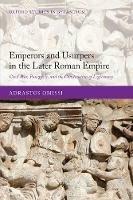
Emperors and Usurpers in the Later Roman Empire: Civil War, Panegyric, and the Construction of Legitimacy

55,20 €
+550
punti 

Venditore: Feltrinelli
Articolo acquistabile con Carta del Docente

Articolo acquistabile con Carta Cultura Giovani e Carta del Merito

Paga con Klarna in 3 rate senza interessi per ordini superiori a 39 €

Dati e Statistiche
 Salvato in 0 liste dei desideri
Salvato in 0 liste dei desideri
Emperors and Usurpers in the Later Roman Empire: Civil War, Panegyric, and the Construction of Legitimacy
Disponibilità in 2 settimane
55,20 €
55,20 €
Disp. in 2 settimane
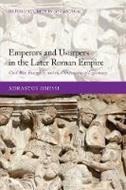
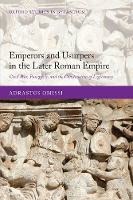



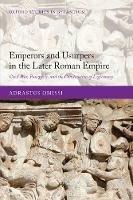
One of the great maxims of history is that it is written by the victors, and nowhere does this find greater support than in the later Roman Empire. Between 284 and 395 AD, no fewer than 37 men claimed imperial power, though today we recognize barely half of these men as 'legitimate' rulers and more than two thirds died at their subjects' hands. Once established in power, a new ruler needed to publicly legitimate himself and to discredit his predecessor: overt criticism of the new regime became high treason, with historians supressing their accounts for fear of reprisals and the very names of defeated emperors chiselled from public inscriptions and deleted from official records. In a period of such chaos, how can we ever hope to record in any fair or objective way the history of the Roman state? Emperors and Usurpers in the Later Roman Empire is the first history of civil war in the later Roman Empire to be written in English and aims to address this question by focusing on the various ways in which successive imperial dynasties attempted to legitimate themselves and to counter the threat of almost perpetual internal challenge to their rule. Panegyric in particular emerges as a crucial tool for understanding the rapidly changing political world of the third and fourth centuries, providing direct evidence of how, in the wake of civil wars, emperors attempted to publish their legitimacy and to delegitimize their enemies. The ceremony and oratory surrounding imperial courts too was of great significance: used aggressively to dramatize and constantly recall the events of recent civil wars, the narratives produced by the court in this context also went on to have enormous influence on the messages and narratives found within contemporary historical texts. In its exploration of the ways in which successive imperial courts sought to communicate with their subjects, this volume offers a thoroughly original reworking of late Roman domestic politics, and demonstrates not only how history could be erased, rewritten, and repurposed, but also how civil war, and indeed usurpation, became endemic to the later Empire.
-
Autore:
-
Editore:
-
Collana:Oxford Studies in Byzantium
-
Anno:2020
-
Rilegatura:Paperback / softback
-
Pagine:368 p.
Testo in English
Dimensioni:
233 x 155 mm
Peso:
554 gr.
EAN:
9780198865162
Informazioni e Contatti sulla Sicurezza dei Prodotti
Le schede prodotto sono aggiornate in conformità al Regolamento UE 988/2023. Laddove ci fossero taluni dati non disponibili per ragioni indipendenti da Feltrinelli, vi informiamo che stiamo compiendo ogni ragionevole sforzo per inserirli. Vi invitiamo a controllare periodicamente il sito www.lafeltrinelli.it per eventuali novità e aggiornamenti.
Per le vendite di prodotti da terze parti, ciascun venditore si assume la piena e diretta responsabilità per la commercializzazione del prodotto e per la sua conformità al Regolamento UE 988/2023, nonché alle normative nazionali ed europee vigenti.
Per informazioni sulla sicurezza dei prodotti, contattare productsafety@feltrinelli.it
