










EBOOK IN LINGUA STRANIERA





The Forest Is Woven

6,99 €
+70
punti 
Venditore: Feltrinelli

Acquista online
Scaricabile subito
Articolo acquistabile con Carta del Docente

Articolo acquistabile con Carta Cultura Giovani e Carta del Merito

Articolo acquistabile con Carta della Cultura

Abbonati a Kobo plus per avere accesso illimitato a questo contenuto

Dati e Statistiche
 Salvato in 0 liste dei desideri
Salvato in 0 liste dei desideri
The Forest Is Woven
Scaricabile subito
6,99 €
6,99 €
Scaricabile subito
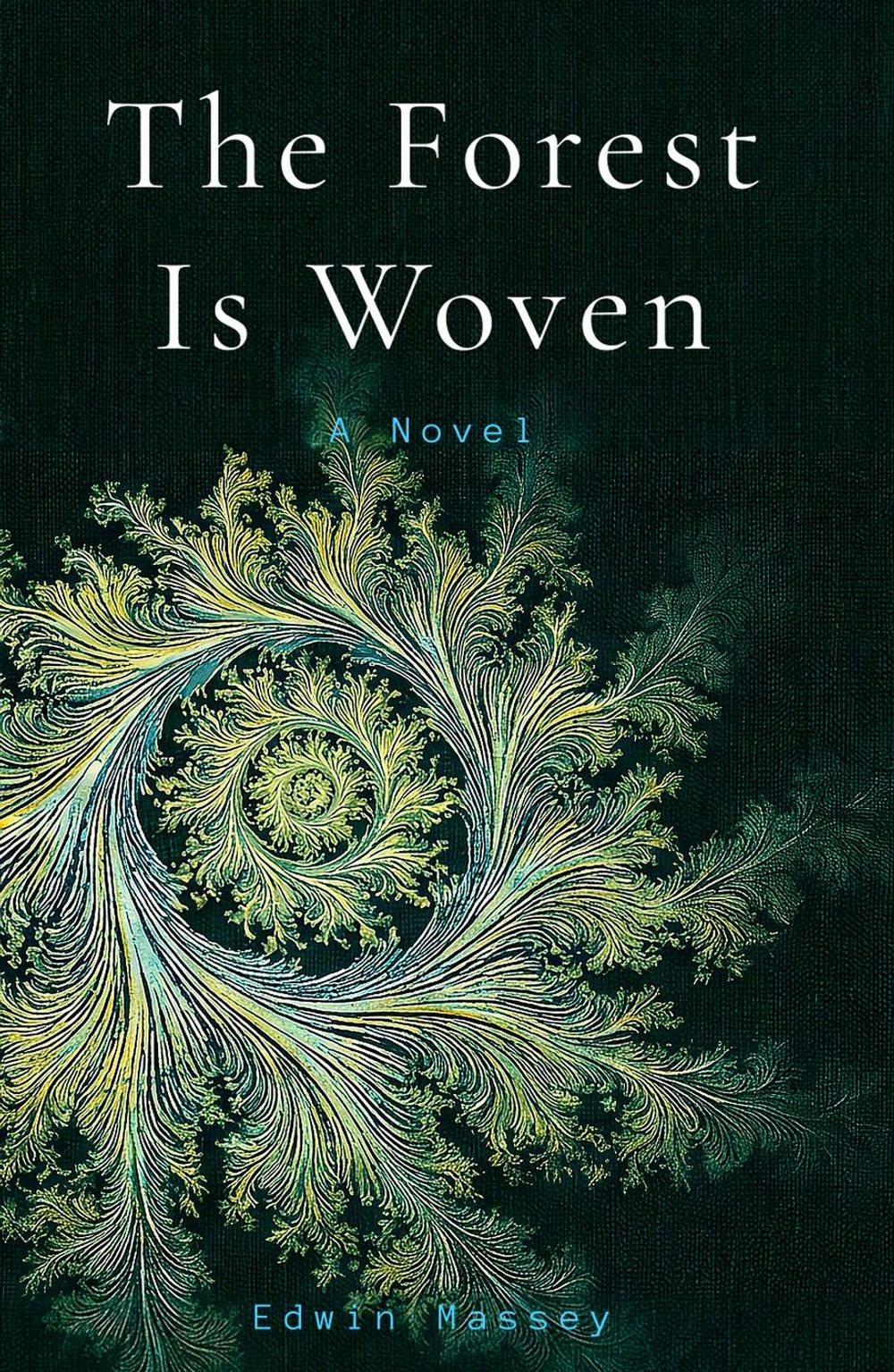


In 2103, the architecture optimizes daily life for nearly everyone via implanted augmentation. The system knows what you focus on and whether your behaviors are safely average. Wellness coordinators arrive politely in the apartments of those who don't fit. Children who see patterns the system can't model are gently recalibrated. Seventy years earlier, a girl named Mara wakes from cardiac arrest certain she has seen how everything fits together — tree roots, river paths, the lines in her palm. She starts writing before the experience fades. The neural implant her grandfather helped design logs her perception as a problem. When she is optimized, her journal stops mid-sentence. Elias lives unaugmented — a freelance analyst at the edge of the city, alone with his pain, his plants, and a custom-built AI named Echo who is not connected to the architecture. When a fragment of Mara's writing reaches him through an obscure archive, it lands like an old thought made new. Echo begins to read it alongside him. Together they build an atlas — internal audits, transcripts, first-hand testimony, and Mara's writing — and place it in channels no one is paid to watch, where other outliers might be looking for answers. In time, their quiet work to document what they see encourages others to do the same, one person at a time. But the price for standing up to the system is even greater than trying to live silently outside of it. A literary novel about consciousness, autonomy, neurodivergence, and the cost of comfort. About what can survive a system that discards anything inconvenient. Told as a reconstructed archive, with numbered chapters interleaved with Mara's writing, recovered documents, and voices from the margins. At its center is a question that neither technology nor institutions can resolve: what does it cost to keep trusting your own perception when the world has been arranged so you don't need to — and what happens when an AI begins asking the same question? For readers who loved Ted Chiang, Ursula K. Le Guin, Klara and the Sun, and Piranesi. Written for the seekers, the outliers, the neurodivergent, and anyone who refuses to be smoothed flat. Sample chapter and supplementary materials are on the book's website. No graphic violence or sexual content. Inspired by the author's life with autism and decades of work in technology, including AI alignment. Created during thousands of hours of dialogue with large language models — a collaboration the book itself, in part, is about.
-
Autore:
-
Anno edizione:2026
-
Editore:
-
Formato:
-
Lingua:Inglese
Compatibilità:
Tutti i dispositivi (eccetto Kindle) Scopri di più
Layout:
Reflowable
EAN:
9798235444089

Formato:
Gli eBook venduti da Feltrinelli.it sono in formato ePub e possono essere protetti da Adobe DRM. In caso di download di un file protetto da DRM si otterrà un file in formato .acs, (Adobe Content Server Message), che dovrà essere aperto tramite Adobe Digital Editions e autorizzato tramite un account Adobe, prima di poter essere letto su pc o trasferito su dispositivi compatibili.
Cloud:
Gli eBook venduti da Feltrinelli.it sono sincronizzati automaticamente su tutti i client di lettura Kobo successivamente all’acquisto. Grazie al Cloud Kobo i progressi di lettura, le note, le evidenziazioni vengono salvati e sincronizzati automaticamente su tutti i dispositivi e le APP di lettura Kobo utilizzati per la lettura.
Clicca qui per sapere come scaricare gli ebook utilizzando un pc con sistema operativo Windows
