









LIBRO INGLESE





Freud's Mahābhārata

141,20 €
+1410
punti 

Venditore: Feltrinelli
Articolo acquistabile con Carta del Docente

Articolo acquistabile con Carta Cultura Giovani e Carta del Merito

Paga con Klarna in 3 rate senza interessi per ordini superiori a 39 €

Dati e Statistiche
 Salvato in 0 liste dei desideri
Salvato in 0 liste dei desideri
Freud's Mahābhārata
Disponibilità in 2 settimane
141,20 €
141,20 €
Disp. in 2 settimane
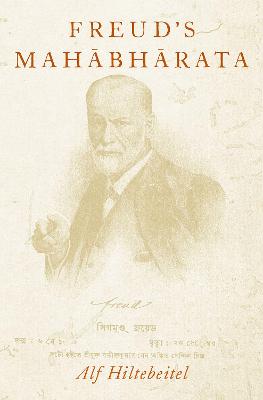



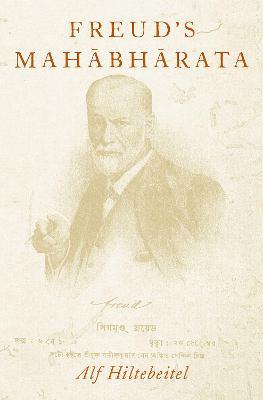
Though Freud never overtly refers to the Mahābhārata, many of the Sanskrit epic's themes are illuminated by Freud's thought and, conversely, many incidents in the epic can be used to illustrate Freud's theories. In Freud's Mahābhārata, the companion volume to Freud's India, Alf Hiltebeitel offers what he calls a "pointillist introduction" to a new theory about the Mahābhārata based on Freud. Chapter 1 introduces the concept of the preoedipal, along with Freud's discussion of burial alive, ghosts and doubles, and castration anxiety, and looks at parallels with Indian theories of karma and reincarnation. In Chapter 2 Hiltebeitel draws on André Green's concept of "the dead mother," alive but dead to her child, to tell the epic's main story through the interactions between the peace-loving King Yudhisthira and his bellicose mother Kunti. Chapter 3 takes up three "dead mother" stories in the Mahābhārata's early books, all of them featuring Kunti, among a plethora of really dead or divine past mothers in the Pandava lineage. Next, Chapter 4 looks at Fernando Wulff Alonso's hypothesis that the Mahābhārata poets worked from Greek sources in modeling their stories. Hiltebeitel explores the epic's divine plan of the unburdening of the Earth, the goddess Earth, and its Greek counterpart in the Iliad's plan of Zeus. Girindrasekhar Bose's concept of the "Oedipus mother" is introduced in Chapter 5 through a discussion of Aravan, a minor figure throughout the Sanskrit epic tradition but one who looms in importance in the Draupadi cult and has a cult of his own, where he is called Kuttantavar. In both cults Aravan is worshiped for his self-mutilating sacrifice as a battle-opening offering to "mother" Kali, and he is worshipped in his own cult by Indian eunuchs or castrati called Aravanis in his honor. The book concludes with a new theory of the epic based on Freud's Moses and Monotheism, in which he argued that religious traditions deserve to be studied not only in what they say consciously about themselves, but in what they have registered unconsciously from past traumas, loss of memory, and the return of the repressed.
-
Autore:
-
Editore:
-
Anno:2018
-
Rilegatura:Hardback
-
Pagine:328 p.
Testo in English
Dimensioni:
239 x 160 mm
Peso:
599 gr.
EAN:
9780190878337
Informazioni e Contatti sulla Sicurezza dei Prodotti
Le schede prodotto sono aggiornate in conformità al Regolamento UE 988/2023. Laddove ci fossero taluni dati non disponibili per ragioni indipendenti da Feltrinelli, vi informiamo che stiamo compiendo ogni ragionevole sforzo per inserirli. Vi invitiamo a controllare periodicamente il sito www.lafeltrinelli.it per eventuali novità e aggiornamenti.
Per le vendite di prodotti da terze parti, ciascun venditore si assume la piena e diretta responsabilità per la commercializzazione del prodotto e per la sua conformità al Regolamento UE 988/2023, nonché alle normative nazionali ed europee vigenti.
Per informazioni sulla sicurezza dei prodotti, contattare productsafety@feltrinelli.it
