










EBOOK IN LINGUA STRANIERA





The Critique of Judgment: Theory of the Aesthetic Judgment and Theory of the Teleological Judgment

1,99 €
+20
punti 
Venditore: Feltrinelli

Acquista online
Scaricabile subito
Articolo acquistabile con Carta del Docente

Articolo acquistabile con Carta Cultura Giovani e Carta del Merito

Abbonati a Kobo plus per avere accesso illimitato a questo contenuto

Dati e Statistiche
 Salvato in 0 liste dei desideri
Salvato in 0 liste dei desideri
The Critique of Judgment: Theory of the Aesthetic Judgment and Theory of the Teleological Judgment
Scaricabile subito
1,99 €
1,99 €
Scaricabile subito
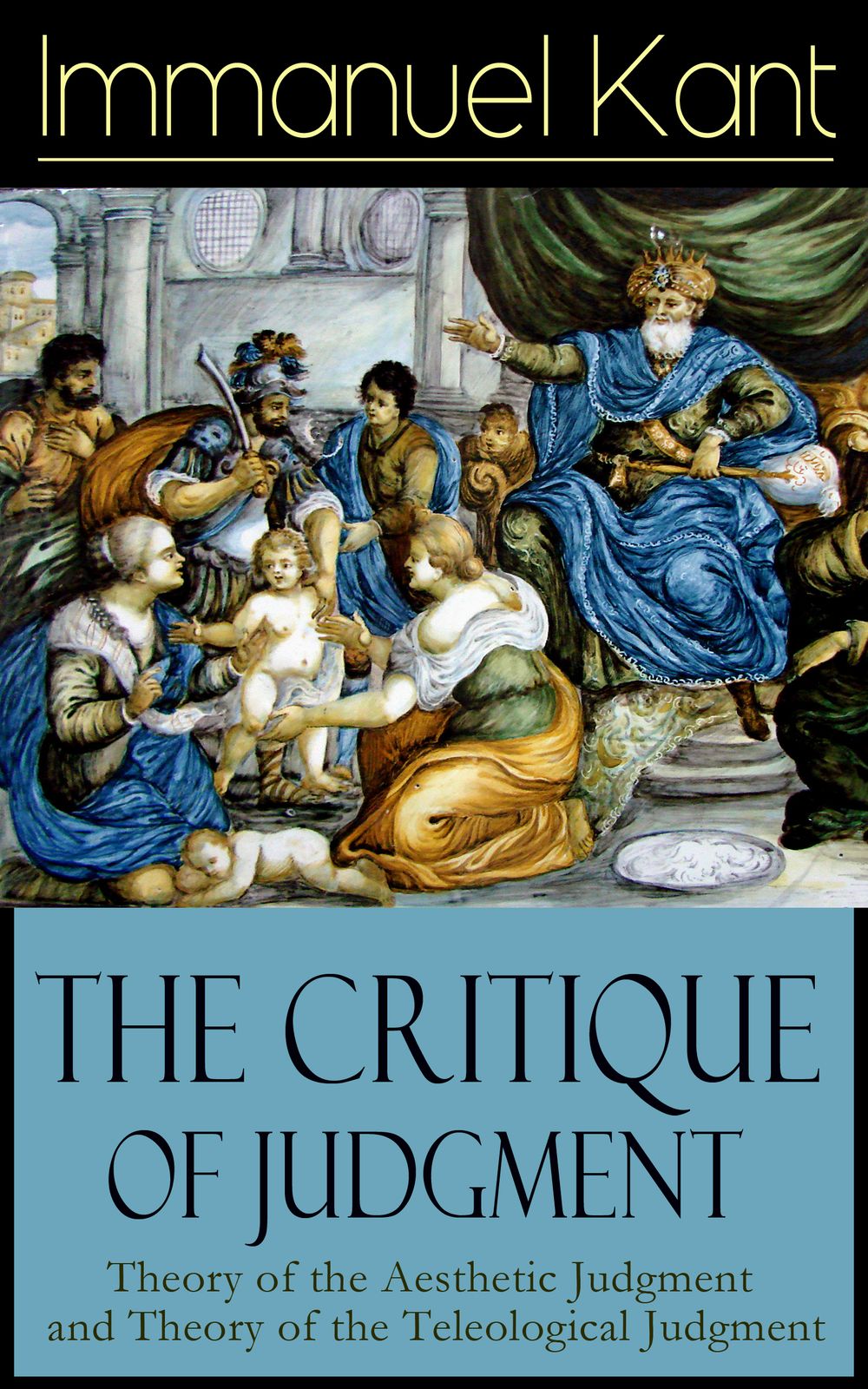



This carefully crafted ebook: "The Critique of Judgment: Theory of the Aesthetic Judgment and Theory of the Teleological Judgment" is formatted for your eReader with a functional and detailed table of contents. The Critique of Judgment, also translated as the Critique of the Power of Judgment and more commonly referred to as the third Critique, is a philosophical work by Immanuel Kant. Critique of Judgment completes the Critical project begun in the Critique of Pure Reason and the Critique of Practical Reason (the first and second Critiques, respectively). The book is divided into two main sections: the Critique of Aesthetic Judgment and the Critique of Teleological Judgment, and also includes a large overview of the entirety of Kant's Critical system, arranged in its final form. The end result of Kant's Critical Project is that there are certain fundamental antinomies in human Reason, most particularly that there is a complete inability to favor on the one hand the argument that all behavior and thought is determined by external causes, and on the other that there is an actual "spontaneous" causal principle at work in human behavior. Immanuel Kant (1724-1804) was a German philosopher, who, according to the Stanford Encyclopedia of Philosophy is "the central figure of modern philosophy." Kant argued that fundamental concepts of the human mind structure human experience, that reason is the source of morality, that aesthetics arises from a faculty of disinterested judgment, that space and time are forms of our understanding, and that the world as it is "in-itself" is unknowable. Kant took himself to have effected a Copernican revolution in philosophy, akin to Copernicus' reversal of the age-old belief that the sun revolved around the earth.
-
Autore:
-
Traduttore:
-
Anno edizione:2015
-
Editore:
-
Formato:
Lingua:
Inglese
Compatibilità:
Tutti i dispositivi (eccetto Kindle) Scopri di più
Layout:
Reflowable
EAN:
9788026845256

Formato:
Gli eBook venduti da Feltrinelli.it sono in formato ePub e possono essere protetti da Adobe DRM. In caso di download di un file protetto da DRM si otterrà un file in formato .acs, (Adobe Content Server Message), che dovrà essere aperto tramite Adobe Digital Editions e autorizzato tramite un account Adobe, prima di poter essere letto su pc o trasferito su dispositivi compatibili.
Cloud:
Gli eBook venduti da Feltrinelli.it sono sincronizzati automaticamente su tutti i client di lettura Kobo successivamente all’acquisto. Grazie al Cloud Kobo i progressi di lettura, le note, le evidenziazioni vengono salvati e sincronizzati automaticamente su tutti i dispositivi e le APP di lettura Kobo utilizzati per la lettura.
Clicca qui per sapere come scaricare gli ebook utilizzando un pc con sistema operativo Windows
