










EBOOK IN LINGUA STRANIERA





Enacting Electronic Government Success

84,23 €
+840
punti 
Venditore: Feltrinelli

Acquisto online
Scaricabile subito
Articolo acquistabile con Carta del Docente

Articolo acquistabile con Carta Cultura Giovani e Carta del Merito

Dati e Statistiche
 Salvato in 0 liste dei desideri
Salvato in 0 liste dei desideri
Enacting Electronic Government Success
Scaricabile subito
84,23 €
84,23 €
Scaricabile subito

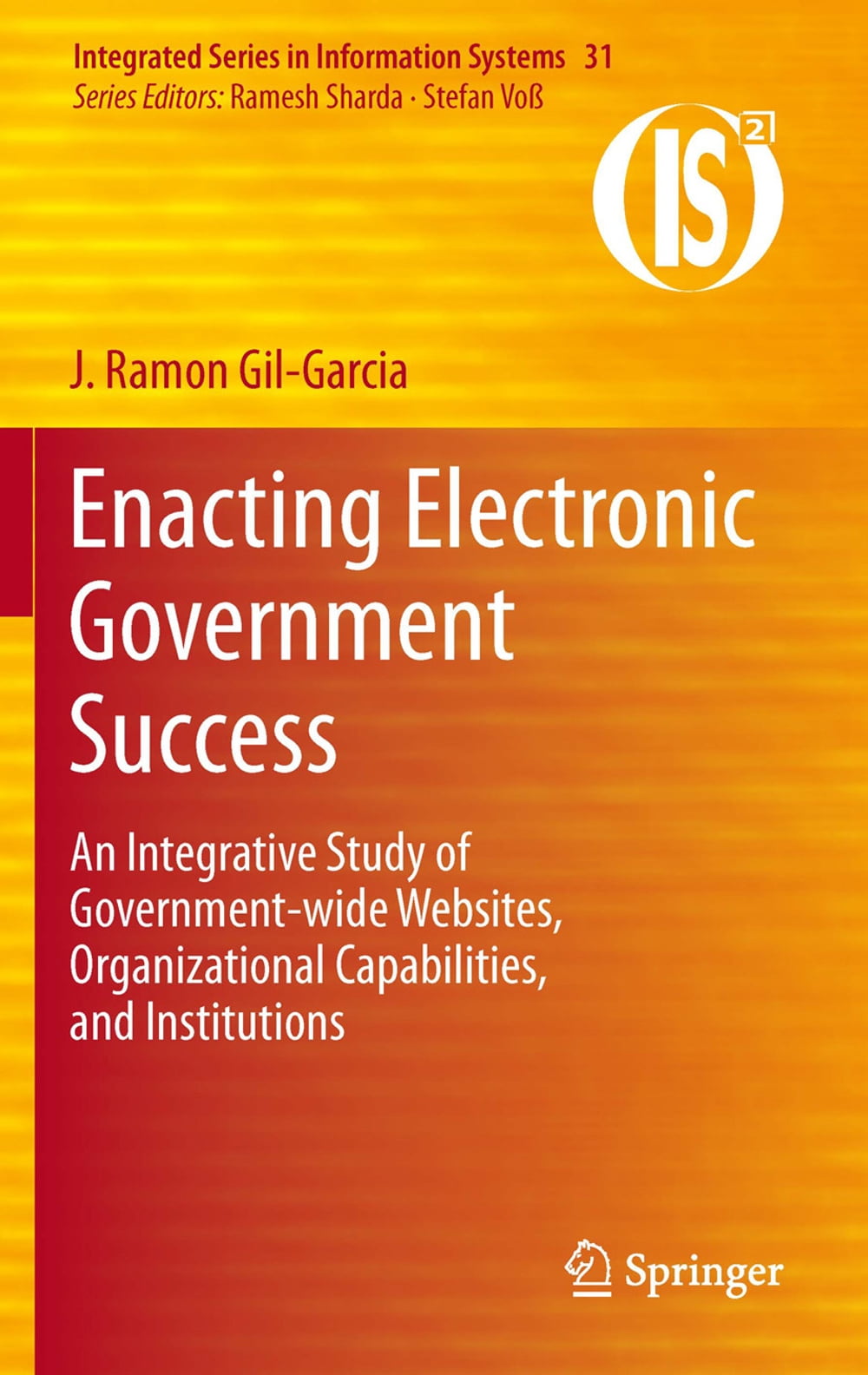




Many countries around the world are investing a great amount of resources in government IT initiatives. However, few of these projects achieve their stated goals and some of them are complete failures. Therefore, understanding e-government success has become very important and urgent in recent years. In order to develop relevant knowledge about this complex phenomenon, researchers and practitioners need to identify and assess what are the main conditions, variables, or factors that have an impact on e-government success. However, before being able to evaluate these impacts, it is necessary to define what e-government success is and what some e-government success measures are. This book presents a review of both e-government success measures and e-government success factors. It also provides empirical evidence from quantitative analysis and two in-depth case studies. Although based on sound theory and rigorous empirical analysis, the book not only significantly contributes to academic knowledge, but also includes some practical recommendations for government officials and public managers. Theoretically, the book proposes a way to quantitatively operationalize Fountain’s enactment framework. Based on the institutional tradition, the technology enactment framework attempts to explain the effects of organizational forms and institutional arrangements on the information technology used by government agencies. According to Fountain (1995; 2001) the technology enactment framework pays attention to the relationships among information technology, organizations, embeddedness, and institutions. This framework is very well known in the e-government field, but is normally used for qualitative analysis and there is no previous proposal of how to use it with quantitative data. The book proposes variables to measure each of the different constructs in this framework and also tests the relationships hypothesized by Fountain’s theory. Finally, using the advantages of the selected quantitative analysis technique (Partial Least Squares), the study also proposes some adjustments and extensions to the original framework in a theory building effort. Methodologically, the book reports on one of the first multi-method studies in the field of e-government in general and e-government success in particular. This study uses a nested research design, which combines statistical analysis with two in depth case studies. The study begins with a statistical analysis using organizational, institutional, and contextual factors as the independent variables. An overall score representing e-government success in terms of the functionality of state websites is the dependent variable. Second, based on the statistical results two cases are selected based on their relative fitness to the model (residuals) and their position in the general ranking of website functionality (which includes four different measures). In order to complement the results of the statistical analysis,case studies were developed for the two selected states (New York and Indiana), using semi-structured interviews and document analysis. In terms of the statistical analysis, the book constitutes one of the first applications of Partial Least Squares (PLS) to an e-government success study. PLS is a structural equations modeling (SEM) technique and, therefore, allows estimating the measurement model and the structural model simultaneously. The use of this sophisticated statistical strategy helped to test the relationships between e-government success and different factors influencing it, as well as some of the relationships between several of the factors, thus allowing exploring some indirect effects too.
-
Autore:
-
Anno edizione:2016
-
Editore:
-
Formato:
-
Lingua:Inglese
Compatibilità:
Tutti i dispositivi (eccetto Kindle) Scopri di più
Layout:
Reflowable
EAN:
9781461420156
Formato:
Gli eBook venduti da Feltrinelli.it sono in formato ePub e possono essere protetti da Adobe DRM. In caso di download di un file protetto da DRM si otterrà un file in formato .acs, (Adobe Content Server Message), che dovrà essere aperto tramite Adobe Digital Editions e autorizzato tramite un account Adobe, prima di poter essere letto su pc o trasferito su dispositivi compatibili.
Cloud:
Gli eBook venduti da Feltrinelli.it sono sincronizzati automaticamente su tutti i client di lettura Kobo successivamente all’acquisto. Grazie al Cloud Kobo i progressi di lettura, le note, le evidenziazioni vengono salvati e sincronizzati automaticamente su tutti i dispositivi e le APP di lettura Kobo utilizzati per la lettura.
Clicca qui per sapere come scaricare gli ebook utilizzando un pc con sistema operativo Windows
