









LIBRO INGLESE





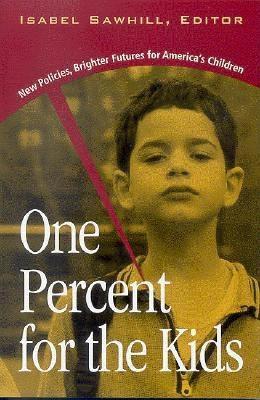
One Percent for the Kids: New Policies, Brighter Futures for America's Children

35,30 €
+350
punti 

Venditore: Feltrinelli
Articolo acquistabile con Carta del Docente

Articolo acquistabile con Carta Cultura Giovani e Carta del Merito

Dati e Statistiche
 Salvato in 0 liste dei desideri
Salvato in 0 liste dei desideri
One Percent for the Kids: New Policies, Brighter Futures for America's Children
Disponibilità in 2 settimane
35,30 €
35,30 €
Disp. in 2 settimane




"In the United States, long considered the land of opportunity, children born into different types of families begin life with very unequal prospects. A growing group of children is being raised in families in which a poorly educated mother begins childbearing at an early age, often outside marriage, and ends up dependent on public welfare. Another group is raised by parents who delay childbearing until they are well-educated, married, and have stable jobs; these children go on to lead more advantageous lives. While virtually everyone talks about the importance of investing in the next generation, in the late 1990s federal spending on children represented only 2 percent of the nation's gross domestic product. This volume argues forcefully that the life prospects of children at the bottom of the socioeconomic ladder can be improved substantially-and the growing gap between them and more privileged children reduced-by making appropriate investments now. Taking their cue on funding from the Blair government in the United Kingdom, which since 1997 has invested almost an extra 1 percent of GDP to reducing child poverty, the contributors offer specific proposals, along with their rationales and costs, to improve early childhood education and health care, bolster family income and work, reduce teen pregnancy, encourage and strengthen marriage, and allow families to move to better neighborhoods. The final chapter assesses the progress of the Blair government toward reaching its goals. Contributors include Isabel Sawhill (Brookings Institution), Greg Duncan (Northwestern University), Katherine Magnuson (Columbia University), Andrea Kane (Brookings Institution), Sara McLanahan (Princeton University), Irwin Garfinkel (Columbia University), Robert Haveman (University of Wisconsin-Madison), Jens Ludwig (Georgetown University), David Armor (George Mason University), Barbara Wolfe (University of Wisconsin-Madison), Scott Scrivner (Public/Private Ventures), and John Hills (London School of Economics). "
-
Curatore:
-
Editore:
-
Anno:2003
-
Rilegatura:Paperback / softback
-
Pagine:208 p.
Testo in English
Dimensioni:
229 x 152 mm
Peso:
295 gr.
EAN:
9780815777212
Informazioni e Contatti sulla Sicurezza dei Prodotti
Le schede prodotto sono aggiornate in conformità al Regolamento UE 988/2023. Laddove ci fossero taluni dati non disponibili per ragioni indipendenti da Feltrinelli, vi informiamo che stiamo compiendo ogni ragionevole sforzo per inserirli. Vi invitiamo a controllare periodicamente il sito www.lafeltrinelli.it per eventuali novità e aggiornamenti.
Per le vendite di prodotti da terze parti, ciascun venditore si assume la piena e diretta responsabilità per la commercializzazione del prodotto e per la sua conformità al Regolamento UE 988/2023, nonché alle normative nazionali ed europee vigenti.
Per informazioni sulla sicurezza dei prodotti, contattare productsafety@feltrinelli.it
