









EBOOK IN LINGUA STRANIERA





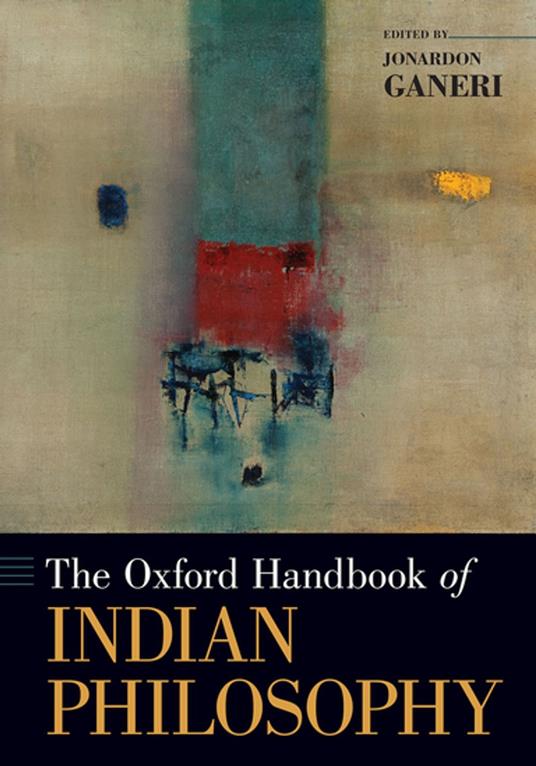
The Oxford Handbook of Indian Philosophy

40,34 €
+400
punti 

Venditore: Feltrinelli

Acquisto online
Scaricabile subito
Articolo acquistabile con Carta del Docente

Articolo acquistabile con Carta Cultura Giovani e Carta del Merito

Dati e Statistiche
 Salvato in 1 lista dei desideri
Salvato in 1 lista dei desideri
The Oxford Handbook of Indian Philosophy
Scaricabile subito
40,34 €
40,34 €
Scaricabile subito




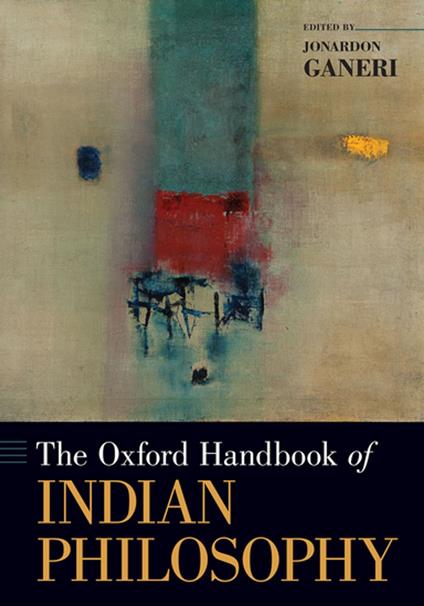
The Oxford Handbook of Indian Philosophy tells the story of philosophy in India through a series of exceptional individual acts of philosophical virtuosity. It brings together forty leading international scholars to record the diverse figures, movements, and approaches that constitute philosophy in the geographical region of the Indian subcontinent, a region sometimes nowadays designated South Asia. The volume aims to be ecumenical, drawing from different locales, languages, and literary cultures, inclusive of dissenters, heretics and sceptics, of philosophical ideas in thinkers not themselves primarily philosophers, and reflecting India's north-western borders with the Persianate and Arabic worlds, its north-eastern boundaries with Tibet, Nepal, Ladakh and China, as well as the southern and eastern shores that afford maritime links with the lands of Theravda Buddhism. Indian Philosophy has been written in many languages, including Pali, Prakrit, Sanskrit, Malayalam, Urdu, Gujarati, Tamil, Telugu, Bengali, Marathi, Persian, Kannada, Punjabi, Hindi, Tibetan, Arabic and Assamese. From the time of the British colonial occupation, it has also been written in English. It spans philosophy of law, logic, politics, environment and society, but is most strongly associated with wide-ranging discussions in the philosophy of mind and language, epistemology and metaphysics (how we know and what is there to be known), ethics, metaethics and aesthetics, and metaphilosophy. The reach of Indian ideas has been vast, both historically and geographically, and it has been and continues to be a major influence in world philosophy. In the breadth as well as the depth of its philosophical investigation, in the sheer bulk of surviving texts and in the diffusion of its ideas, the philosophical heritage of India easily stands comparison with that of China, Greece, the Latin west, or the Islamic world.
-
Curatore:
-
Anno edizione:2017
-
Editore:
-
Formato:
Lingua:
Inglese
Compatibilità:
Tutti i dispositivi (eccetto Kindle) Scopri di più
Layout:
Reflowable
EAN:
9780190668396
Formato:
Gli eBook venduti da Feltrinelli.it sono in formato ePub e possono essere protetti da Adobe DRM. In caso di download di un file protetto da DRM si otterrà un file in formato .acs, (Adobe Content Server Message), che dovrà essere aperto tramite Adobe Digital Editions e autorizzato tramite un account Adobe, prima di poter essere letto su pc o trasferito su dispositivi compatibili.
Cloud:
Gli eBook venduti da Feltrinelli.it sono sincronizzati automaticamente su tutti i client di lettura Kobo successivamente all’acquisto. Grazie al Cloud Kobo i progressi di lettura, le note, le evidenziazioni vengono salvati e sincronizzati automaticamente su tutti i dispositivi e le APP di lettura Kobo utilizzati per la lettura.
Clicca qui per sapere come scaricare gli ebook utilizzando un pc con sistema operativo Windows
