









LIBRO INGLESE





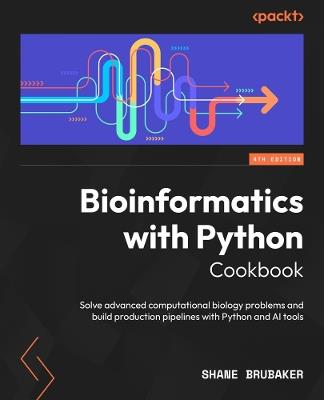
Bioinformatics with Python Cookbook: Solve advanced computational biology problems and build production pipelines with Python and AI tools

41,79 €
+420
punti 
Venditore: Feltrinelli
Articolo acquistabile con Carta del Docente

Articolo acquistabile con Carta Cultura Giovani e Carta del Merito

Articolo acquistabile con Carta della Cultura

Paga con Klarna in 3 rate senza interessi per ordini superiori a 39 €

Dati e Statistiche
 Salvato in 0 liste dei desideri
Salvato in 0 liste dei desideri
Bioinformatics with Python Cookbook: Solve advanced computational biology problems and build production pipelines with Python and AI tools
Disponibilità in 3 settimane
41,79 €
41,79 €
Disponibilità in 3 settimane
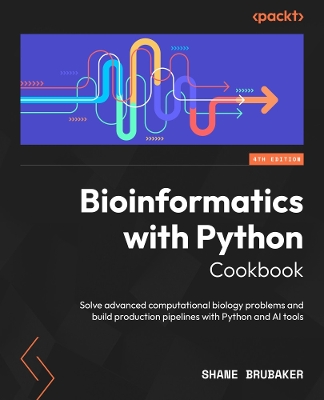


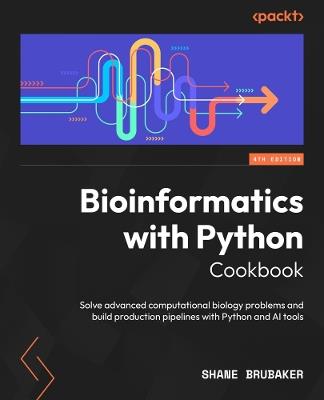
Enhance your bioinformatics toolbox with practical Python recipes, tips, and tricks for key tasks like aligning sequence data, calling variants, and building Infrastructure as Code Key Features Perform sequence analysis at primary, secondary, and tertiary levels using Python libraries Solve real-world problems in the fields of phylogenetics, protein design, and annotation Use language models and other AI techniques to work with multimodal bioinformatics data Purchase of the print or Kindle book includes a free PDF eBook Book DescriptionIf you've ever felt overwhelmed by the vast number of Python tools available for bioinformatics, you're not alone. The Bioinformatics with Python Cookbook is a recipe-based guide that explores practical approaches for solving classic bioinformatics challenges, showing you which Python packages work best for each task. You’ll start with the essential Python libraries for data science and bioinformatics, then move through key workflows in sequencing analysis, quality control, alignment, and variant calling. Along the way, you’ll pick up modern coding practices, explore recent advances in bioinformatics research, and gain hands-on experience with libraries such as NumPy, pandas, and sci-kit learn. This book walks you through core bioinformatics tasks such as phylogenetic analysis and population genomics while familiarizing you with the wealth of modern public bioinformatics databases. You’ll learn cloud computing approaches used by researchers, set up workflow orchestration systems for controlling bioinformatics pipelines, and see how AI and the use of large language models (LLMs) are reshaping the field–right down to designing proteins and DNA. By the end of this book, you’ll be ready to apply Python for real bioinformatics work and launch bioinformatics pipelines for your research.What you will learn Process, analyze, and align sequencing data Call variants and interpret their biological meaning Use modern cloud infrastructure to launch bioinformatics workflows Ingest, clean, and transform data efficiently Explore how AI is shaping the future of bioinformatics Leverage imaging data for biological insights Apply single-cell sequencing to cluster and compare gene expression Who this book is forThis book is for early- to mid-level practitioners in bioinformatics, data science, and software engineering who want to improve their skills and apply practical solutions to real-world problems. You should have a basic understanding of biology, including DNA, proteins, and cell structure, as well as Python programming and software engineering techniques. While prior exposure to machine learning with Python is not essential, experience with a cloud computing platform (AWS, GCP, or Azure) will be helpful.
-
Autore:
-
Editore:
-
Anno:2025
-
Rilegatura:Paperback / softback
-
Pagine:618 p.
Testo in English
Dimensioni:
235 x 191 mm
EAN:
9781836642756

Informazioni e Contatti sulla Sicurezza dei Prodotti
Le schede prodotto sono aggiornate in conformità al Regolamento UE 988/2023. Laddove ci fossero taluni dati non disponibili per ragioni indipendenti da Feltrinelli, vi informiamo che stiamo compiendo ogni ragionevole sforzo per inserirli. Vi invitiamo a controllare periodicamente il sito www.lafeltrinelli.it per eventuali novità e aggiornamenti.
Per le vendite di prodotti da terze parti, ciascun venditore si assume la piena e diretta responsabilità per la commercializzazione del prodotto e per la sua conformità al Regolamento UE 988/2023, nonché alle normative nazionali ed europee vigenti.
Per informazioni sulla sicurezza dei prodotti, contattare productsafety@feltrinelli.it
