









LIBRO INGLESE





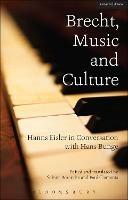
Brecht, Music and Culture: Hanns Eisler in Conversation with Hans Bunge

153,60 €
+1540
punti 

Venditore: Feltrinelli
Articolo acquistabile con Carta del Docente

Articolo acquistabile con Carta Cultura Giovani e Carta del Merito

Paga con Klarna in 3 rate senza interessi per ordini superiori a 39 €

Dati e Statistiche
 Salvato in 0 liste dei desideri
Salvato in 0 liste dei desideri
Brecht, Music and Culture: Hanns Eisler in Conversation with Hans Bunge
Disponibilità in 2 settimane
153,60 €
153,60 €
Disp. in 2 settimane




The Austrian composer Hanns Eisler was Bertolt Brecht's closest friend and most politically committed collaborator. In these conversations with Hans Bunge which took place over a period of four years, from 1958 until his death in 1962, Eisler offers a compelling and absorbing account of his and Brecht's period of exile in Europe and the USA between 1933 and 1947, and of the quality of artistic, social and intellectual life in post-war East Germany. Brecht, Music and Culture includes a discussion of a number of Brecht's principal plays, including Life of Galileo and The Caucasian Chalk Circle, considers the place of music in Brecht's work and discusses the time that Brecht was brought before The House of Un-American Activities Committee. It includes lively accounts of Brecht's meetings with key cultural figures, including Arnold Schönberg, Charlie Chaplin and Thomas Mann, and offers throughout a sustained response to the question of the purpose of art in a time of political turmoil. Throughout the conversations, Eisler provides illuminating and original insights into Brecht's work and ideas and gives a highly entertaining first-hand account of his friend's personality and attitudes. First published in Germany in 1975, and now published in English for the first time, the conversations provide a fascinating account of the lives and work of two of the twentieth century's greatest artists.
-
Autore:
-
Traduttore:
-
Editore:
-
Anno:2014
-
Rilegatura:Hardback
-
Pagine:312 p.
Testo in English
Dimensioni:
216 x 138 mm
Peso:
544 gr.
EAN:
9781472524355

Informazioni e Contatti sulla Sicurezza dei Prodotti
Le schede prodotto sono aggiornate in conformità al Regolamento UE 988/2023. Laddove ci fossero taluni dati non disponibili per ragioni indipendenti da Feltrinelli, vi informiamo che stiamo compiendo ogni ragionevole sforzo per inserirli. Vi invitiamo a controllare periodicamente il sito www.lafeltrinelli.it per eventuali novità e aggiornamenti.
Per le vendite di prodotti da terze parti, ciascun venditore si assume la piena e diretta responsabilità per la commercializzazione del prodotto e per la sua conformità al Regolamento UE 988/2023, nonché alle normative nazionali ed europee vigenti.
Per informazioni sulla sicurezza dei prodotti, contattare productsafety@feltrinelli.it
