









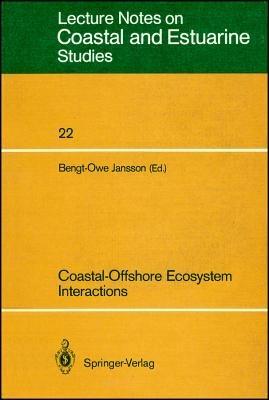
LIBRO INGLESE





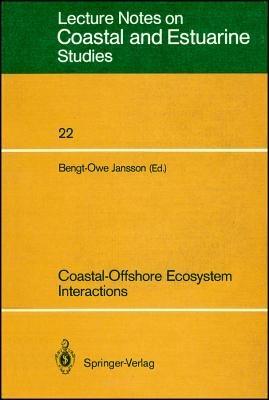
Coastal-Offshore Ecosystem Interactions: Proceedings of a Symposium sponsored by SCOR, UNESCO, San Francisco Society, California Sea Grant Program, and U.S. Dept. of Interior, Mineral Management Service held at San Francisco State University, Tiburon, California, April 7–22, 1986

63,90 €
+640
punti 
Venditore: Feltrinelli
Articolo acquistabile con Carta del Docente

Articolo acquistabile con Carta Cultura Giovani e Carta del Merito

Articolo acquistabile con Carta della Cultura

Paga con Klarna in 3 rate senza interessi per ordini superiori a 39 €

Dati e Statistiche
 Salvato in 0 liste dei desideri
Salvato in 0 liste dei desideri
Coastal-Offshore Ecosystem Interactions: Proceedings of a Symposium sponsored by SCOR, UNESCO, San Francisco Society, California Sea Grant Program, and U.S. Dept. of Interior, Mineral Management Service held at San Francisco State University, Tiburon, California, April 7–22, 1986
Disponibilità in 2 settimane
63,90 €
63,90 €
Disponibilità in 2 settimane



stable isotope ratios act as naturally-occurring tracers for organic matter, making possible, under certain conditions, the quantification of coastal-offshore exchanges. In general, organic matter has isotope ratios characteristic of its origin (e. g. plants with different modes of photosynthesis and different growth conditions, anthropogenic compounds). These ratios are maintained as the organic matter moves through the biosphere and geosphere. A mixture of organic matter from two sources has isotope ratios intermediate between those of the two sources, in proportion to the fraction of material from each source. Isotope ratios are one of the few methods which can trace organic matter as it moves through natural ecosystems. Ratios can be measured on both the total organic matter and on particular chemical fractions or compounds. When used on organisms, isotope ratios provide information of organic matter actually assimilated into body tissues, not just material ingested. As with all tools, this method has certain limitations which must be borne in mind when interpreting its results. Firstly, specific environmental conditions must be met. This generally means an ecosystem with a limited and known number of sources of organic matter having different isotope ratios. Two sources with different isotope ratios are ideal; additional sources with other isotope ratios complicate interpretation. Secondly, the difference in isotope ratios of the two sources should be large compared with analytical variability. Thirdly, the ratios within each source should vary as little as possible.
-
Curatore:
-
Editore:
-
Collana:Coastal and Estuarine Studies
-
Anno:1988
-
Rilegatura:Paperback / softback
Pagine:
367 p.
Testo in English
Dimensioni:
254 x 178 mm
EAN:
9783540190516

Informazioni e Contatti sulla Sicurezza dei Prodotti
Le schede prodotto sono aggiornate in conformità al Regolamento UE 988/2023. Laddove ci fossero taluni dati non disponibili per ragioni indipendenti da Feltrinelli, vi informiamo che stiamo compiendo ogni ragionevole sforzo per inserirli. Vi invitiamo a controllare periodicamente il sito www.lafeltrinelli.it per eventuali novità e aggiornamenti.
Per le vendite di prodotti da terze parti, ciascun venditore si assume la piena e diretta responsabilità per la commercializzazione del prodotto e per la sua conformità al Regolamento UE 988/2023, nonché alle normative nazionali ed europee vigenti.
Per informazioni sulla sicurezza dei prodotti, contattare productsafety@feltrinelli.it
