









EBOOK IN LINGUA STRANIERA





Collective Rationality

29,73 €
+300
punti 
Venditore: Feltrinelli

Acquista online
Scaricabile subito
Articolo acquistabile con Carta del Docente

Articolo acquistabile con Carta Cultura Giovani e Carta del Merito

Articolo acquistabile con Carta della Cultura

Dati e Statistiche
 Salvato in 0 liste dei desideri
Salvato in 0 liste dei desideri
Collective Rationality
Scaricabile subito
29,73 €
29,73 €
Scaricabile subito
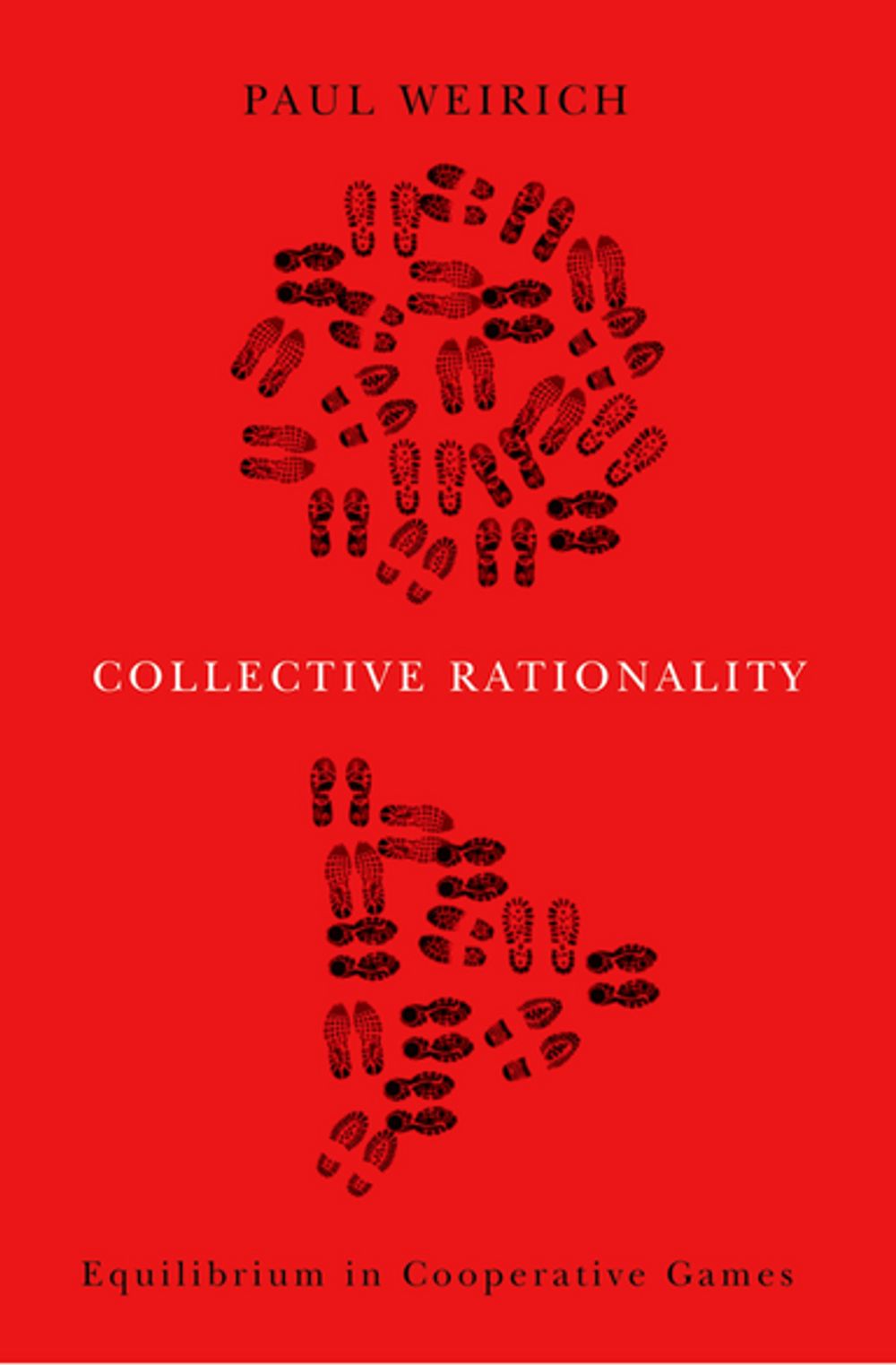


Groups of people perform acts that are subject to standards of rationality. A committee may sensibly award fellowships, or may irrationally award them in violation of its own policies. A theory of collective rationality defines collective acts that are evaluable for rationality and formulates principles for their evaluation. This book argues that a group's act is evaluable for rationality if it is the products of acts its members fully control. It also argues that such an act is collectively rational if the acts of the group's members are rational. Efficiency is a goal of collective rationality, but not a requirement, except in cases where conditions are ideal for joint action and agents have rationally prepared for joint action. The people engaged in a game of strategy form a group, and the combination of their acts yields a collective act. If their collective act is rational, it constitutes a solution to their game. A theory of collective rationality yields principles concerning solutions to games. One principle requires that a solution constitute an equilibrium among the incentives of the agents in the game. In a cooperative game some agents are coalitions of individuals, and it may be impossible for all agents to pursue all incentives. Because rationality is attainable, the appropriate equilibrium standard for cooperative games requires that agents pursue only incentives that provide sufficient reasons to act. The book's theory of collective rationality supports an attainable equilibrium-standard for solutions to cooperative games and shows that its realization follows from individuals' rational acts. By extending the theory of rationality to groups, this book reveals the characteristics that make an act evaluable for rationality and the way rationality's evaluation of an act responds to the type of control its agent exercises over the act. The book's theory of collective rationality contributes to philosophical projects such as contractarian ethics and to practical projects such as the design of social institutions.
-
Autore:
-
Anno edizione:2009
-
Editore:
-
Formato:
-
Lingua:Inglese
Compatibilità:
Tutti i dispositivi (eccetto Kindle) Scopri di più
Layout:
Reflowable
EAN:
9780190452780

Formato:
Gli eBook venduti da Feltrinelli.it sono in formato ePub e possono essere protetti da Adobe DRM. In caso di download di un file protetto da DRM si otterrà un file in formato .acs, (Adobe Content Server Message), che dovrà essere aperto tramite Adobe Digital Editions e autorizzato tramite un account Adobe, prima di poter essere letto su pc o trasferito su dispositivi compatibili.
Cloud:
Gli eBook venduti da Feltrinelli.it sono sincronizzati automaticamente su tutti i client di lettura Kobo successivamente all’acquisto. Grazie al Cloud Kobo i progressi di lettura, le note, le evidenziazioni vengono salvati e sincronizzati automaticamente su tutti i dispositivi e le APP di lettura Kobo utilizzati per la lettura.
Clicca qui per sapere come scaricare gli ebook utilizzando un pc con sistema operativo Windows
