


EBOOK IN LINGUA STRANIERA


Efficiency, Sustainability, and Justice to Future Generations

131,03 €
+1310
punti 
Venditore: Feltrinelli

Acquista online
Scaricabile subito
Articolo acquistabile con Carta del Docente

Articolo acquistabile con Carta Cultura Giovani e Carta del Merito

Articolo acquistabile con Carta della Cultura

Dati e Statistiche
 Salvato in 0 liste dei desideri
Efficiency, Sustainability, and Justice to Future Generations
Scaricabile subito
131,03 €
131,03 €
Scaricabile subito

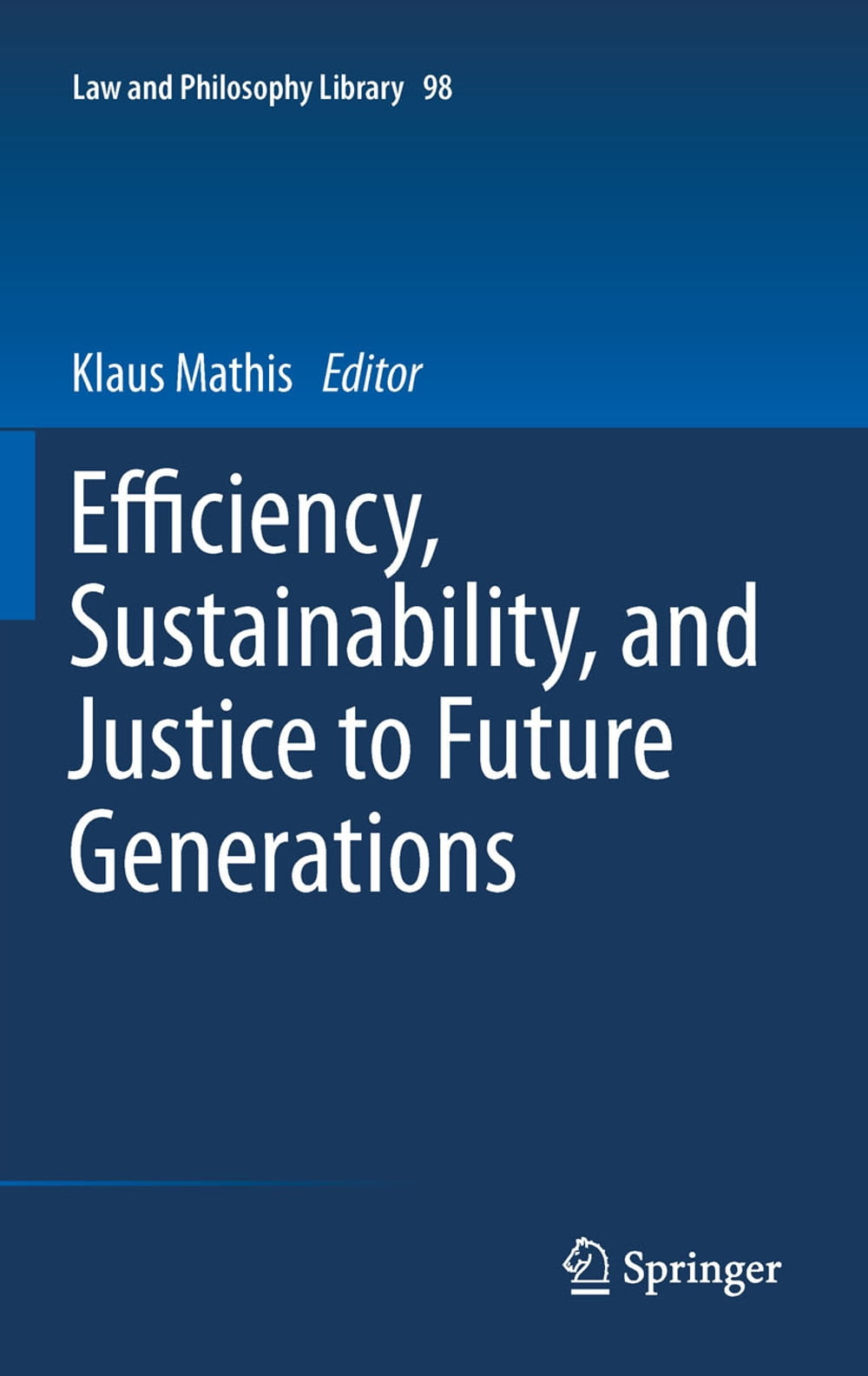


Fifty years after the famous essay “The Problem of Social Cost” (1960) by the Nobel laureate Ronald Coase, Law and Economics seems to have become the lingua franca of American jurisprudence, and although its influence on European jurisprudence is only moderate by comparison, it has also gained popularity in Europe. A highly influential publication of a different nature was the Brundtland Report (1987), which extended the concept of sustainability from forestry to the whole of the economy and society. According to this report, development is sustainable when it “meets the needs of the present without compromising the ability of future generations to meet their own needs”. A key requirement of sustainable development is justice to future generations. It is still a matter of fact that the law as well as the theories of justice are generally restricted to the resolution of conflicts between contemporaries and between people living in the same country. This in turn raises a number of questions: what is the philosophical justification for intergenerational justice? What bearing does sustainability have on the efficiency principle? How do we put a policy of sustainability into practice, and what is the role of the law in doing so? The present volume is devoted to these questions. In Part One, “Law and Economics”, the role of economic analysis and efficiency in law is examined more closely. Part Two, “Law and Sustainability”, engages with the themes of sustainable development and justice to future generations. Finally, Part Three, “Law, Economics and Sustainability”, addresses the interrelationships between the different aspects.
-
Curatore:
-
Anno edizione:2011
-
Editore:
-
Formato:
Lingua:
Inglese
Compatibilità:
Tutti i dispositivi (eccetto Kindle) Scopri di più
Layout:
Reflowable
EAN:
9789400718692

Formato:
Gli eBook venduti da Feltrinelli.it sono in formato ePub e possono essere protetti da Adobe DRM. In caso di download di un file protetto da DRM si otterrà un file in formato .acs, (Adobe Content Server Message), che dovrà essere aperto tramite Adobe Digital Editions e autorizzato tramite un account Adobe, prima di poter essere letto su pc o trasferito su dispositivi compatibili.
Cloud:
Gli eBook venduti da Feltrinelli.it sono sincronizzati automaticamente su tutti i client di lettura Kobo successivamente all’acquisto. Grazie al Cloud Kobo i progressi di lettura, le note, le evidenziazioni vengono salvati e sincronizzati automaticamente su tutti i dispositivi e le APP di lettura Kobo utilizzati per la lettura.
Clicca qui per sapere come scaricare gli ebook utilizzando un pc con sistema operativo Windows
