









EBOOK IN LINGUA STRANIERA





The Global Learning Framework

24,99 €
+250
punti 
Venditore: Feltrinelli

Acquista online
Scaricabile subito
Articolo acquistabile con Carta del Docente

Articolo acquistabile con Carta Cultura Giovani e Carta del Merito

Articolo acquistabile con Carta della Cultura

Dati e Statistiche
 Salvato in 0 liste dei desideri
Salvato in 0 liste dei desideri
The Global Learning Framework
Scaricabile subito
24,99 €
24,99 €
Scaricabile subito
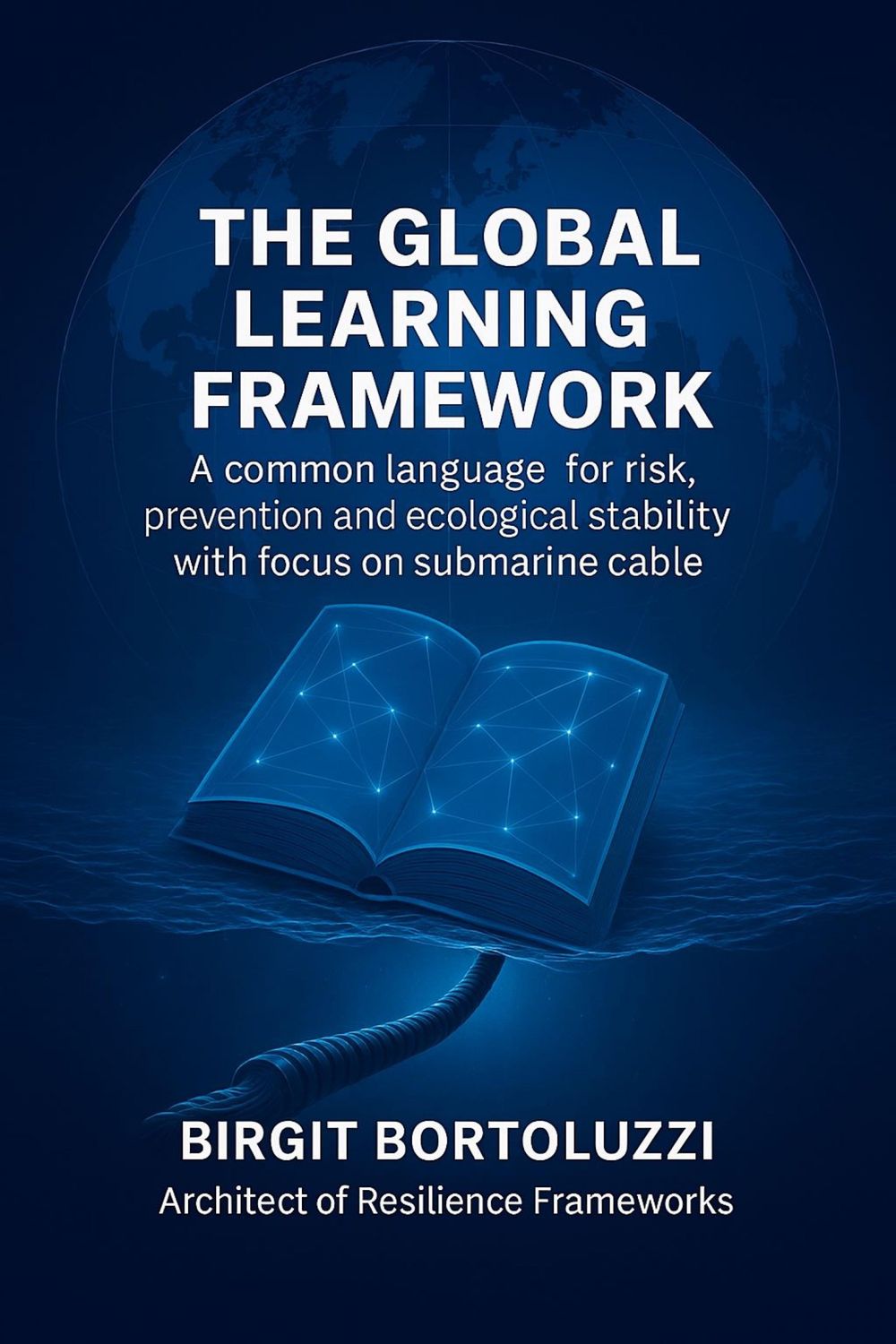


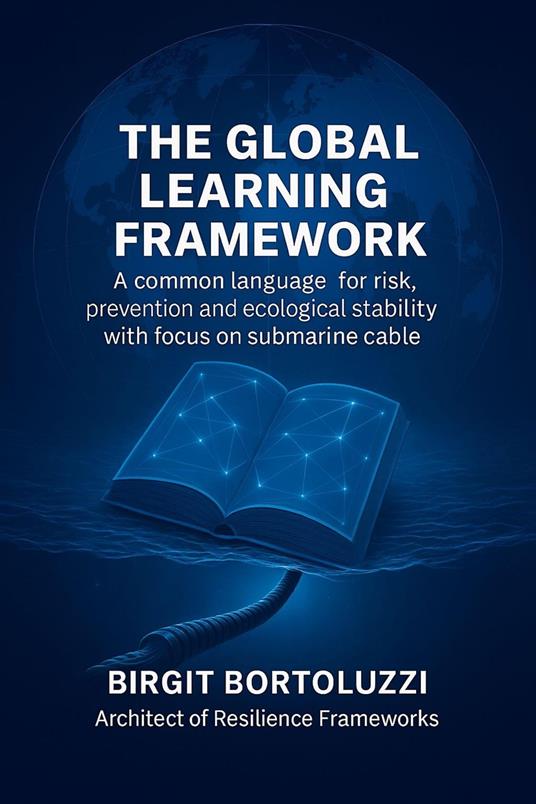
As the world grows more complex, understanding becomes a collective rather than an individual act. Systems do not react sequentially but simultaneously; developments overlap; and decisions emerge within a field of diverse signals and perspectives. Stability in such a world is no longer a static condition but a question of how we perceive, connect, interpret, and act when signals are fragmented and time windows are narrow. The Global Learning Framework (GLF) begins precisely here: as a universal meta architecture that does not simplify complexity but makes it intelligible. It translates six foundational concepts — visibility, structure, dynamics, interfaces, instability and capacity to act — into a circular mode of shared learning. Within this rhythm, the four pillars SEE, CONNECT, INTERPRET and ACT function not as linear steps but as recurring movements of collective sense making. The GLF does not replace existing methods; it provides a shared language that aligns heterogeneous data, perspectives and decision logics within an integrated risk and learning architecture. The GeoResilience Compass extends this by adding a spatial dynamic dimension, showing where instabilities may emerge, how they propagate, and which interventions could be systemically effective. Subsea cables illustrate this interplay: they combine technical precision, ecological sensitivity, maritime reality and institutional responsibility within a single system whose risks become visible only when multiple signals are considered together. The Subsea Edition demonstrates how the GLF can operate in a highly dynamic, ambiguous and internationally shared environment — while remaining equally relevant to epidemiology, urban resilience, energy systems, ecosystems, critical infrastructures and governance. In a time when global risks are increasingly intertwined and stability depends on anticipatory design rather than reaction, the GLF offers a way to see, connect, interpret, act and learn together.
-
Autore:
-
Anno edizione:2026
-
Editore:
-
Formato:
-
Lingua:Inglese
Compatibilità:
Tutti i dispositivi (eccetto Kindle) Scopri di più
Layout:
Reflowable
EAN:
9783565227754

Formato:
Gli eBook venduti da Feltrinelli.it sono in formato ePub e possono essere protetti da Adobe DRM. In caso di download di un file protetto da DRM si otterrà un file in formato .acs, (Adobe Content Server Message), che dovrà essere aperto tramite Adobe Digital Editions e autorizzato tramite un account Adobe, prima di poter essere letto su pc o trasferito su dispositivi compatibili.
Cloud:
Gli eBook venduti da Feltrinelli.it sono sincronizzati automaticamente su tutti i client di lettura Kobo successivamente all’acquisto. Grazie al Cloud Kobo i progressi di lettura, le note, le evidenziazioni vengono salvati e sincronizzati automaticamente su tutti i dispositivi e le APP di lettura Kobo utilizzati per la lettura.
Clicca qui per sapere come scaricare gli ebook utilizzando un pc con sistema operativo Windows
