










EBOOK IN LINGUA STRANIERA





Heredity Explored

32,13 €
+320
punti 
Venditore: Feltrinelli

Acquista online
Scaricabile subito
Articolo acquistabile con Carta del Docente

Articolo acquistabile con Carta Cultura Giovani e Carta del Merito

Articolo acquistabile con Carta della Cultura

Dati e Statistiche
 Salvato in 0 liste dei desideri
Salvato in 0 liste dei desideri
Heredity Explored
Scaricabile subito
32,13 €
32,13 €
Scaricabile subito
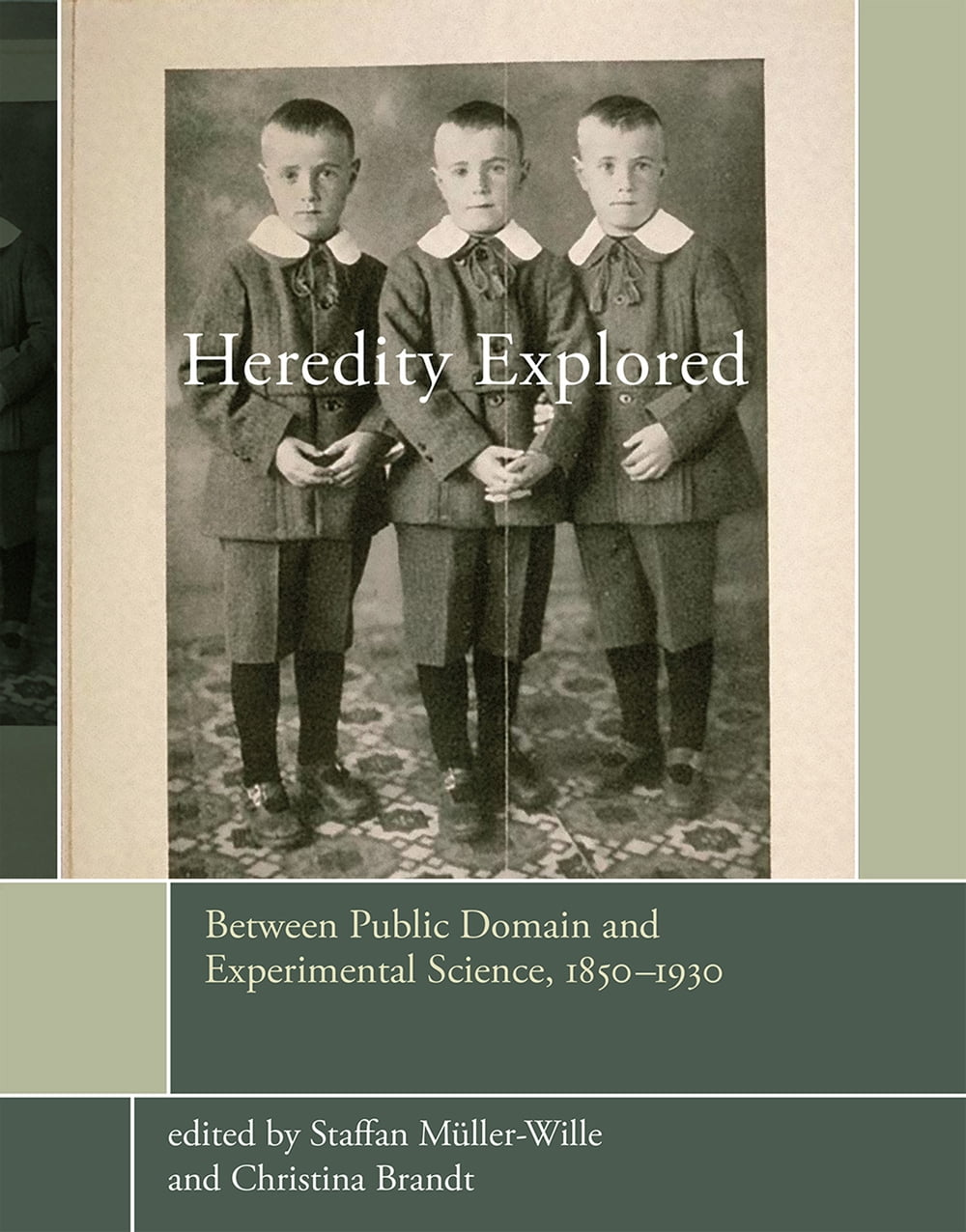



Investigations of how the understanding of heredity developed in scientific, medical, agro-industrial, and political contexts of the late nineteenth and early twentieth centuries. This book examines the wide range of scientific and social arenas in which the concept of inheritance gained relevance in the late nineteenth and early twentieth centuries. Although genetics emerged as a scientific discipline during this period, the idea of inheritance also played a role in a variety of medical, agricultural, industrial, and political contexts. The book, which follows an earlier collection, Heredity Produced (covering the period 1500 to 1870), addresses heredity in national debates over identity, kinship, and reproduction; biopolitical conceptions of heredity, degeneration, and gender; agro-industrial contexts for newly emerging genetic rationality; heredity and medical research; and the genealogical constructs and experimental systems of genetics that turned heredity into a representable and manipulable object. Taken together, the essays in Heredity Explored show that a history of heredity includes much more than the history of genetics, and that knowledge of heredity was always more than the knowledge formulated as Mendelism. It was the broader public discourse of heredity in all its contexts that made modern genetics possible. Contributors Caroline Arni, Christophe Bonneuil, Christina Brandt, Luis Campos, Jean-Paul Gaudillière, Bernd Gausemeier, Jean Gayon, Veronika Lipphardt, Ilana Löwy, J. Andrew Mendelsohn, Staffan Müller-Wille, Diane B. Paul, Theodore M. Porter, Alain Pottage, Hans-Jörg Rheinberger, Marsha L. Richmond, Helga Satzinger, Judy Johns Schloegel, Alexander von Schwerin, Hamish G. Spencer, Ulrike Vedder
-
Curatore:
-
Anno edizione:2016
-
Editore:
-
Formato:
Lingua:
Inglese
Compatibilità:
Tutti i dispositivi (eccetto Kindle) Scopri di più
Layout:
Reflowable
EAN:
9780262332286

Formato:
Gli eBook venduti da Feltrinelli.it sono in formato ePub e possono essere protetti da Adobe DRM. In caso di download di un file protetto da DRM si otterrà un file in formato .acs, (Adobe Content Server Message), che dovrà essere aperto tramite Adobe Digital Editions e autorizzato tramite un account Adobe, prima di poter essere letto su pc o trasferito su dispositivi compatibili.
Cloud:
Gli eBook venduti da Feltrinelli.it sono sincronizzati automaticamente su tutti i client di lettura Kobo successivamente all’acquisto. Grazie al Cloud Kobo i progressi di lettura, le note, le evidenziazioni vengono salvati e sincronizzati automaticamente su tutti i dispositivi e le APP di lettura Kobo utilizzati per la lettura.
Clicca qui per sapere come scaricare gli ebook utilizzando un pc con sistema operativo Windows
