









EBOOK IN LINGUA STRANIERA





Intracellular Delivery III

131,03 €
+1310
punti 
Venditore: Feltrinelli

Acquista online
Scaricabile subito
Articolo acquistabile con Carta del Docente

Articolo acquistabile con Carta Cultura Giovani e Carta del Merito

Articolo acquistabile con Carta della Cultura

Dati e Statistiche
 Salvato in 0 liste dei desideri
Salvato in 0 liste dei desideri
Intracellular Delivery III
Scaricabile subito
131,03 €
131,03 €
Scaricabile subito
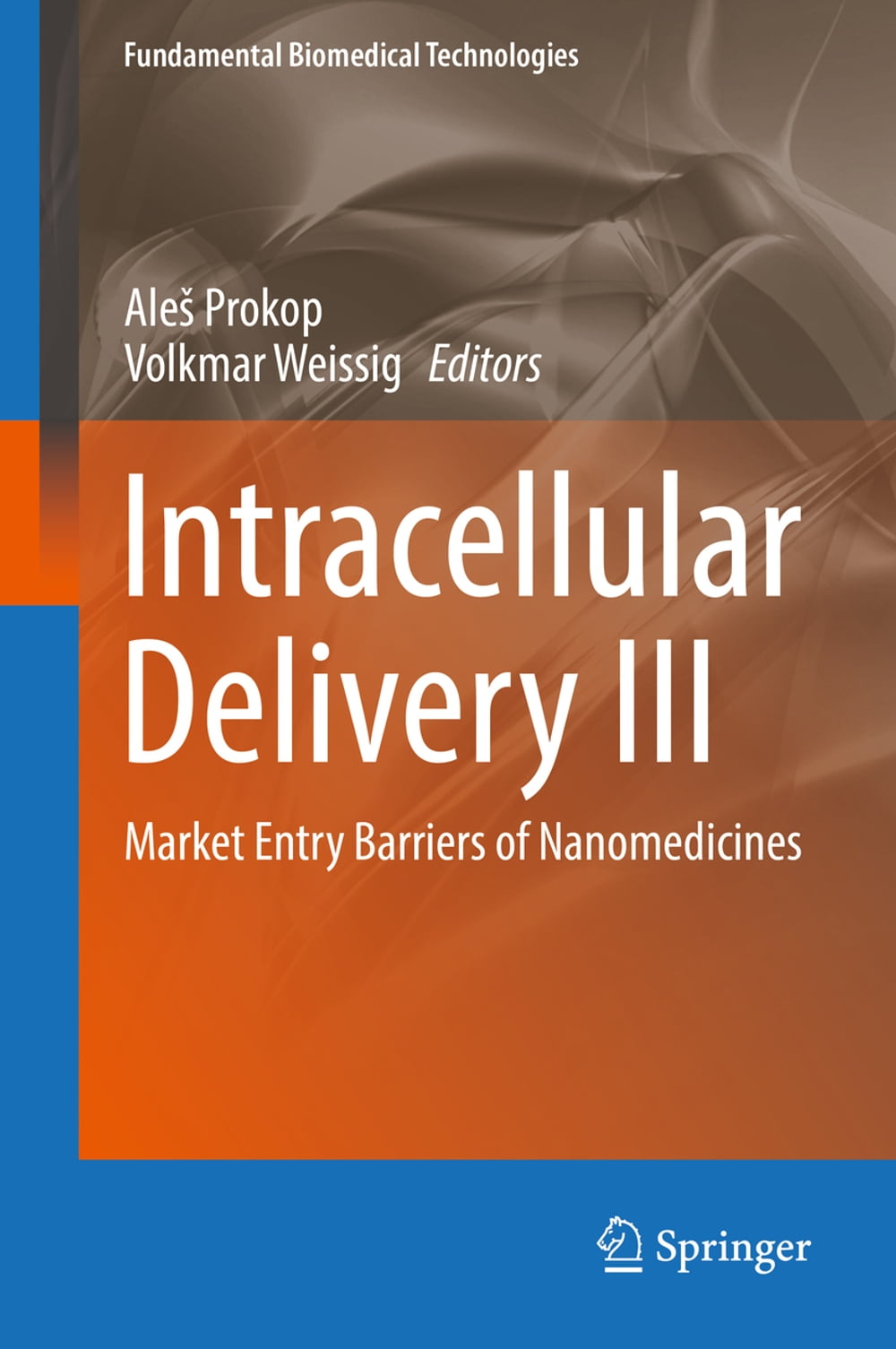


A critical review is attempted to assess the status of nanomedicine entry onto the market. The emergence of new potential therapeutic entities such as DNA and RNA fragments requires that these new “drugs” will need to be delivered in a cell-and organelle-specific manner. Although efforts have been made over the last 50 years or so to develop such delivery technology, no effective and above all clinically approved protocol for cell-specific drug delivery in humans exists as yet. Various particles, macromolecules, liposomes and most recently “nanomaterials” have been said to “show promise” but none of these promises have so far been “reduced” to human clinical practice. The focus of this volume is on cancer indication since the majority of published research relates to this application; within that, we focus on solid tumors (solid malignancies). Our aim is critically to evaluate whether nanomaterials, both non-targeted and targeted to specific cells, could be of therapeutic benefit in clinical practice. The emphasis of this volume will be on pharmacokinetics (PK) and pharmacodynamics (PD) in animal and human studies. Apart from the case of exquisitely specific antibody-based drugs, the development of target-specific drug–carrier delivery systems has not yet been broadly successful at the clinical level. It can be argued that drugs generated using the conventional means of drug development (i.e., relying on facile biodistribution and activity after (preferably) oral administration) are not suitable for a target-specific delivery and would not benefit from such delivery even when a seemingly perfect delivery system is available. Therefore, successful development of site-selective drug delivery systems will need to include not only the development of suitable carriers, but also the development of drug entities that meet the required PK/PD profile.
-
Curatore:
-
Anno edizione:2016
-
Editore:
-
Formato:
Lingua:
Inglese
Compatibilità:
Tutti i dispositivi (eccetto Kindle) Scopri di più
Layout:
Reflowable
EAN:
9783319435251

Formato:
Gli eBook venduti da Feltrinelli.it sono in formato ePub e possono essere protetti da Adobe DRM. In caso di download di un file protetto da DRM si otterrà un file in formato .acs, (Adobe Content Server Message), che dovrà essere aperto tramite Adobe Digital Editions e autorizzato tramite un account Adobe, prima di poter essere letto su pc o trasferito su dispositivi compatibili.
Cloud:
Gli eBook venduti da Feltrinelli.it sono sincronizzati automaticamente su tutti i client di lettura Kobo successivamente all’acquisto. Grazie al Cloud Kobo i progressi di lettura, le note, le evidenziazioni vengono salvati e sincronizzati automaticamente su tutti i dispositivi e le APP di lettura Kobo utilizzati per la lettura.
Clicca qui per sapere come scaricare gli ebook utilizzando un pc con sistema operativo Windows
