










EBOOK IN LINGUA STRANIERA





Navigation

7,13 €
+70
punti 
Venditore: Feltrinelli

Acquista online
Scaricabile subito
Articolo acquistabile con Carta del Docente

Articolo acquistabile con Carta Cultura Giovani e Carta del Merito

Articolo acquistabile con Carta della Cultura

Dati e Statistiche
 Salvato in 0 liste dei desideri
Salvato in 0 liste dei desideri
Navigation
Scaricabile subito
7,13 €
7,13 €
Scaricabile subito




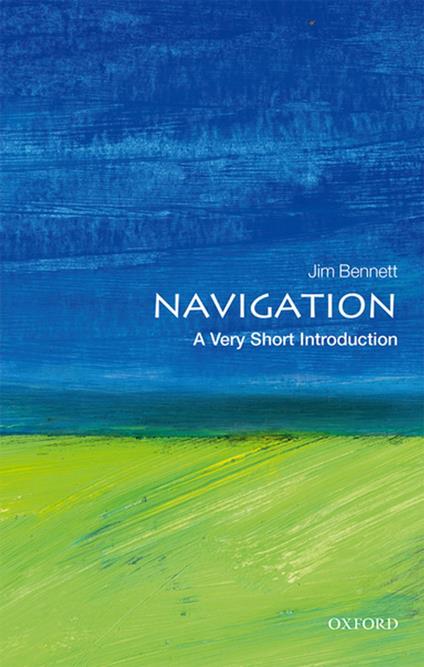
From the Bronze Age mariners of the Mediterranean to contemporary sailors using satellite-based technologies, the history of navigation at sea, the art of finding a position and setting a course, is fascinating. The scientific and technological developments that have enabled accurate measurements of position were central to exploration, trade, and the opening up of new continents, and the resulting journeys taken under their influence have had a profound influence on world history. In this Very Short Introduction Jim Bennett looks at the history of navigation, starting with the distinctive cultures of navigation that are defined geographically - the Mediterranean Sea, and the Pacific, Indian, and Atlantic Oceans. He shows how the adoption of mathematical methods, the use of instruments, the writing of textbooks and the publication of charts all combined to create a more standardised practice. Methods such as longitude-finding by chronometer and lunar distance were complemented by the routine business of recording courses and reckoning position 'by account'. Bennett also introduces the incredible array of instruments relied on by sailors, from astrolabes, sextants, and chronometers, to our more modern radio receivers, electronic equipment, and charts, and highlights the crucial role played by the individual qualities of endeavour and resourcefulness from mathematicians, scientists, and seamen in finding their way at sea. The story of navigation combines the societal, the technical, and the human, and it was vital for shaping the modern world. ABOUT THE SERIES: The Very Short Introductions series from Oxford University Press contains hundreds of titles in almost every subject area. These pocket-sized books are the perfect way to get ahead in a new subject quickly. Our expert authors combine facts, analysis, perspective, new ideas, and enthusiasm to make interesting and challenging topics highly readable.
-
Autore:
-
Anno edizione:2017
-
Editore:
-
Formato:
-
Lingua:Inglese
Compatibilità:
Tutti i dispositivi (eccetto Kindle) Scopri di più
Layout:
Reflowable
EAN:
9780191053450

Formato:
Gli eBook venduti da Feltrinelli.it sono in formato ePub e possono essere protetti da Adobe DRM. In caso di download di un file protetto da DRM si otterrà un file in formato .acs, (Adobe Content Server Message), che dovrà essere aperto tramite Adobe Digital Editions e autorizzato tramite un account Adobe, prima di poter essere letto su pc o trasferito su dispositivi compatibili.
Cloud:
Gli eBook venduti da Feltrinelli.it sono sincronizzati automaticamente su tutti i client di lettura Kobo successivamente all’acquisto. Grazie al Cloud Kobo i progressi di lettura, le note, le evidenziazioni vengono salvati e sincronizzati automaticamente su tutti i dispositivi e le APP di lettura Kobo utilizzati per la lettura.
Clicca qui per sapere come scaricare gli ebook utilizzando un pc con sistema operativo Windows
