










EBOOK IN LINGUA STRANIERA





Occupied Words

32,44 €
+320
punti 
Venditore: Feltrinelli

Acquista online
Scaricabile subito
Articolo acquistabile con Carta del Docente

Articolo acquistabile con Carta Cultura Giovani e Carta del Merito

Articolo acquistabile con Carta della Cultura

Dati e Statistiche
 Salvato in 0 liste dei desideri
Salvato in 0 liste dei desideri
Occupied Words
Scaricabile subito
32,44 €
32,44 €
Scaricabile subito

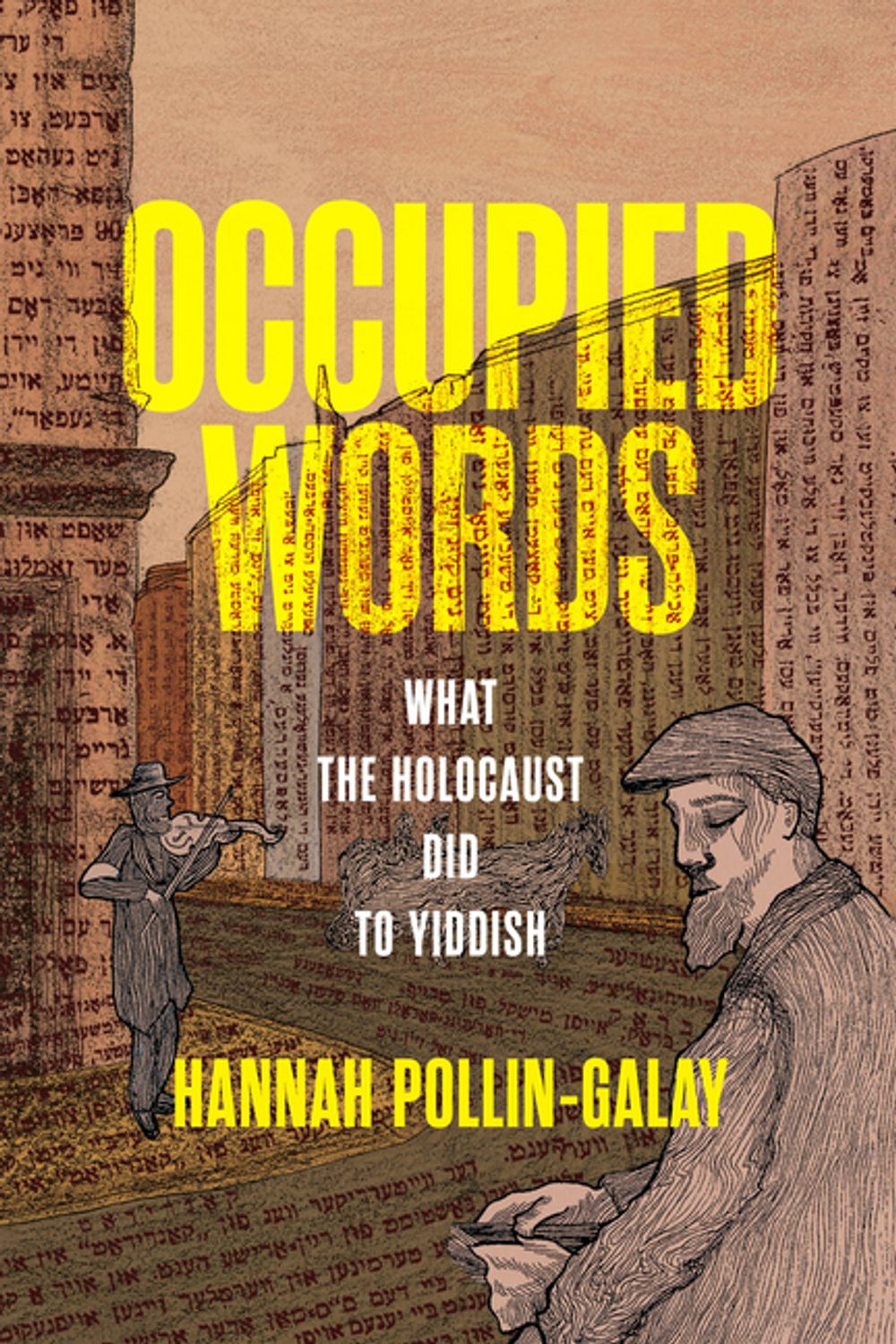


How Yiddish changed to express and memorialize the trauma of the Holocaust The Holocaust radically altered the way many East European Jews spoke Yiddish. Finding prewar language incapable of describing the imprisonment, death, and dehumanization of the Shoah, prisoners added or reinvented thousands of Yiddish words and phrases to describe their new reality. These crass, witty, and sometimes beautiful Yiddish words – Khurbn Yiddish, or “Yiddish of the Holocaust” – puzzled and intrigued the East European Jews who were experiencing the metamorphosis of their own tongue in real time. Sensing that Khurbn Yiddish words harbored profound truths about what Jews endured during the Holocaust, some Yiddish speakers threw themselves into compiling dictionaries and glossaries to document and analyze these new words. Others incorporated Khurbn Yiddish into their poetry and prose. In Occupied Words, Hannah Pollin-Galay explores Khurbn Yiddish as a form of Holocaust memory and as a testament to the sensation of speech under genocidal conditions. Occupied Words investigates Khurbn Yiddish through the lenses of cultural history, philology, and literary interpretation. Analyzing fragments of language consciousness left behind from the camps and ghettos alongside the postwar journeys of three intellectuals—Nachman Blumental, Israel Kaplan and Elye Spivak—Pollin-Galay seeks to understand why people chose Yiddish lexicography as a means of witnessing the Holocaust. She then turns to the Khurbn Yiddish words themselves, focusing on terms related to theft, the German-Yiddish encounter and the erotic female body. Here, the author unearths new perspectives on how Jews experienced daily life under Nazi occupation, while raising questions about language and victimhood. Lastly, the book explores how writers turned ghetto and camp slang into art—highlighting the poetry and fiction of K. Tzetnik (Yehiel Di-Nur) and Chava Rosenfarb. Ultimately, Occupied Words speaks to broader debates about cultural genocide, asking how we might rethink the concept of genocide through the framework of language.
-
Autore:
-
Anno edizione:2024
-
Editore:
-
Formato:
-
Lingua:Inglese
Compatibilità:
Tutti i dispositivi (eccetto Kindle) Scopri di più
Layout:
Reflowable
EAN:
9781512825916

Formato:
Gli eBook venduti da Feltrinelli.it sono in formato ePub e possono essere protetti da Adobe DRM. In caso di download di un file protetto da DRM si otterrà un file in formato .acs, (Adobe Content Server Message), che dovrà essere aperto tramite Adobe Digital Editions e autorizzato tramite un account Adobe, prima di poter essere letto su pc o trasferito su dispositivi compatibili.
Cloud:
Gli eBook venduti da Feltrinelli.it sono sincronizzati automaticamente su tutti i client di lettura Kobo successivamente all’acquisto. Grazie al Cloud Kobo i progressi di lettura, le note, le evidenziazioni vengono salvati e sincronizzati automaticamente su tutti i dispositivi e le APP di lettura Kobo utilizzati per la lettura.
Clicca qui per sapere come scaricare gli ebook utilizzando un pc con sistema operativo Windows
