









LIBRO INGLESE





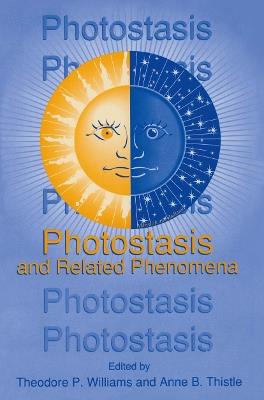
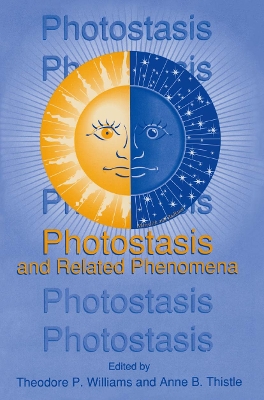
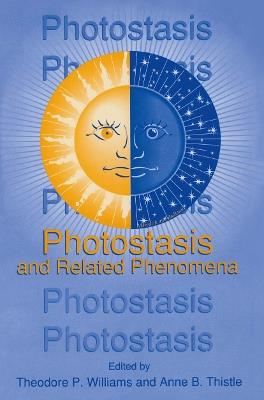
Photostasis and Related Phenomena


212,50 €
+2130
punti 
Venditore: Feltrinelli
Articolo acquistabile con Carta del Docente

Articolo acquistabile con Carta Cultura Giovani e Carta del Merito

Articolo acquistabile con Carta della Cultura

Paga con Klarna in 3 rate senza interessi per ordini superiori a 39 €

Dati e Statistiche
 Salvato in 0 liste dei desideri
Salvato in 0 liste dei desideri
Photostasis and Related Phenomena
Disponibilità in 2 settimane
212,50 €
212,50 €
Disponibilità in 2 settimane


Over the weekend of 21-23 February 1997, a small group gathered in Tallahassee, Florida, at the invitation of Ted Williams, to discuss "photo stasis and related topics." The majority of participants were former students and colleagues of Ted's, but an occasional outsider such as myself was generously included. The papers presented there are collected in this volume. The theory of photo stasis was first outlined in a landmark paper by John Penn and Ted, published in 1986 in Experimental Eye Research. They provided compelling data showing that, in the albino rat eye, levels of rhodopsin, outer-segment length, rhodopsin regeneration rate, and even, perhaps, rhodopsin packing density all depend on the levels of cyclic illumination (12 hours light, 12 hours dark) in which the animal was reared. So, for example, there is fourfold less rhodopsin in a retinal extract derived from an animal reared at 400 lux than in an extract from the retina of an animal reared at 3 lux. Animals reared at intermediate levels of light show intermediate amounts of rhodopsin that are correlated with illumination level. What these data immediately suggested is that the photoreceptor cell can adjust its photon-catching ability in response to the levels of light in which an animal is reared, and they also provided a compelling rationale for outer-segment turnover, a phenomenon discovered 20 years earlier by Richard Young but whose function has remained obscure.
-
Curatore:
-
Editore:
-
Anno:2013
-
Rilegatura:Paperback / softback
Pagine:
225 p.
Testo in English
Dimensioni:
235 x 155 mm
EAN:
9781489915511

Informazioni e Contatti sulla Sicurezza dei Prodotti
Le schede prodotto sono aggiornate in conformità al Regolamento UE 988/2023. Laddove ci fossero taluni dati non disponibili per ragioni indipendenti da Feltrinelli, vi informiamo che stiamo compiendo ogni ragionevole sforzo per inserirli. Vi invitiamo a controllare periodicamente il sito www.lafeltrinelli.it per eventuali novità e aggiornamenti.
Per le vendite di prodotti da terze parti, ciascun venditore si assume la piena e diretta responsabilità per la commercializzazione del prodotto e per la sua conformità al Regolamento UE 988/2023, nonché alle normative nazionali ed europee vigenti.
Per informazioni sulla sicurezza dei prodotti, contattare productsafety@feltrinelli.it
