









EBOOK IN LINGUA STRANIERA





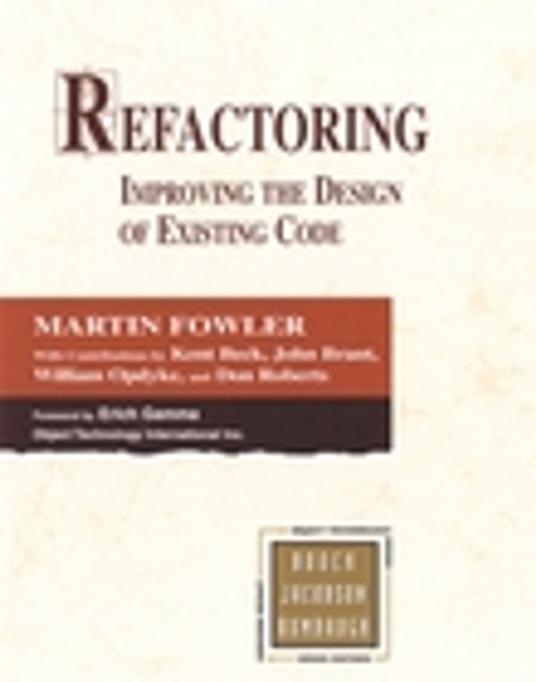
Refactoring: Improving the Design of Existing Code

41,80 €
+420
punti 
Venditore: Feltrinelli

Acquista online
Scaricabile subito
Articolo acquistabile con Carta del Docente

Articolo acquistabile con Carta Cultura Giovani e Carta del Merito

Articolo acquistabile con Carta della Cultura

Dati e Statistiche
 Salvato in 0 liste dei desideri
Salvato in 0 liste dei desideri
Refactoring: Improving the Design of Existing Code
Scaricabile subito
41,80 €
41,80 €
Scaricabile subito
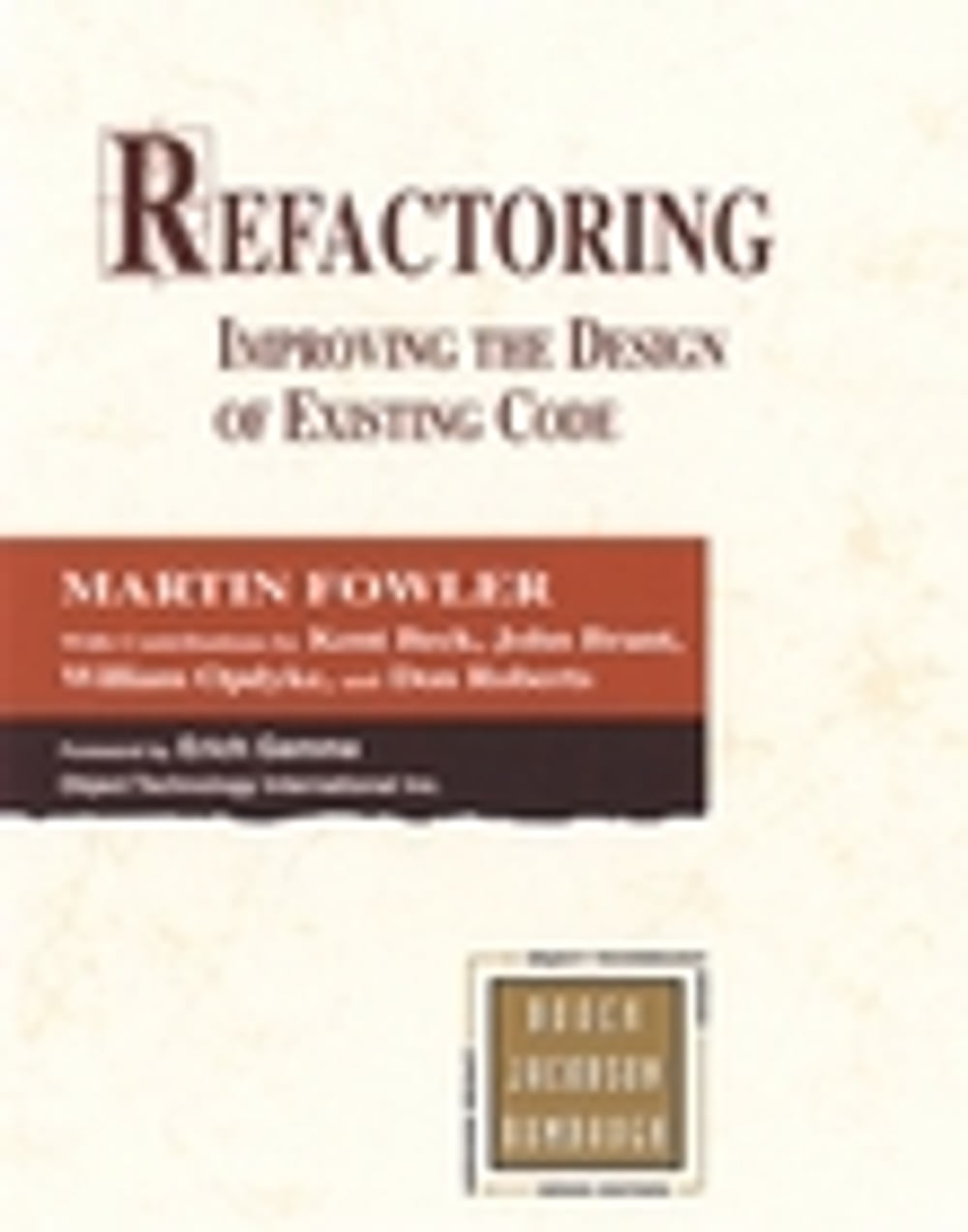


As the application of object technology--particularly the Java programming language--has become commonplace, a new problem has emerged to confront the software development community. Significant numbers of poorly designed programs have been created by less-experienced developers, resulting in applications that are inefficient and hard to maintain and extend. Increasingly, software system professionals are discovering just how difficult it is to work with these inherited, "non-optimal" applications. For several years, expert-level object programmers have employed a growing collection of techniques to improve the structural integrity and performance of such existing software programs. Referred to as "refactoring," these practices have remained in the domain of experts because no attempt has been made to transcribe the lore into a form that all developers could use. . .until now. In Refactoring: Improving the Design of Existing Code, renowned object technology mentor Martin Fowler breaks new ground, demystifying these master practices and demonstrating how software practitioners can realize the significant benefits of this new process. With proper training a skilled system designer can take a bad design and rework it into well-designed, robust code. In this book, Martin Fowler shows you where opportunities for refactoring typically can be found, and how to go about reworking a bad design into a good one. Each refactoring step is simple--seemingly too simple to be worth doing. Refactoring may involve moving a field from one class to another, or pulling some code out of a method to turn it into its own method, or even pushing some code up or down a hierarchy. While these individual steps may seem elementary, the cumulative effect of such small changes can radically improve the design. Refactoring is a proven way to prevent software decay. In addition to discussing the various techniques of refactoring, the author provides a detailed catalog of more than seventy proven refactorings with helpful pointers that teach you when to apply them; step-by-step instructions for applying each refactoring; and an example illustrating how the refactoring works. The illustrative examples are written in Java, but the ideas are applicable to any object-oriented programming language.
-
Autore:
-
Anno edizione:2012
-
Editore:
-
Formato:
-
Lingua:Inglese
Compatibilità:
Tutti i dispositivi (eccetto Kindle) Scopri di più
Layout:
Reflowable
EAN:
9780133065268

Formato:
Gli eBook venduti da Feltrinelli.it sono in formato ePub e possono essere protetti da Adobe DRM. In caso di download di un file protetto da DRM si otterrà un file in formato .acs, (Adobe Content Server Message), che dovrà essere aperto tramite Adobe Digital Editions e autorizzato tramite un account Adobe, prima di poter essere letto su pc o trasferito su dispositivi compatibili.
Cloud:
Gli eBook venduti da Feltrinelli.it sono sincronizzati automaticamente su tutti i client di lettura Kobo successivamente all’acquisto. Grazie al Cloud Kobo i progressi di lettura, le note, le evidenziazioni vengono salvati e sincronizzati automaticamente su tutti i dispositivi e le APP di lettura Kobo utilizzati per la lettura.
Clicca qui per sapere come scaricare gli ebook utilizzando un pc con sistema operativo Windows
