










LIBRO INGLESE





Short-term Visual Information Forgetting (PLE: Memory)

64,10 €
+640
punti 
Venditore: Feltrinelli
Articolo acquistabile con Carta del Docente

Articolo acquistabile con Carta Cultura Giovani e Carta del Merito

Articolo acquistabile con Carta della Cultura

Paga con Klarna in 3 rate senza interessi per ordini superiori a 39 €

Dati e Statistiche
 Salvato in 0 liste dei desideri
Salvato in 0 liste dei desideri
Short-term Visual Information Forgetting (PLE: Memory)
Disponibilità in 2 settimane
64,10 €
64,10 €
Disponibilità in 2 settimane
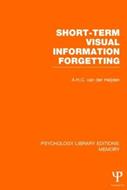




When this title was originally published in 1981, the information processing approach to perception and memory was dominant in experimental psychology, and the research reported here had major implications for future development. After exploring the shortcomings of earlier work in this field, the author develops a new model which he shows to be capable of accounting for a variety of experimental data connected with human information processing, visual perception and attention. The central theme which is discussed is how we select relevant and discard irrelevant information. The basic assumption is that all incoming information is identified, that is, it reaches and activates the appropriate lexical entries. A piece of identified information is described as a unit consisting of three distinguishable codes: a visual code, a lexical or semantic code and a motor or action code. Identified information decays fast, so selective attention operates by selecting those units which have to be saved from this rapid decay. In a sense, therefore, the human information processor is described as struggling against forgetting.
-
Autore:
-
Editore:
-
Collana:Psychology Library Editions: Memory
-
Anno:2014
-
Rilegatura:Hardback
-
Pagine:240 p.
Testo in English
Dimensioni:
234 x 156 mm
Peso:
498 gr.
EAN:
9781848723580

Informazioni e Contatti sulla Sicurezza dei Prodotti
Le schede prodotto sono aggiornate in conformità al Regolamento UE 988/2023. Laddove ci fossero taluni dati non disponibili per ragioni indipendenti da Feltrinelli, vi informiamo che stiamo compiendo ogni ragionevole sforzo per inserirli. Vi invitiamo a controllare periodicamente il sito www.lafeltrinelli.it per eventuali novità e aggiornamenti.
Per le vendite di prodotti da terze parti, ciascun venditore si assume la piena e diretta responsabilità per la commercializzazione del prodotto e per la sua conformità al Regolamento UE 988/2023, nonché alle normative nazionali ed europee vigenti.
Per informazioni sulla sicurezza dei prodotti, contattare productsafety@feltrinelli.it
