










LIBRO INGLESE





Tajikistan on the Move: Statebuilding and Societal Transformations

186,90 €
+1870
punti 
Venditore: Feltrinelli
Articolo acquistabile con Carta del Docente

Articolo acquistabile con Carta Cultura Giovani e Carta del Merito

Articolo acquistabile con Carta della Cultura

Paga con Klarna in 3 rate senza interessi per ordini superiori a 39 €

Dati e Statistiche
 Salvato in 0 liste dei desideri
Salvato in 0 liste dei desideri
Tajikistan on the Move: Statebuilding and Societal Transformations
Disponibilità in 2 settimane
186,90 €
186,90 €
Disponibilità in 2 settimane

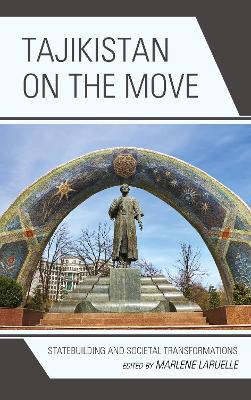



The southernmost and poorest state of the Eurasian space, Tajikistan collapsed immediately upon the fall of the Soviet Union and plunged into a bloody five-year civil war (1992–1997) that left more than 50,000 people dead and more than half a million displaced. After the 1997 Peace Agreements, Tajikistan stood out for being the only post-Soviet country to recognize an Islamic party—the Islamic Renaissance Party of Tajikistan (IRPT)—as a key actor in the civil war as well as in postwar reconstruction and democratization. Tajikistan’s linguistic and cultural proximity to Iran notwithstanding, the balance of external powers over the country remains fairly typical of Central Asia, with Russia as the major security provider and China as its principal investor. Another specificity of Tajikistan is its massive labor migration flows toward Russia. Out of a population of eight million, about one million work abroad seasonally—one of the highest rates of departure in the world. Migration trends have impacted Tajikistan’s economy and rent mechanisms: half of the country’s GDP comes from migrant remittances, a higher share than anywhere else in the world. However, it is in the societal and cultural realms that migration has had the most transformative effect. Migrants’ cultural and societal identities are on the move, with a growing role given to Islam as a normative tool for regulating the cultural shock of migration. Islam, and especially a globalized fundamentalist pietist movement, regulates both physical and moral security in workplace and other settings, and brings migrants together to make their interactions meaningful and socio-politically relevant. It offers a new social prestige to those who work in an environment seen as threatening to their Islamic identity. The first section of this volume investigates the critical question of the nature of the Tajik political regime, its stability, legitimacy mechanisms, and patterns of centralization. In the volume’s second part, we move away from studying the state to delve into the societal fabric of Tajikistan, shaped by local rural specificities and social vulnerabilities in the health sector and gender relationships. The third section of the volume is devoted to identity narratives and changes. While the Tajik regime works hard to control the national narrative and the interpretation of the civil war, society is literally and figuratively on the move, as migration profoundly reshapes societal structures and cultural values.
-
Curatore:
-
Editore:
-
Collana:Contemporary Central Asia: Societies, Politics, and Cultures
-
Anno:2018
-
Rilegatura:Hardback
Pagine:
336 p.
Testo in English
Dimensioni:
229 x 160 mm
Peso:
717 gr.
EAN:
9781498546515

Informazioni e Contatti sulla Sicurezza dei Prodotti
Le schede prodotto sono aggiornate in conformità al Regolamento UE 988/2023. Laddove ci fossero taluni dati non disponibili per ragioni indipendenti da Feltrinelli, vi informiamo che stiamo compiendo ogni ragionevole sforzo per inserirli. Vi invitiamo a controllare periodicamente il sito www.lafeltrinelli.it per eventuali novità e aggiornamenti.
Per le vendite di prodotti da terze parti, ciascun venditore si assume la piena e diretta responsabilità per la commercializzazione del prodotto e per la sua conformità al Regolamento UE 988/2023, nonché alle normative nazionali ed europee vigenti.
Per informazioni sulla sicurezza dei prodotti, contattare productsafety@feltrinelli.it
