










LIBRO INGLESE





Vanadium in Biological Systems: Physiology and Biochemistry


207,60 €
+2080
punti 
Venditore: Feltrinelli
Articolo acquistabile con Carta del Docente

Articolo acquistabile con Carta Cultura Giovani e Carta del Merito

Articolo acquistabile con Carta della Cultura

Paga con Klarna in 3 rate senza interessi per ordini superiori a 39 €

Dati e Statistiche
 Salvato in 0 liste dei desideri
Salvato in 0 liste dei desideri
Vanadium in Biological Systems: Physiology and Biochemistry
Disponibilità in 2 settimane
207,60 €
207,60 €
Disponibilità in 2 settimane
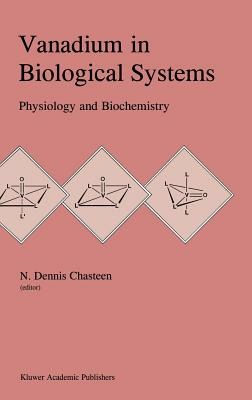


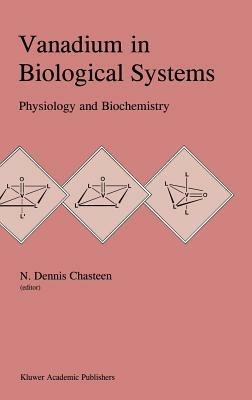
Over the past several decades, vanadium has increasingly attracted the interest of biologists and chemists. The discovery by Henze in 1911 that certain marine ascidians accumulate the metal in their blood cells in unusually large quantities has done much to stimulate research on the role of vanadium in biology. In the intervening years, a large number of studies have been carried out to investigate the toxicity of vanadium in higher animals and to determine whether it is an essential trace element. That vanadium is a required element for a few selected organisms is now well established. Whether vanadium is essential for humans remains unclear although evidence increasingly suggests that it probably is. The discovery by Cantley in 1977 that vanadate is a potent inhibitor of ATPases lead to numerous studies of the inhibitory and stimulatory effects of vanadium on phosphate metabolizing enzymes. As a consequence vanadates are now routinely used as probes to investigate the mechanisms of such enzymes. Our understanding of vanadium in these systems has been further enhanced by the work of Tracy and Gresser which has shown striking parallels between the chemistry of vanadates and phosphates and their biological compounds. The observation by Shechter and Karlish, and Dubyak and Kleinzeller in 1980 that vanadate is an insulin mimetic agent has opened a new area of research dealing with the hormonal effects of vanadium. The first vanadium containing enzyme, a bromoperoxidase from the marine alga Ascophyllum nodosum, was isolated in 1984 by Viltner.
-
Curatore:
-
Editore:
-
Anno:1990
-
Rilegatura:Hardback
Pagine:
226 p.
Testo in English
Dimensioni:
235 x 155 mm
EAN:
9780792307334

Informazioni e Contatti sulla Sicurezza dei Prodotti
Le schede prodotto sono aggiornate in conformità al Regolamento UE 988/2023. Laddove ci fossero taluni dati non disponibili per ragioni indipendenti da Feltrinelli, vi informiamo che stiamo compiendo ogni ragionevole sforzo per inserirli. Vi invitiamo a controllare periodicamente il sito www.lafeltrinelli.it per eventuali novità e aggiornamenti.
Per le vendite di prodotti da terze parti, ciascun venditore si assume la piena e diretta responsabilità per la commercializzazione del prodotto e per la sua conformità al Regolamento UE 988/2023, nonché alle normative nazionali ed europee vigenti.
Per informazioni sulla sicurezza dei prodotti, contattare productsafety@feltrinelli.it
