









LIBRO INGLESE





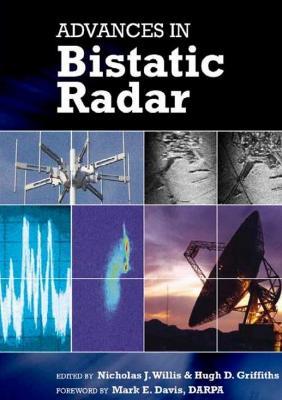
Advances in Bistatic Radar

162,50 €
+1630
punti 
Venditore: Feltrinelli
Articolo acquistabile con Carta del Docente

Articolo acquistabile con Carta Cultura Giovani e Carta del Merito

Articolo acquistabile con Carta della Cultura

Paga con Klarna in 3 rate senza interessi per ordini superiori a 39 €

Dati e Statistiche
 Salvato in 0 liste dei desideri
Salvato in 0 liste dei desideri
Advances in Bistatic Radar
Disponibile in 5 gg lavorativi
162,50 €
162,50 €
Disponibile in 5 gg lavorativi





Advances in Bistatic Radar updates and extends bistatic and multistatic radar developments since the publication of Willis' Bistatic Radar in 1991. New and recently declassified military applications are documented, civil applications are detailed including commercial and scientific systems and leading radar engineers provide expertise to each of these applications. Advances in Bistatic Radar consists of two major sections: Bistatic/Multistatic Radar Systems and Bistatic Clutter and Signal Processing. Starting with a history update, the first section documents the early and now declassified military AN/FPS-23 Fluttar DEW-Line Gap-filler, and high frequency (HF) bistatic radars developed for missile attack warning. It then documents the recently developed passive bistatic and multistatic radars exploiting commercial broadcast transmitters for military and civilian air surveillance. Next, the section documents scientific bistatic radar systems for planetary exploration, which have exploited data link transmitters over the last forty years; ionospheric measurements, again exploiting commercial broadcast transmitters; and 3-D wind field measurements using a bistatic receiver hitchhiking off doppler weather radars. This last application has been commercialized. The second section starts by documenting the full, unclassified bistatic clutter scattering coefficient data base, along with the theory and analysis supporting its development. The section then details two major clutter-related developments, spotlight bistatic synthetic aperture radar (SAR), which can now generate high resolution images using bistatic autofocus and related techniques; and adaptive moving target indication (MTI), which allows cancellation of nonstationary clutter generated by moving (i.e. airborne) platforms through the use of bistatic space-time adaptive processing (STAP).
-
Curatore:
-
Editore:
-
Collana:Radar, Sonar and Navigation
-
Anno:2007
-
Rilegatura:Hardback
Pagine:
494 p.
Testo in English
Dimensioni:
254 x 178 mm
EAN:
9781891121487

Informazioni e Contatti sulla Sicurezza dei Prodotti
Le schede prodotto sono aggiornate in conformità al Regolamento UE 988/2023. Laddove ci fossero taluni dati non disponibili per ragioni indipendenti da Feltrinelli, vi informiamo che stiamo compiendo ogni ragionevole sforzo per inserirli. Vi invitiamo a controllare periodicamente il sito www.lafeltrinelli.it per eventuali novità e aggiornamenti.
Per le vendite di prodotti da terze parti, ciascun venditore si assume la piena e diretta responsabilità per la commercializzazione del prodotto e per la sua conformità al Regolamento UE 988/2023, nonché alle normative nazionali ed europee vigenti.
Per informazioni sulla sicurezza dei prodotti, contattare productsafety@feltrinelli.it
