










EBOOK IN LINGUA STRANIERA





Artificial Intelligence in Vision-Based Structural Health Monitoring

46,79 €
+470
punti 
Venditore: Feltrinelli

Acquista online
Scaricabile subito
Articolo acquistabile con Carta del Docente

Articolo acquistabile con Carta Cultura Giovani e Carta del Merito

Articolo acquistabile con Carta della Cultura

Dati e Statistiche
 Salvato in 0 liste dei desideri
Salvato in 0 liste dei desideri
Artificial Intelligence in Vision-Based Structural Health Monitoring
Scaricabile subito
46,79 €
46,79 €
Scaricabile subito

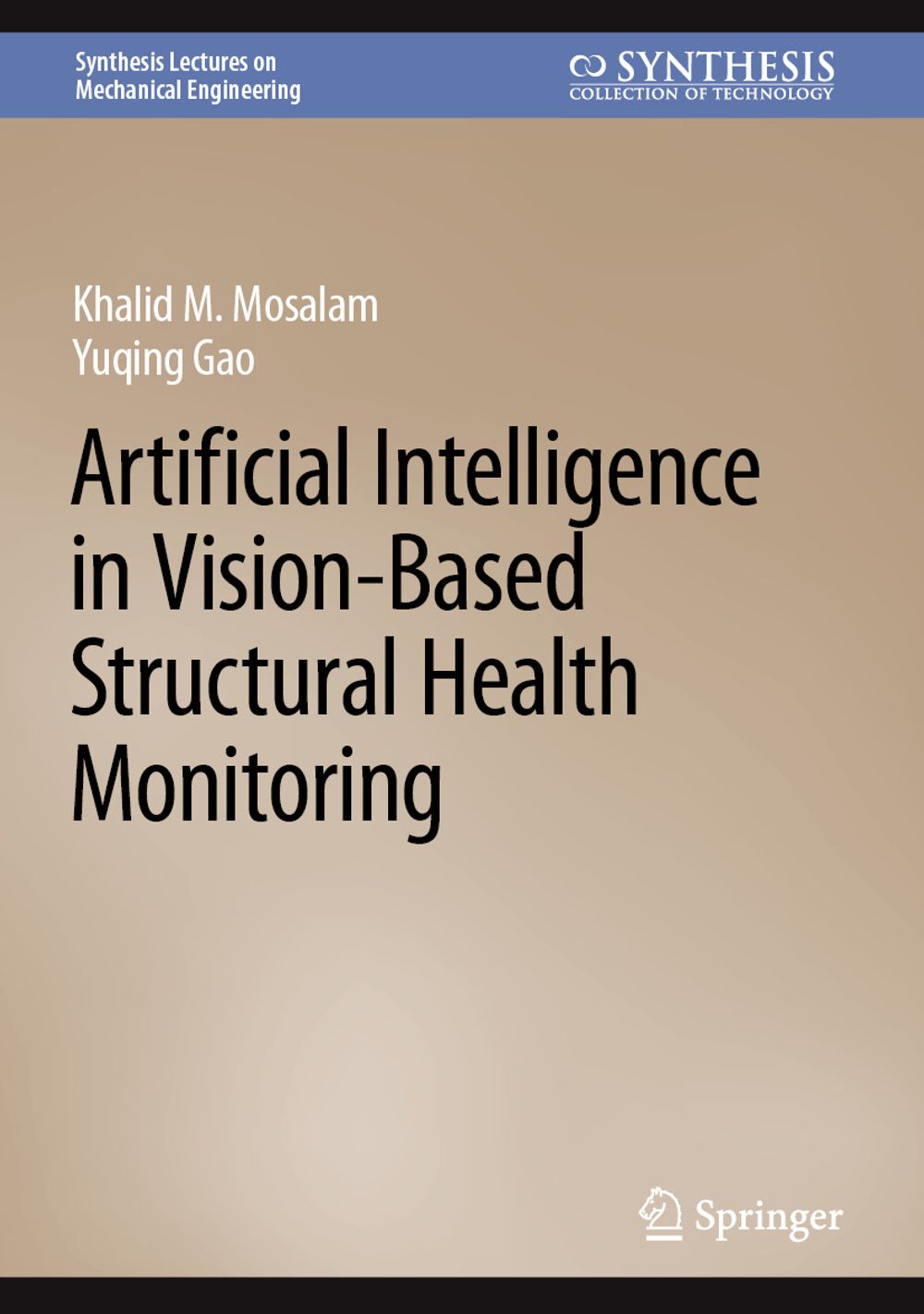



This book provides a comprehensive coverage of the state-of-the-art artificial intelligence (AI) technologies in vision-based structural health monitoring (SHM). In this data explosion epoch, AI-aided SHM and rapid damage assessment after natural hazards have become of great interest in civil and structural engineering, where using machine and deep learning in vision-based SHM brings new research direction. As researchers begin to apply these concepts to the structural engineering domain, especially in SHM, several critical scientific questions need to be addressed: (1) What can AI solve for the SHM problems? (2) What are the relevant AI technologies? (3) What is the effectiveness of the AI approaches in vision-based SHM? (4) How to improve the adaptability of the AI approaches for practical projects? (5) How to build a resilient AI-aided disaster prevention system making use of the vision-based SHM? This book introduces and implements the state-of-the-art machine learning and deep learning technologies for vision-based SHM applications. Specifically, corresponding to the above-mentioned scientific questions, it consists of: (1) motivation, background & progress of AI-aided vision-based SHM, (2) fundamentals of machine learning & deep learning approaches, (3) basic AI applications in vision-based SHM, (4) advanced topics & approaches, and (5) resilient AI-aided applications. In the introduction, a brief coverage about the development progress of AI technologies in the vision-based area is presented. It gives the readers the motivations and background of the relevant research. In Part I, basic knowledges of machine and deep learning are introduced, which provide the foundation for the readers irrespective of their background. In Part II, to verify the effectiveness of the AI methods, the key procedure of the typical AI-aided SHM applications (classification, localization, and segmentation) is explored, including vision data collection, data pre-processing,transfer learning-based training mechanism, evaluation, and analysis. In Part III, advanced AI topics, e.g., generative adversarial network, semi-supervised learning, and active learning, are discussed. They aim to address several critical issues in practical projects, e.g., the lack of well-labeled data and imbalanced labels, to improve the adaptability of the AI models. In Part IV, the new concept of “resilient AI” is introduced to establish an intelligent disaster prevention system, multi-modality learning, multi-task learning, and interpretable AI technologies. These advances are aimed towards increasing the robustness and explainability of the AI-enabled SHM system, and ultimately leading to improved resiliency. The scope covered in this book is not only beneficial for education purposes but also is essential for modern industrial applications. The target audience is broad and includes students, engineers, and researchers in civil engineering, statistics, and computer science. Unique Book Features: • Provide a comprehensive review of the rapidly expanding field of vision-based structural health monitoring (SHM) using artificial intelligence approaches. • Re-organize fundamental knowledge specific to the machine and deep learning in vision tasks. • Include comprehensive details about the procedure of conducting AI approaches for vision-based SHM along with examples and exercises. • Cover a vast array of special topics and advanced AI-enabled vision-based SHM applications. • List a few potential extensions for inspiring the readers for future investigation.
-
Autore:
-
Anno edizione:2024
-
Editore:
-
Formato:
-
Lingua:Inglese
Compatibilità:
Tutti i dispositivi (eccetto Kindle) Scopri di più
Layout:
Reflowable
EAN:
9783031524073

Formato:
Gli eBook venduti da Feltrinelli.it sono in formato ePub e possono essere protetti da Adobe DRM. In caso di download di un file protetto da DRM si otterrà un file in formato .acs, (Adobe Content Server Message), che dovrà essere aperto tramite Adobe Digital Editions e autorizzato tramite un account Adobe, prima di poter essere letto su pc o trasferito su dispositivi compatibili.
Cloud:
Gli eBook venduti da Feltrinelli.it sono sincronizzati automaticamente su tutti i client di lettura Kobo successivamente all’acquisto. Grazie al Cloud Kobo i progressi di lettura, le note, le evidenziazioni vengono salvati e sincronizzati automaticamente su tutti i dispositivi e le APP di lettura Kobo utilizzati per la lettura.
Clicca qui per sapere come scaricare gli ebook utilizzando un pc con sistema operativo Windows
