










EBOOK IN LINGUA STRANIERA





Artificial Mathematical Intelligence

46,79 €
+470
punti 
Venditore: Feltrinelli

Acquista online
Scaricabile subito
Articolo acquistabile con Carta del Docente

Articolo acquistabile con Carta Cultura Giovani e Carta del Merito

Articolo acquistabile con Carta della Cultura

Dati e Statistiche
 Salvato in 0 liste dei desideri
Salvato in 0 liste dei desideri
Artificial Mathematical Intelligence
Scaricabile subito
46,79 €
46,79 €
Scaricabile subito

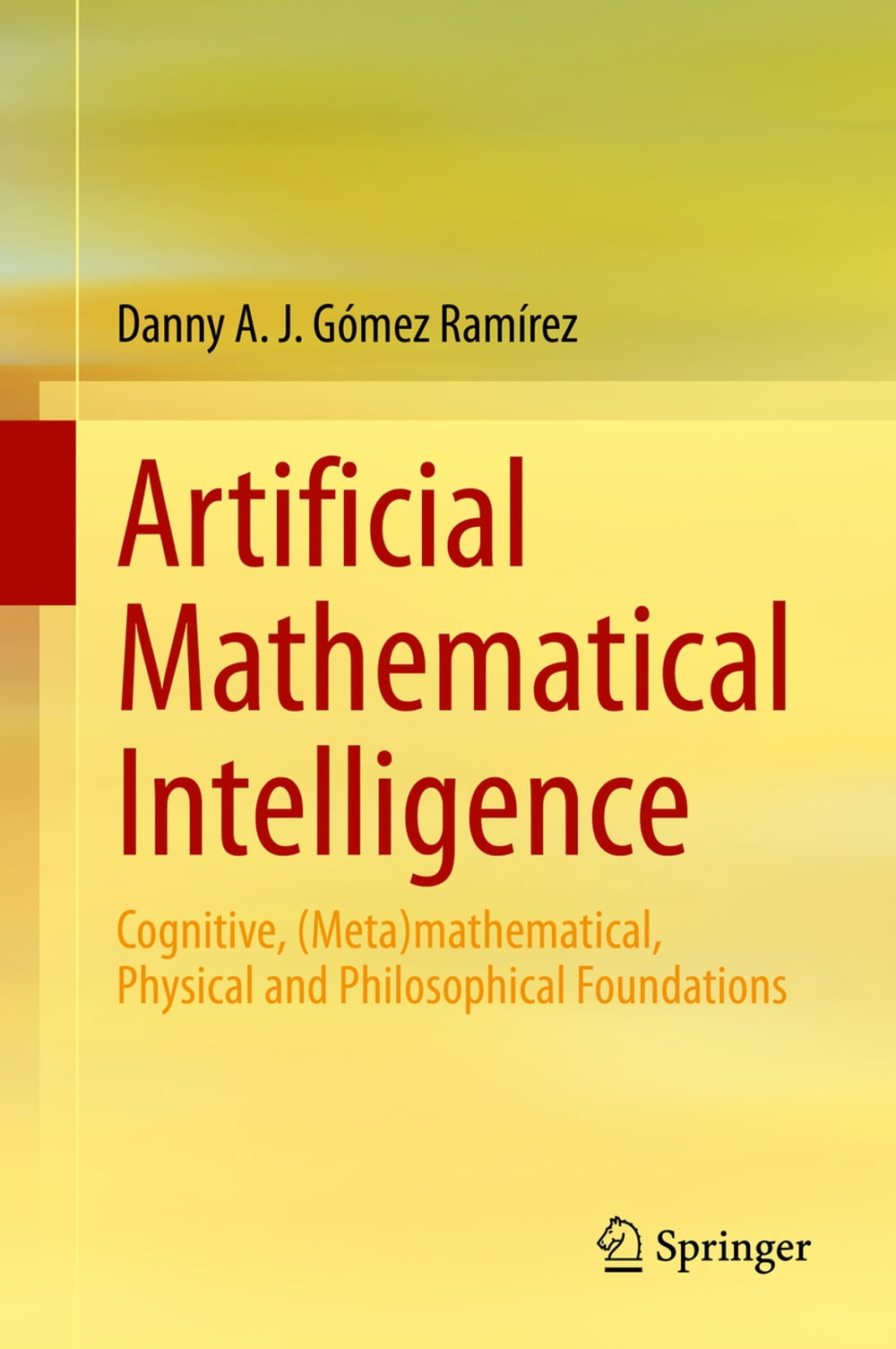


This volume discusses the theoretical foundations of a new inter- and intra-disciplinary meta-research discipline, which can be succinctly called cognitive metamathematics, with the ultimate goal of achieving a global instance of concrete Artificial Mathematical Intelligence (AMI). In other words, AMI looks for the construction of an (ideal) global artificial agent being able to (co-)solve interactively formal problems with a conceptual mathematical description in a human-style way. It first gives formal guidelines from the philosophical, logical, meta-mathematical, cognitive, and computational points of view supporting the formal existence of such a global AMI framework, examining how much of current mathematics can be completely generated by an interactive computer program and how close we are to constructing a machine that would be able to simulate the way a modern working mathematician handles solvable mathematical conjectures from a conceptual point of view. The thesis that it is possible to meta-model the intellectual job of a working mathematician is heuristically supported by the computational theory of mind, which posits that the mind is in fact a computational system, and by the meta-fact that genuine mathematical proofs are, in principle, algorithmically verifiable, at least theoretically. The introduction to this volume provides then the grounding multifaceted principles of cognitive metamathematics, and, at the same time gives an overview of some of the most outstanding results in this direction, keeping in mind that the main focus is human-style proofs, and not simply formal verification. The first part of the book presents the new cognitive foundations of mathematics’ program dealing with the construction of formal refinements of seminal (meta-)mathematical notions and facts. The second develops positions and formalizations of a global taxonomy of classic and new cognitive abilities, and computational tools allowing for calculation of formal conceptual blends are described. In particular, a new cognitive characterization of the Church-Turing Thesis is presented. In the last part, classic and new results concerning the co-generation of a vast amount of old and new mathematical concepts and the key parts of several standard proofs in Hilbert-style deductive systems are shown as well, filling explicitly a well-known gap in the mechanization of mathematics concerning artificial conceptual generation.
-
Autore:
-
Anno edizione:2020
-
Editore:
-
Formato:
-
Lingua:Inglese
Compatibilità:
Tutti i dispositivi (eccetto Kindle) Scopri di più
Layout:
Reflowable
EAN:
9783030502737

Formato:
Gli eBook venduti da Feltrinelli.it sono in formato ePub e possono essere protetti da Adobe DRM. In caso di download di un file protetto da DRM si otterrà un file in formato .acs, (Adobe Content Server Message), che dovrà essere aperto tramite Adobe Digital Editions e autorizzato tramite un account Adobe, prima di poter essere letto su pc o trasferito su dispositivi compatibili.
Cloud:
Gli eBook venduti da Feltrinelli.it sono sincronizzati automaticamente su tutti i client di lettura Kobo successivamente all’acquisto. Grazie al Cloud Kobo i progressi di lettura, le note, le evidenziazioni vengono salvati e sincronizzati automaticamente su tutti i dispositivi e le APP di lettura Kobo utilizzati per la lettura.
Clicca qui per sapere come scaricare gli ebook utilizzando un pc con sistema operativo Windows
