


EBOOK IN LINGUA STRANIERA


Astroecology: Engineering Self-Sustaining Ecosystems, Closed-Loop Biospheres, and Planetary Ecology for Space Habitats and Exoplanets

8,99 €
+90
punti 
Venditore: Feltrinelli

Acquista online
Scaricabile subito
Articolo acquistabile con Carta del Docente

Articolo acquistabile con Carta Cultura Giovani e Carta del Merito

Articolo acquistabile con Carta della Cultura

Abbonati a Kobo plus per avere accesso illimitato a questo contenuto

Dati e Statistiche
 Salvato in 0 liste dei desideri
Astroecology: Engineering Self-Sustaining Ecosystems, Closed-Loop Biospheres, and Planetary Ecology for Space Habitats and Exoplanets
Scaricabile subito
8,99 €
8,99 €
Scaricabile subito

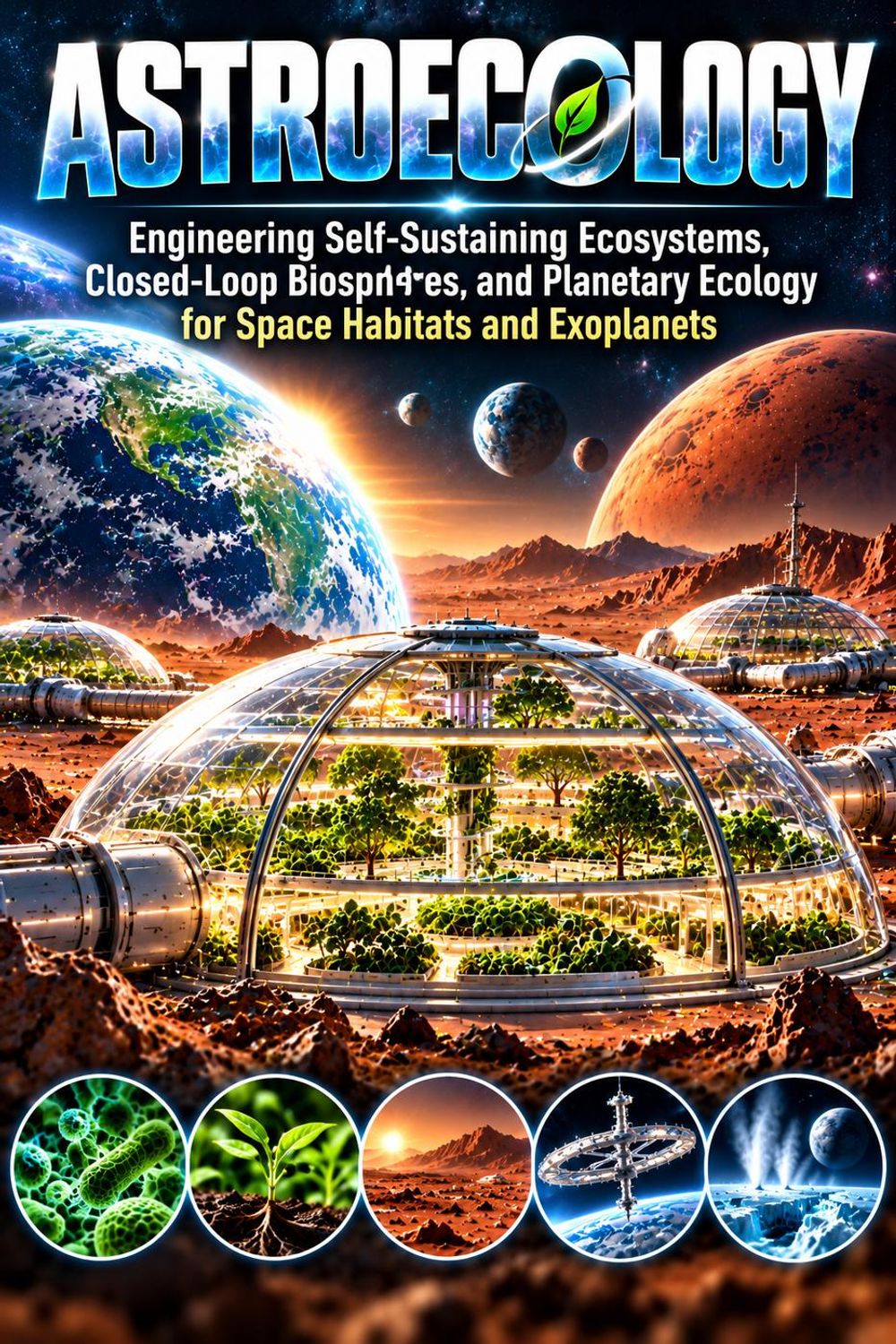


What will it take to build ecosystems that can survive—and thrive—beyond Earth? Astroecology: Engineering Self-Sustaining Ecosystems, Closed-Loop Biospheres, and Planetary Ecology for Space Habitats and Exoplanets explores how ecological science could help humanity develop sustainable habitats on Mars, the Moon, and deep-space missions. Lasting settlements will need systems that produce food, recover water, regenerate oxygen, process waste, and recycle nutrients. Achieving this requires understanding the relationships among organisms, energy, atmosphere, water, and minerals—and how those relationships change inside an artificial environment. Bringing together astrobiology, ecology, microbiology, planetary science, environmental biotechnology, and space agriculture, this book examines the biological foundations of regenerative space habitats. Inside, discover: • Planetary habitability: the environmental conditions life requires and what Earth's history reveals about the development of living systems. • Microbial ecosystems: how bacteria, fungi, cyanobacteria, and algae contribute to decomposition, nutrient recovery, oxygen production, and ecological productivity. • Ecological networks: the roles of producers, consumers, decomposers, biodiversity, and feedback mechanisms in ecosystem resilience. • Essential resource cycles: how carbon, nitrogen, phosphorus, sulfur, and water circulate through natural and engineered environments. • Space agriculture: hydroponics, aeroponics, controlled-environment farming, plant biology, and beneficial plant–microbe relationships. • Regenerative life support: approaches to integrating food production, air management, water purification, and biological waste processing. • Habitat constraints: the distinct challenges facing lunar bases, Mars settlements, orbital stations, and long-duration spacecraft. • Computational ecology: how systems biology, environmental sensors, modeling, and artificial intelligence could support habitat monitoring and management. • Worlds beyond our solar system: how exoplanet research expands scientific questions about potential ecosystems and planetary habitability. How could a habitat recover from a failed harvest? What happens when microbial communities become unbalanced? Can biological recycling reduce dependence on supplies from Earth? Which ecological functions require technological support? Astroecology investigates these questions by treating habitats as interconnected living systems. It explores how biological processes and engineered technologies could work together to conserve resources, support human health, and maintain productive environments over long periods. Earth provides valuable lessons, but reproducing its ecological functions within a confined habitat remains difficult. Small ecosystems can be vulnerable to contamination, resource losses, disease, and unexpected changes. Fully self-sustaining space biospheres remain a research goal, requiring dependable energy, careful monitoring, maintenance, and recovery strategies. Written for readers interested in astrobiology, synthetic ecology, space agriculture, environmental science, and human space exploration, this accessible scientific overview connects established ecological principles with emerging habitat research. It also distinguishes practical regenerative life-support concepts from the more speculative ambitions of planetary biosphere engineering. From microscopic nutrient exchanges to the dynamics of entire biospheres, explore the living relationships that could shape humanity's future beyond Earth.
-
Autore:
-
Anno edizione:2026
-
Editore:
-
Formato:
-
Lingua:Inglese
Compatibilità:
Tutti i dispositivi (eccetto Kindle) Scopri di più
Layout:
Reflowable
EAN:
9798237013702

Formato:
Gli eBook venduti da Feltrinelli.it sono in formato ePub e possono essere protetti da Adobe DRM. In caso di download di un file protetto da DRM si otterrà un file in formato .acs, (Adobe Content Server Message), che dovrà essere aperto tramite Adobe Digital Editions e autorizzato tramite un account Adobe, prima di poter essere letto su pc o trasferito su dispositivi compatibili.
Cloud:
Gli eBook venduti da Feltrinelli.it sono sincronizzati automaticamente su tutti i client di lettura Kobo successivamente all’acquisto. Grazie al Cloud Kobo i progressi di lettura, le note, le evidenziazioni vengono salvati e sincronizzati automaticamente su tutti i dispositivi e le APP di lettura Kobo utilizzati per la lettura.
Clicca qui per sapere come scaricare gli ebook utilizzando un pc con sistema operativo Windows
