









EBOOK IN LINGUA STRANIERA





Cataloging the World

17,88 €
+180
punti 
Venditore: Feltrinelli

Acquista online
Scaricabile subito
Articolo acquistabile con Carta del Docente

Articolo acquistabile con Carta Cultura Giovani e Carta del Merito

Articolo acquistabile con Carta della Cultura

Dati e Statistiche
 Salvato in 0 liste dei desideri
Salvato in 0 liste dei desideri
Cataloging the World
Scaricabile subito
17,88 €
17,88 €
Scaricabile subito



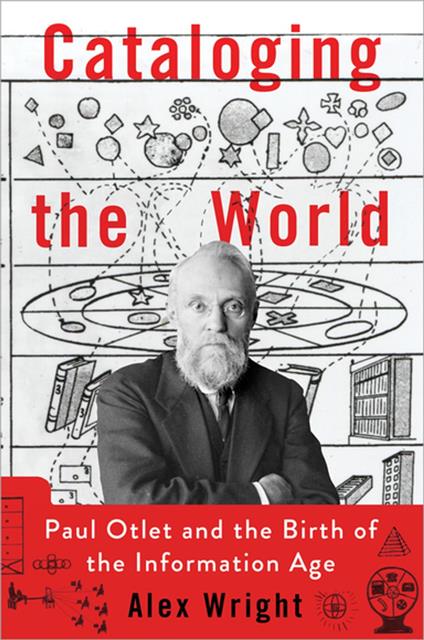
The dream of capturing and organizing knowledge is as old as history. From the archives of ancient Sumeria and the Library of Alexandria to the Library of Congress and Wikipedia, humanity has wrestled with the problem of harnessing its intellectual output. The timeless quest for wisdom has been as much about information storage and retrieval as creative genius. In Cataloging the World, Alex Wright introduces us to a figure who stands out in the long line of thinkers and idealists who devoted themselves to the task. Beginning in the late nineteenth century, Paul Otlet, a librarian by training, worked at expanding the potential of the catalog card, the world's first information chip. From there followed universal libraries and museums, connecting his native Belgium to the world by means of a vast intellectual enterprise that attempted to organize and code everything ever published. Forty years before the first personal computer and fifty years before the first browser, Otlet envisioned a network of "electric telescopes" that would allow people everywhere to search through books, newspapers, photographs, and recordings, all linked together in what he termed, in 1934, a réseau mondial--essentially, a worldwide web. Otlet's life achievement was the construction of the Mundaneum--a mechanical collective brain that would house and disseminate everything ever committed to paper. Filled with analog machines such as telegraphs and sorters, the Mundaneum--what some have called a "Steampunk version of hypertext"--was the embodiment of Otlet's ambitions. It was also short-lived. By the time the Nazis, who were pilfering libraries across Europe to collect information they thought useful, carted away Otlet's collection in 1940, the dream had ended. Broken, Otlet died in 1944. Wright's engaging intellectual history gives Otlet his due, restoring him to his proper place in the long continuum of visionaries and pioneers who have struggled to classify knowledge, from H.G. Wells and Melvil Dewey to Vannevar Bush, Ted Nelson, Tim Berners-Lee, and Steve Jobs. Wright shows that in the years since Otlet's death the world has witnessed the emergence of a global network that has proved him right about the possibilities--and the perils--of networked information, and his legacy persists in our digital world today, captured for all time.
-
Autore:
-
Anno edizione:2024
-
Editore:
-
Formato:
-
Lingua:Inglese
Compatibilità:
Tutti i dispositivi (eccetto Kindle) Scopri di più
Layout:
Reflowable
EAN:
9780199354207

Formato:
Gli eBook venduti da Feltrinelli.it sono in formato ePub e possono essere protetti da Adobe DRM. In caso di download di un file protetto da DRM si otterrà un file in formato .acs, (Adobe Content Server Message), che dovrà essere aperto tramite Adobe Digital Editions e autorizzato tramite un account Adobe, prima di poter essere letto su pc o trasferito su dispositivi compatibili.
Cloud:
Gli eBook venduti da Feltrinelli.it sono sincronizzati automaticamente su tutti i client di lettura Kobo successivamente all’acquisto. Grazie al Cloud Kobo i progressi di lettura, le note, le evidenziazioni vengono salvati e sincronizzati automaticamente su tutti i dispositivi e le APP di lettura Kobo utilizzati per la lettura.
Clicca qui per sapere come scaricare gli ebook utilizzando un pc con sistema operativo Windows
