


EBOOK IN LINGUA STRANIERA


Clean Code for Linux Systems: Best Practices and Design Principles for Maintainable Applications

5,99 €
+60
punti 
Venditore: Feltrinelli

Acquista online
Scaricabile subito
Articolo acquistabile con Carta del Docente

Articolo acquistabile con Carta Cultura Giovani e Carta del Merito

Articolo acquistabile con Carta della Cultura

Abbonati a Kobo plus per avere accesso illimitato a questo contenuto

Dati e Statistiche
 Salvato in 0 liste dei desideri
Clean Code for Linux Systems: Best Practices and Design Principles for Maintainable Applications
Scaricabile subito
5,99 €
5,99 €
Scaricabile subito

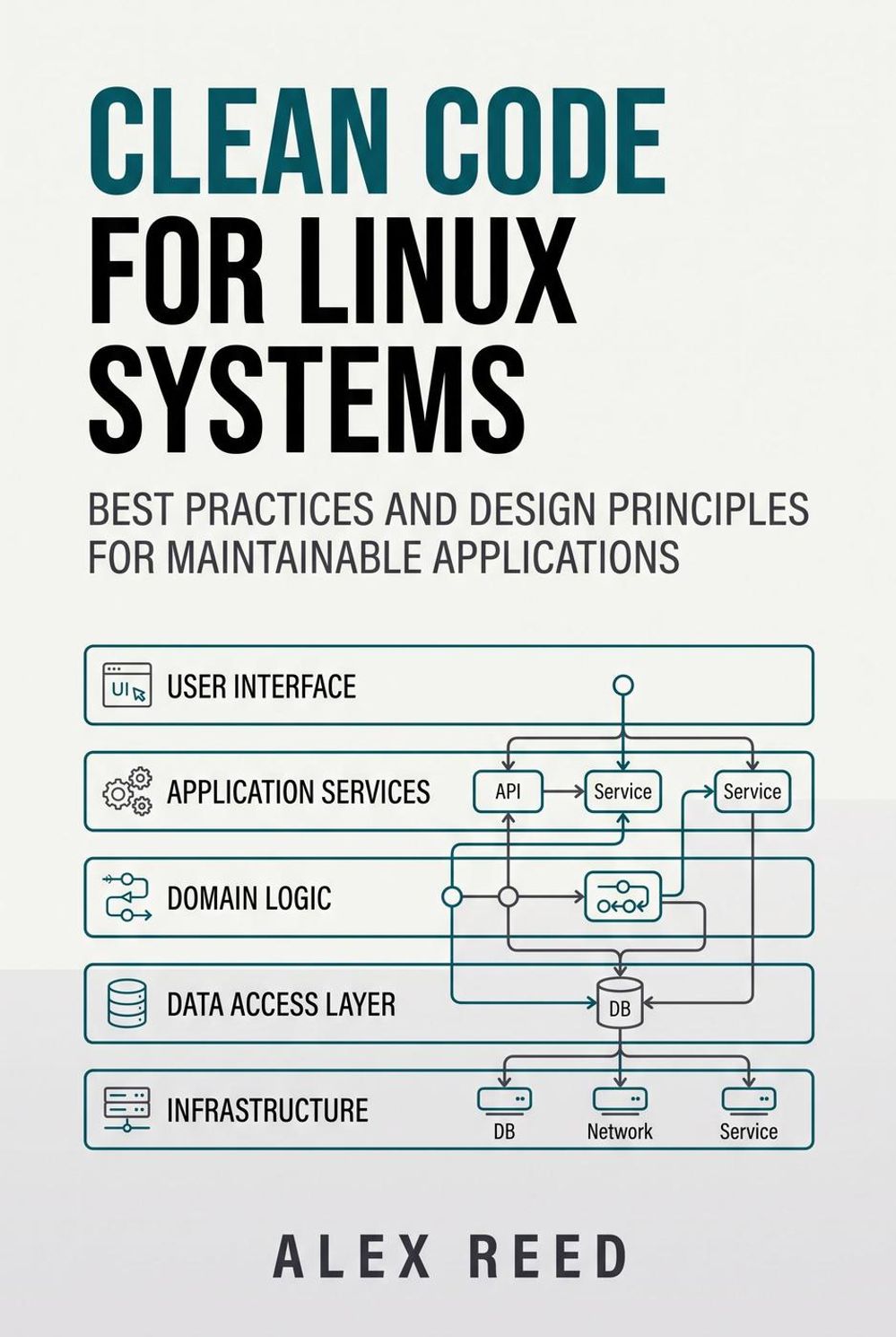


Write Linux software that still makes sense two years from now. Linux code does not run in a vacuum. It shares memory, files, and CPU with other processes, runs for months without a restart, and gets judged by the people who deploy it, package it, and fix it at three in the morning. Clean code on Linux is more than tidy naming. It is about how your application owns resources, handles failure, and respects the operating system. Clean Code for Linux Systems brings proven software design principles together with real Linux practice. Across 21 focused chapters in seven parts, you will learn how to build applications that are readable, reliable, secure, and easy to maintain. Inside, you will learn how to: Name, structure, and organize code so its intent is obvious Design clear interfaces, boundaries, and low-coupling architecture Manage files, descriptors, processes, signals, and system calls with clear ownership Handle errors, memory, and concurrency without leaks, races, or silent failures Build useful logging, tests, and debugging workflows for production systems Apply security, privilege separation, and performance-aware design without losing clarity Review, refactor, and reduce technical debt in existing codebases The book teaches principles over tools, so the lessons apply whether you write in C, C++, Rust, Python, or shell. Practical examples show each idea at work, and seven appendices give you ready-to-use checklists and references for code review, error handling, debugging, testing, coding standards, and Linux conventions. Ideal for: software developers, systems programmers, DevOps and site reliability engineers, backend developers moving into systems work, and open source contributors who want professional-grade results. If you want fewer production surprises, simpler maintenance, and code your teammates will thank you for, this guide gives you a clear path. Start building Linux software that lasts.
-
Autore:
-
Anno edizione:2026
-
Editore:
-
Formato:
-
Lingua:Inglese
Compatibilità:
Tutti i dispositivi (eccetto Kindle) Scopri di più
Layout:
Reflowable
EAN:
9798235365322

Formato:
Gli eBook venduti da Feltrinelli.it sono in formato ePub e possono essere protetti da Adobe DRM. In caso di download di un file protetto da DRM si otterrà un file in formato .acs, (Adobe Content Server Message), che dovrà essere aperto tramite Adobe Digital Editions e autorizzato tramite un account Adobe, prima di poter essere letto su pc o trasferito su dispositivi compatibili.
Cloud:
Gli eBook venduti da Feltrinelli.it sono sincronizzati automaticamente su tutti i client di lettura Kobo successivamente all’acquisto. Grazie al Cloud Kobo i progressi di lettura, le note, le evidenziazioni vengono salvati e sincronizzati automaticamente su tutti i dispositivi e le APP di lettura Kobo utilizzati per la lettura.
Clicca qui per sapere come scaricare gli ebook utilizzando un pc con sistema operativo Windows
