










EBOOK IN LINGUA STRANIERA





Conservation Refugees

22,14 €
+220
punti 
Venditore: Feltrinelli

Acquista online
Scaricabile subito
Articolo acquistabile con Carta del Docente

Articolo acquistabile con Carta Cultura Giovani e Carta del Merito

Articolo acquistabile con Carta della Cultura

Dati e Statistiche
 Salvato in 0 liste dei desideri
Salvato in 0 liste dei desideri
Conservation Refugees
Scaricabile subito
22,14 €
22,14 €
Scaricabile subito

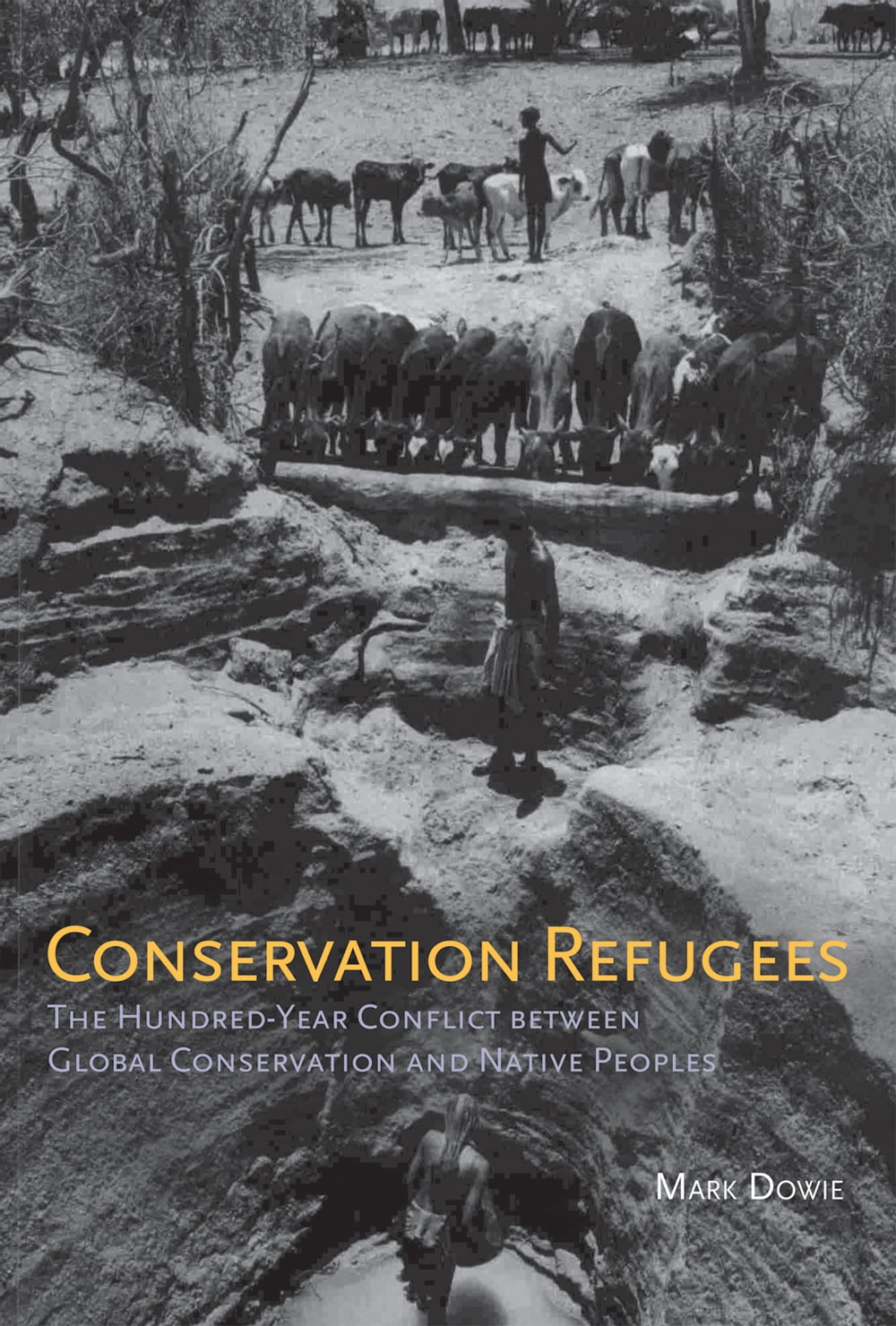



How native people—from the Miwoks of Yosemite to the Maasai of eastern Africa—have been displaced from their lands in the name of conservation. Since 1900, more than 108,000 officially protected conservation areas have been established worldwide, largely at the urging of five international conservation organizations. About half of these areas were occupied or regularly used by indigenous peoples. Millions who had been living sustainably on their land for generations were displaced in the interests of conservation. In Conservation Refugees, Mark Dowie tells this story. This is a “good guy vs. good guy” story, Dowie writes; the indigenous peoples' movement and conservation organizations have a vital common goal—to protect biological diversity—and could work effectively and powerfully together to protect the planet and preserve biological diversity. Yet for more than a hundred years, these two forces have been at odds. The result: thousands of unmanageable protected areas and native peoples reduced to poaching and trespassing on their ancestral lands or “assimilated” but permanently indentured on the lowest rungs of the money economy. Dowie begins with the story of Yosemite National Park, which by the turn of the twentieth century established a template for bitter encounters between native peoples and conservation. He then describes the experiences of other groups, ranging from the Ogiek and Maasai of eastern Africa and the Pygmies of Central Africa to the Karen of Thailand and the Adevasis of India. He also discusses such issues as differing definitions of “nature” and “wilderness,” the influence of the “BINGOs” (Big International NGOs, including the Worldwide Fund for Nature, Conservation International, and The Nature Conservancy), the need for Western scientists to respect and honor traditional lifeways, and the need for native peoples to blend their traditional knowledge with the knowledge of modern ecology. When conservationists and native peoples acknowledge the interdependence of biodiversity conservation and cultural survival, Dowie writes, they can together create a new and much more effective paradigm for conservation.
-
Autore:
-
Anno edizione:2011
-
Editore:
-
Formato:
-
Lingua:Inglese
Compatibilità:
Tutti i dispositivi (eccetto Kindle) Scopri di più
Layout:
Reflowable
EAN:
9780262260626

Formato:
Gli eBook venduti da Feltrinelli.it sono in formato ePub e possono essere protetti da Adobe DRM. In caso di download di un file protetto da DRM si otterrà un file in formato .acs, (Adobe Content Server Message), che dovrà essere aperto tramite Adobe Digital Editions e autorizzato tramite un account Adobe, prima di poter essere letto su pc o trasferito su dispositivi compatibili.
Cloud:
Gli eBook venduti da Feltrinelli.it sono sincronizzati automaticamente su tutti i client di lettura Kobo successivamente all’acquisto. Grazie al Cloud Kobo i progressi di lettura, le note, le evidenziazioni vengono salvati e sincronizzati automaticamente su tutti i dispositivi e le APP di lettura Kobo utilizzati per la lettura.
Clicca qui per sapere come scaricare gli ebook utilizzando un pc con sistema operativo Windows
