










EBOOK IN LINGUA STRANIERA





Continuous Process Improvement

6,75 €
+70
punti 
Venditore: Feltrinelli

Acquista online
Scaricabile subito
Articolo acquistabile con Carta del Docente

Articolo acquistabile con Carta Cultura Giovani e Carta del Merito

Articolo acquistabile con Carta della Cultura

Dati e Statistiche
 Salvato in 0 liste dei desideri
Salvato in 0 liste dei desideri
Continuous Process Improvement
Scaricabile subito
6,75 €
6,75 €
Scaricabile subito

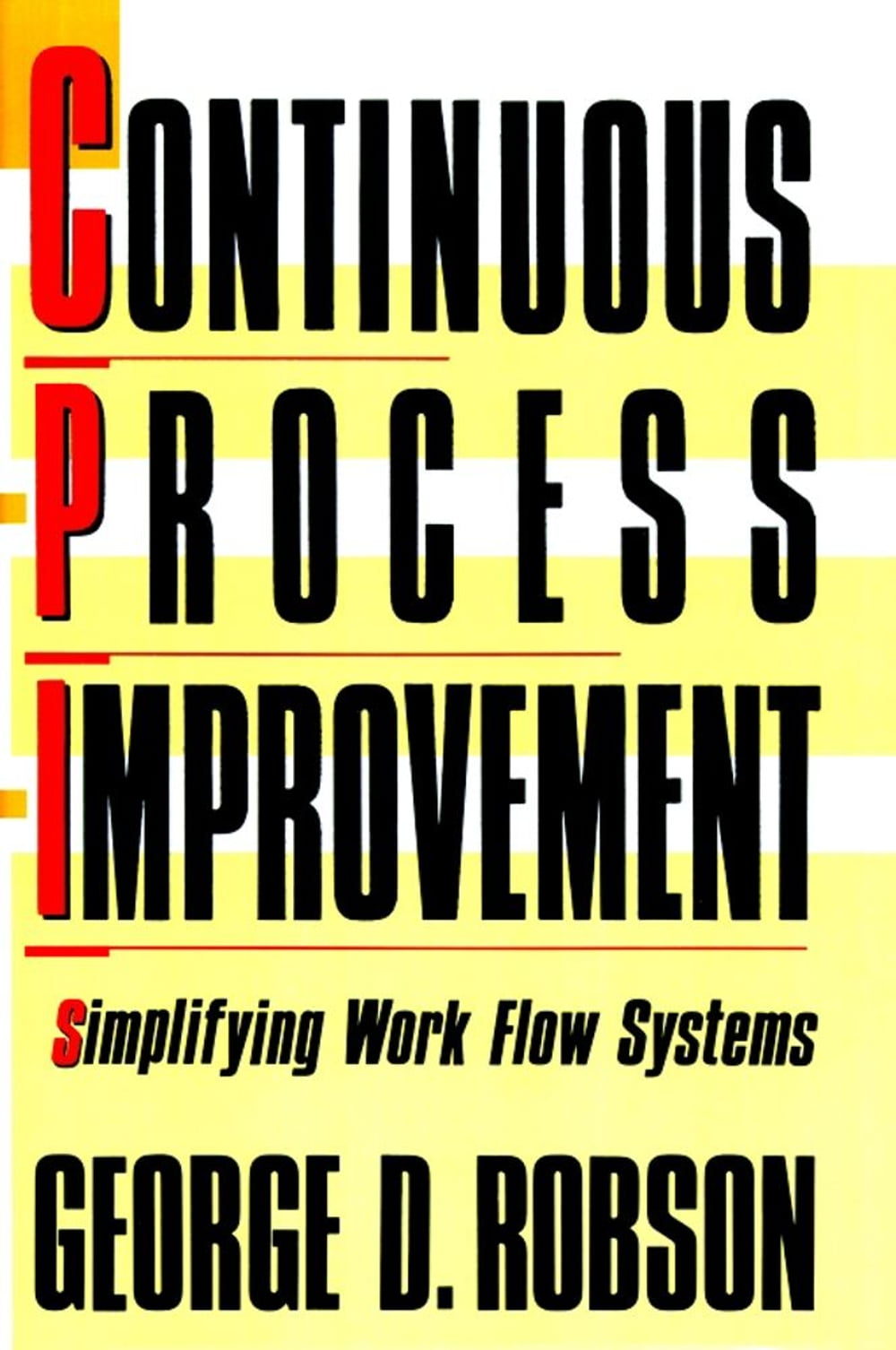


During the past decade Japanese companies have derived many of their competitive advantages from streamlined work-flow processes. Desperate to replicate the Japanese systems, American managers have bought into countless theories advanced by management consultants which, lacking a methodology, have proved fruitless and frustrating. Now, from inside a world-renowned learning organization, comes that methodology. Continuous Process Improvement (CPI) is an improvement and problem-prevention system created and developed by George Robson to "empower" natural work teams in three General Electric businesses. Composed of a logical set of steps, at the heart of which is "Process Flow Diagramming," CPI focuses on and simplifies the critical elements of work flow processes and eliminates those parts that add no value. Not only has this methodology helped these GE businesses save in excess of $35 million during the first two years of implementation, but similar techniques are now being employed by leading-edge companies throughout the world. CPI is a transportable system that not only has profoundly changed manufacturing practices, but has been applied with equal success in all areas of a business. Robson shows how the "Iceberg Phenomenon" can identify the measurable benefits of accurately accounting for direct and indirect costs by carefully tracking expenses. Planning for the true costs of customer service, marketing concessions, and retraining can turn unplanned losses into short- and long-term returns on investments. Robson focuses on activities that are critical to quality in design and production and demonstrates how non-value-added work can be eliminated. The staggering cost of re-work, calculated in "The Rule of Tens," is reduced by catching mistakes before they escape to subsequent stages of handling. The CPI system, which has been widely praised within General Electric, will be of broad interest throughout the business and university communities.
-
Autore:
-
Anno edizione:2010
-
Editore:
-
Formato:
-
Lingua:Inglese
Compatibilità:
Tutti i dispositivi (eccetto Kindle) Scopri di più
Layout:
Reflowable
EAN:
9781451602463

Formato:
Gli eBook venduti da Feltrinelli.it sono in formato ePub e possono essere protetti da Adobe DRM. In caso di download di un file protetto da DRM si otterrà un file in formato .acs, (Adobe Content Server Message), che dovrà essere aperto tramite Adobe Digital Editions e autorizzato tramite un account Adobe, prima di poter essere letto su pc o trasferito su dispositivi compatibili.
Cloud:
Gli eBook venduti da Feltrinelli.it sono sincronizzati automaticamente su tutti i client di lettura Kobo successivamente all’acquisto. Grazie al Cloud Kobo i progressi di lettura, le note, le evidenziazioni vengono salvati e sincronizzati automaticamente su tutti i dispositivi e le APP di lettura Kobo utilizzati per la lettura.
Clicca qui per sapere come scaricare gli ebook utilizzando un pc con sistema operativo Windows
