










LIBRO INGLESE





Development Through Bricolage: Rethinking Institutions for Natural Resource Management

81,10 €
+810
punti 
Venditore: Feltrinelli
Articolo acquistabile con Carta del Docente

Articolo acquistabile con Carta Cultura Giovani e Carta del Merito

Articolo acquistabile con Carta della Cultura

Paga con Klarna in 3 rate senza interessi per ordini superiori a 39 €

Dati e Statistiche
 Salvato in 0 liste dei desideri
Salvato in 0 liste dei desideri
Development Through Bricolage: Rethinking Institutions for Natural Resource Management
Disponibilità in 2 settimane
81,10 €
81,10 €
Disponibilità in 2 settimane

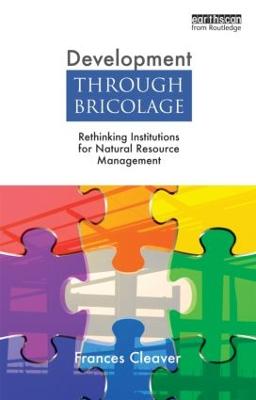



Why, despite an emphasis on 'getting institutions right', do development initiatives so infrequently deliver as planned? Why do many institutions designed for natural resource management (e.g. Water User Associations, Irrigation Committees, Forest Management Councils) not work as planners intended? This book disputes the model of development by design and argues that institutions are formed through the uneven patching together of old practices and accepted norms with new arrangements. The managing of natural resources and delivery of development through such processes of 'bricolage' is likened to 'institutional 'DIY' rather than engineering or design. The author explores the processes involved in institutional bricolage; the constant renegotiation of norms, the reinvention of tradition, the importance of legitimate authority and the role of people themselves in shaping such arrangements. Bricolage is seen as an inevitable, but not always benign process; the extent to which it reproduces social inequalities or creates space for challenging them is also considered. The book draws on a number of contemporary strands of development thinking about collective action, participation, governance, natural resource management, political ecology and wellbeing. It synthesises these to develop new understandings of why and how people act to manage resources and how access is secured or denied. A variety of case studies ranging from the management of water (Zimbabwe, India, Pakistan), conflict and cooperation over land, grazing and water (Tanzania), and the emergence of community management of forests (Sweden, Nepal), illustrate the context specific and generalised nature of bricolage and the resultant challenges for development policy and practice.
-
Autore:
-
Editore:
-
Collana:Earthscan Studies in Natural Resource Management
-
Anno:2012
-
Rilegatura:Paperback / softback
-
Pagine:224 p.
Testo in English
Dimensioni:
216 x 138 mm
Peso:
440 gr.
EAN:
9781844078691

Informazioni e Contatti sulla Sicurezza dei Prodotti
Le schede prodotto sono aggiornate in conformità al Regolamento UE 988/2023. Laddove ci fossero taluni dati non disponibili per ragioni indipendenti da Feltrinelli, vi informiamo che stiamo compiendo ogni ragionevole sforzo per inserirli. Vi invitiamo a controllare periodicamente il sito www.lafeltrinelli.it per eventuali novità e aggiornamenti.
Per le vendite di prodotti da terze parti, ciascun venditore si assume la piena e diretta responsabilità per la commercializzazione del prodotto e per la sua conformità al Regolamento UE 988/2023, nonché alle normative nazionali ed europee vigenti.
Per informazioni sulla sicurezza dei prodotti, contattare productsafety@feltrinelli.it
