










EBOOK IN LINGUA STRANIERA





The Dystopian Mind

6,49 €
+60
punti 
Venditore: Feltrinelli

Acquista online
Scaricabile subito
Articolo acquistabile con Carta del Docente

Articolo acquistabile con Carta Cultura Giovani e Carta del Merito

Articolo acquistabile con Carta della Cultura

Abbonati a Kobo plus per avere accesso illimitato a questo contenuto

Dati e Statistiche
 Salvato in 0 liste dei desideri
Salvato in 0 liste dei desideri
The Dystopian Mind
Scaricabile subito
6,49 €
6,49 €
Scaricabile subito

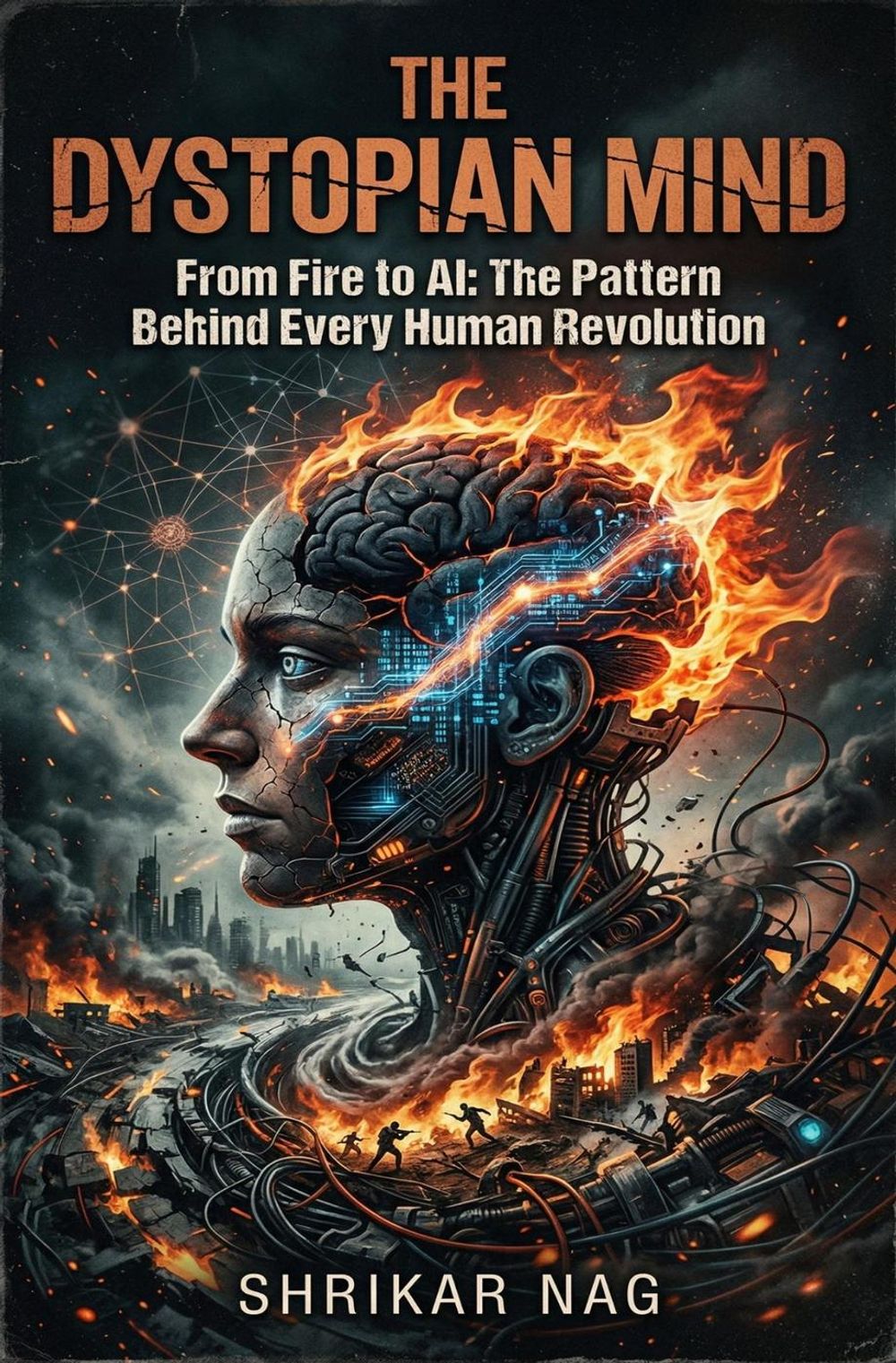


Every revolution in human history followed the same hidden pattern. It arrived as something strange. It became useful. Then ordinary. Then invisible. By the time it felt like reality, the costs had already disappeared from view. Fire did not merely light the night — it rewired the human brain and created the first dependency. Agriculture did not merely produce food — it invented hierarchy, property, and the chronic anxiety of scarcity. Writing did not merely preserve memory — it made debt permanent and authority portable. The printing press did not merely spread ideas — it shattered the monopoly on truth and created the first crisis of misinformation. The smartphone did not merely connect people — it eliminated the last boundary between the human and the network, recalibrating the nervous system through sheer repetition. The Dystopian Mind traces this pattern across seventeen revolutions — from fire to artificial intelligence — revealing that the deepest threat to human autonomy has never been force. It has been the quiet, seductive process of normalizing conditions we never chose. Drawing on archaeology, neuroscience, economic history, media theory, and moral philosophy, the book argues that what we call normal life is the accumulated residue of bargains nobody remembers making. Each chapter follows one revolution through its full arc: the moment of arrival, the period of resistance, the process of accommodation, and the point at which the extraordinary becomes ordinary and the costs become invisible. The result is a unified account of how technology shapes not just what humans can do, but what they expect, desire, tolerate, and defend — often without awareness that any change has occurred. Blending the civilizational sweep of Sapiens, the pattern-revealing intelligence of Freakonomics, and the lingering unease of a psychological thriller, The Dystopian Mind is a book for anyone who has ever suspected that something about ordinary life is quietly, invisibly wrong — and wanted the language to say what. The question is not whether the future will arrive. The question is whether you will notice when it does.
-
Autore:
-
Anno edizione:2026
-
Editore:
-
Formato:
-
Lingua:Inglese
Compatibilità:
Tutti i dispositivi (eccetto Kindle) Scopri di più
Layout:
Reflowable
EAN:
9798995665113

Formato:
Gli eBook venduti da Feltrinelli.it sono in formato ePub e possono essere protetti da Adobe DRM. In caso di download di un file protetto da DRM si otterrà un file in formato .acs, (Adobe Content Server Message), che dovrà essere aperto tramite Adobe Digital Editions e autorizzato tramite un account Adobe, prima di poter essere letto su pc o trasferito su dispositivi compatibili.
Cloud:
Gli eBook venduti da Feltrinelli.it sono sincronizzati automaticamente su tutti i client di lettura Kobo successivamente all’acquisto. Grazie al Cloud Kobo i progressi di lettura, le note, le evidenziazioni vengono salvati e sincronizzati automaticamente su tutti i dispositivi e le APP di lettura Kobo utilizzati per la lettura.
Clicca qui per sapere come scaricare gli ebook utilizzando un pc con sistema operativo Windows
