









LIBRO INGLESE





Eastern Trade and the Mediterranean in the Middle Ages: Pegolotti’s Ayas-Tabriz Itinerary and its Commercial Context


75,70 €
+760
punti 
Venditore: Feltrinelli
Articolo acquistabile con Carta del Docente

Articolo acquistabile con Carta Cultura Giovani e Carta del Merito

Articolo acquistabile con Carta della Cultura

Paga con Klarna in 3 rate senza interessi per ordini superiori a 39 €

Dati e Statistiche
 Salvato in 0 liste dei desideri
Salvato in 0 liste dei desideri
Eastern Trade and the Mediterranean in the Middle Ages: Pegolotti’s Ayas-Tabriz Itinerary and its Commercial Context
Disponibilità in 2 settimane
75,70 €
75,70 €
Disponibilità in 2 settimane

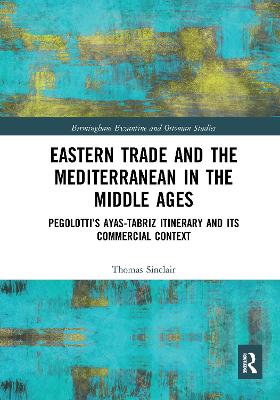


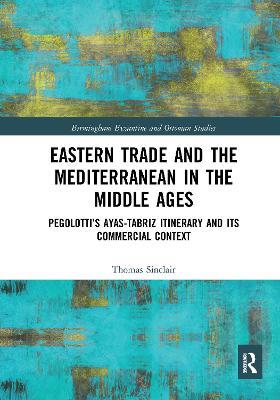
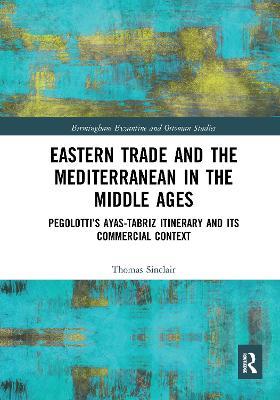
At the end of the High Middle Ages in Europe, with buying power and economic sophistication at a high, an itinerary detailing the toll stations along a commercial artery carrying eastern goods (from China, India and Iran) towards Europe was compiled, and later incorporated in the well-known trading manual of the Florentine bank official Pegolotti; Pegolotti was twice stationed in the city of Famagusta in Cyprus, which lay opposite the city of Ayas where the land route ended. The Il-Khanid capital, Tabriz in Iran, attracting expensive merchandise such as spices and silk from a variety of origins, was the road’s starting-point. To demonstrate the importance of the route in its own time, parallel and contemporary routes in the Black Sea and the Levant are traced and the effect of trade on their cities noted. To compare the Ayas itinerary (1250s to 1330s) with previous periods the networks of commercial avenues in the previous period (1100-1250) and the subsequent one (1340s to 1500) are reconstructed. In each period the connection of east-west trade with the main movements of the European economy are fully drawn out, and the effects on the building history of the three main Italian cities concerned (Venice, Genoa and Florence) are sketched. Attention then turns to the Pegolotti itinerary itself. The individual toll stations are identified employing a variety of means, such as names taken from the Roman itineraries (Peutinger Table and Antonine Itinerary) and archaeological data; this allows the course of the track to be followed through diverse topography to the city of Sivas, then across plains and through passes to Erzurum and finally to Tabriz. A picture is drawn of the urban history of each major city, including Sivas, Erzurum and Tabriz itself, and of the other towns along the route.
-
Autore:
-
Editore:
-
Collana:Birmingham Byzantine and Ottoman Studies
-
Anno:2021
-
Rilegatura:Paperback / softback
-
Pagine:452 p.
Testo in English
Dimensioni:
246 x 174 mm
Peso:
834 gr.
EAN:
9781032083407

Informazioni e Contatti sulla Sicurezza dei Prodotti
Le schede prodotto sono aggiornate in conformità al Regolamento UE 988/2023. Laddove ci fossero taluni dati non disponibili per ragioni indipendenti da Feltrinelli, vi informiamo che stiamo compiendo ogni ragionevole sforzo per inserirli. Vi invitiamo a controllare periodicamente il sito www.lafeltrinelli.it per eventuali novità e aggiornamenti.
Per le vendite di prodotti da terze parti, ciascun venditore si assume la piena e diretta responsabilità per la commercializzazione del prodotto e per la sua conformità al Regolamento UE 988/2023, nonché alle normative nazionali ed europee vigenti.
Per informazioni sulla sicurezza dei prodotti, contattare productsafety@feltrinelli.it
