










EBOOK IN LINGUA STRANIERA





Electrochemical Components

139,99 €
+1400
punti 
Venditore: Feltrinelli

Acquista online
Scaricabile subito
Articolo acquistabile con Carta del Docente

Articolo acquistabile con Carta Cultura Giovani e Carta del Merito

Articolo acquistabile con Carta della Cultura

Dati e Statistiche
 Salvato in 0 liste dei desideri
Salvato in 0 liste dei desideri
Electrochemical Components
Scaricabile subito
139,99 €
139,99 €
Scaricabile subito

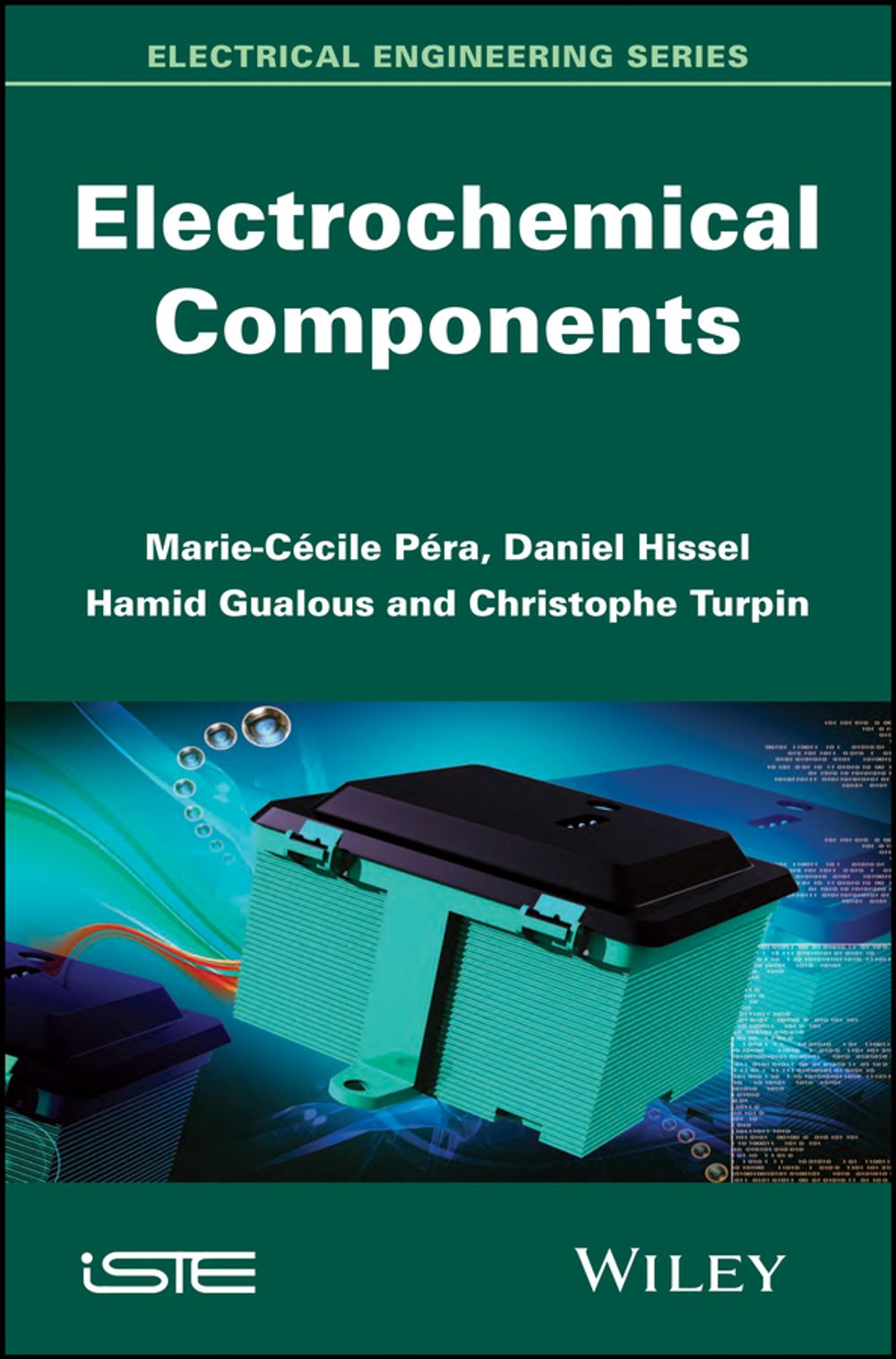



This book focuses on the methods of storage commonly used in hybrid systems. After an introductory chapter reviewing the basics of electrochemistry, Chapter 2 is given over to the storage of electricity in the form of hydrogen. Once hydrogen has been made, we have to be able to convert it back into electricity on demand. This can be done with another energy converter: a fuel cell, the subject of Chapter 3. Such a system is unable to deliver significant dynamics in terms of storage and release of electricity and needs to be supplemented with another solution: a detailed study of supercapacitors is provided in Chapter 4.While the storage systems touched upon in the previous three chapters (hydrogen batteries and supercapacitors) both exhibit advantageous characteristics, at present they are still relatively costly. Thus, the days of the electrochemical accumulator by no means appear to be numbered just yet. This will therefore be the topic of Chapter 5. Finally, on the basis of the elements laid down in the previous chapters, Chapter 6 will focus on electrical hybridization of these storage systems, with a view to enhancing the performance (in terms of energy, lifetime, cost, etc.) of the newly formed system. Aimed at an audience of researchers, industrialists, academics, teachers and students, many exercises, along with corrected solutions, are provided throughout the book. She has contributed to more than 180 articles in international journals and conferences. Daniel Hissel is Full Professor at the University of Franche-Comte in France and Director of the Fuel Cell Lab Research Federation (CNRS). He also leads a research team devoted to hybrid electrical systems in the FEMTO-ST Institute (CNRS). He has published more than 250 research papers on modeling, control, diagnostics and prognostics of hybrid electrical systems. Hamid Gualous is Full Professor at the University of Caen Lower Normandy in France and director of the LUSAC laboratory. His current research interests include power electronics, electric energy storage, power and energy systems and energy management. Christophe Turpin is Full Researcher at the CNRS (French National Center for Scientific Research). He is responsible for hydrogen activities within the Laboratory LAPLACE, Toulouse, France. His research activities include the characterization and modeling of fuel cells and electrolyzers, the state of health of these components, and their hybridization with other electrochemical components (ultracapacitors, batteries) within optimized energy systems for stationary and aeronautical applications.
-
Autore:
-
Anno edizione:2013
-
Editore:
-
Formato:
-
Lingua:Inglese
Compatibilità:
Tutti i dispositivi (eccetto Kindle) Scopri di più
Layout:
Reflowable
EAN:
9781118576922

Formato:
Gli eBook venduti da Feltrinelli.it sono in formato ePub e possono essere protetti da Adobe DRM. In caso di download di un file protetto da DRM si otterrà un file in formato .acs, (Adobe Content Server Message), che dovrà essere aperto tramite Adobe Digital Editions e autorizzato tramite un account Adobe, prima di poter essere letto su pc o trasferito su dispositivi compatibili.
Cloud:
Gli eBook venduti da Feltrinelli.it sono sincronizzati automaticamente su tutti i client di lettura Kobo successivamente all’acquisto. Grazie al Cloud Kobo i progressi di lettura, le note, le evidenziazioni vengono salvati e sincronizzati automaticamente su tutti i dispositivi e le APP di lettura Kobo utilizzati per la lettura.
Clicca qui per sapere come scaricare gli ebook utilizzando un pc con sistema operativo Windows
