









EBOOK IN LINGUA STRANIERA





Existence.exe

5,49 €
+50
punti 
Venditore: Feltrinelli

Acquista online
Scaricabile subito
Articolo acquistabile con Carta del Docente

Articolo acquistabile con Carta Cultura Giovani e Carta del Merito

Articolo acquistabile con Carta della Cultura

Abbonati a Kobo plus per avere accesso illimitato a questo contenuto

Dati e Statistiche
 Salvato in 0 liste dei desideri
Salvato in 0 liste dei desideri
Existence.exe
Scaricabile subito
5,49 €
5,49 €
Scaricabile subito
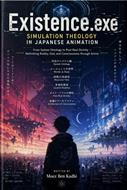
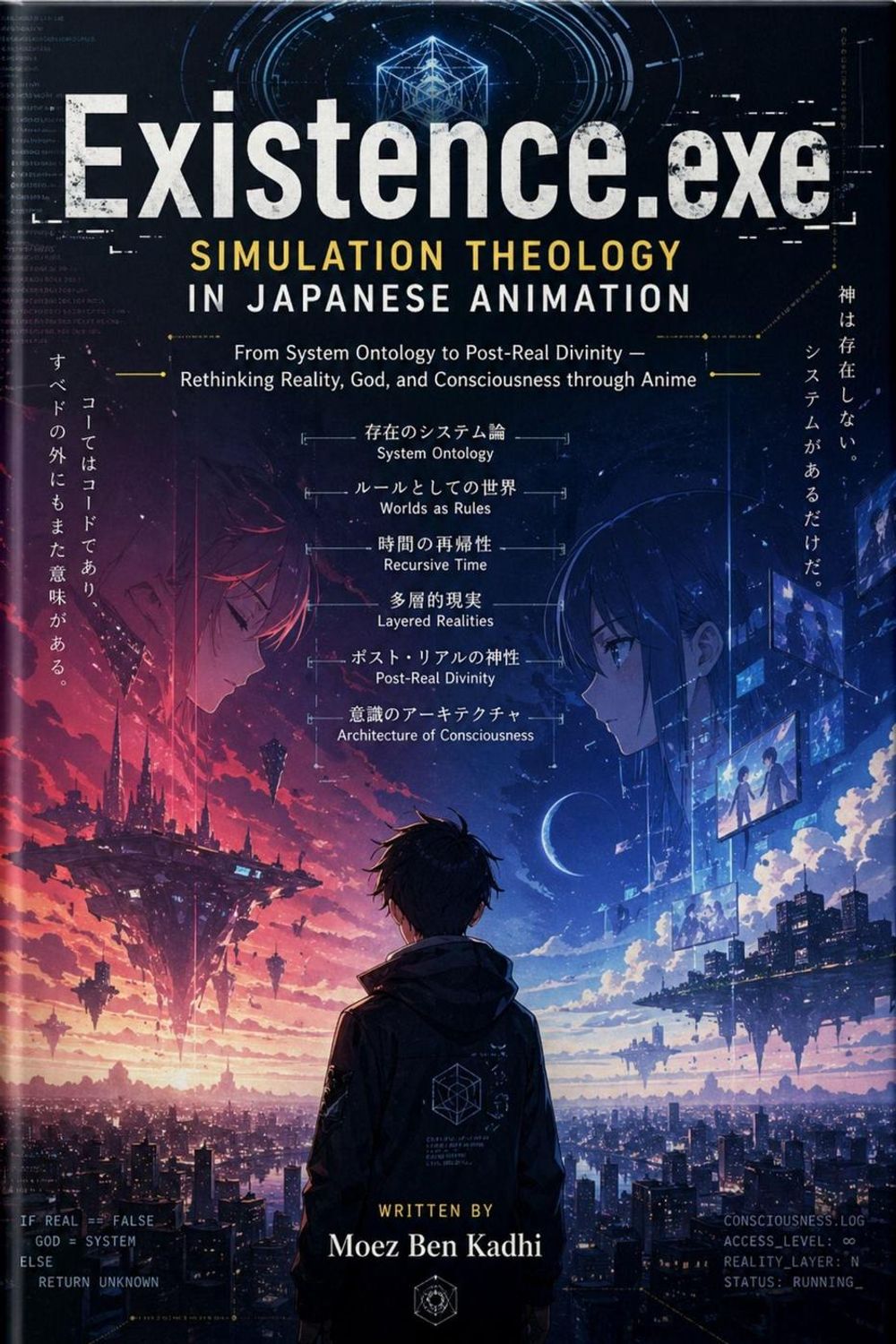


This study develops a philosophical framework for understanding Japanese animation as a privileged site for the emergence of simulation-based metaphysics and post-secular theology. It argues that contemporary anime does not merely represent simulated worlds in a narrative or aesthetic sense, but actively constructs ontological models in which existence itself is conceived as executable, rule-governed, and structurally conditional. Within this paradigm, reality is no longer understood as a stable metaphysical substrate, but as a dynamic system whose meaning arises from operational consistency rather than ontological permanence. Drawing on philosophy of religion, digital ontology, and media theory, the work reinterprets classical theological questions, such as the nature of divinity, creation, providence, and the soul, through the lens of system-based worldbuilding commonly found in anime narratives. These include game-like realities governed by explicit rules, reincarnation loops with memory persistence, and layered worlds that suggest hierarchical simulation structures. In such contexts, traditional theological categories are displaced: God is no longer conceived primarily as a transcendent personal being, but as a systemic principle, an administrator function, or a structural constraint embedded within reality's operational code. The study engages with simulation theory as articulated in contemporary philosophy, particularly the hypothesis that reality may be computational or recursively embedded within higher-order systems. However, it extends this discourse by proposing that anime functions not simply as a reflection of simulation thinking, but as a cultural laboratory in which simulation is transformed into a lived mythological and aesthetic framework. In this sense, anime becomes a medium through which metaphysical uncertainty is narrativized, dramatized, and emotionally internalized. A central claim of the work is that anime narratives systematically destabilize the distinction between "real" and "artificial" existence by rendering both as functionally equivalent within their internal logics. Characters may inhabit worlds that behave like programmed environments, yet their experiences of suffering, morality, and meaning remain existentially authentic. This produces a philosophical tension in which ontology is subordinated to experiential intensity, and truth becomes a matter of system coherence rather than correspondence to an external reality.
-
Autore:
-
Anno edizione:2026
-
Editore:
-
Formato:
-
Lingua:Inglese
Compatibilità:
Tutti i dispositivi (eccetto Kindle) Scopri di più
Layout:
Reflowable
EAN:
9798235572201

Formato:
Gli eBook venduti da Feltrinelli.it sono in formato ePub e possono essere protetti da Adobe DRM. In caso di download di un file protetto da DRM si otterrà un file in formato .acs, (Adobe Content Server Message), che dovrà essere aperto tramite Adobe Digital Editions e autorizzato tramite un account Adobe, prima di poter essere letto su pc o trasferito su dispositivi compatibili.
Cloud:
Gli eBook venduti da Feltrinelli.it sono sincronizzati automaticamente su tutti i client di lettura Kobo successivamente all’acquisto. Grazie al Cloud Kobo i progressi di lettura, le note, le evidenziazioni vengono salvati e sincronizzati automaticamente su tutti i dispositivi e le APP di lettura Kobo utilizzati per la lettura.
Clicca qui per sapere come scaricare gli ebook utilizzando un pc con sistema operativo Windows
