










EBOOK IN LINGUA STRANIERA





Explanation in Ethics and Mathematics

64,26 €
+640
punti 
Venditore: Feltrinelli

Acquista online
Scaricabile subito
Articolo acquistabile con Carta del Docente

Articolo acquistabile con Carta Cultura Giovani e Carta del Merito

Articolo acquistabile con Carta della Cultura

Dati e Statistiche
 Salvato in 0 liste dei desideri
Salvato in 0 liste dei desideri
Explanation in Ethics and Mathematics
Scaricabile subito
64,26 €
64,26 €
Scaricabile subito

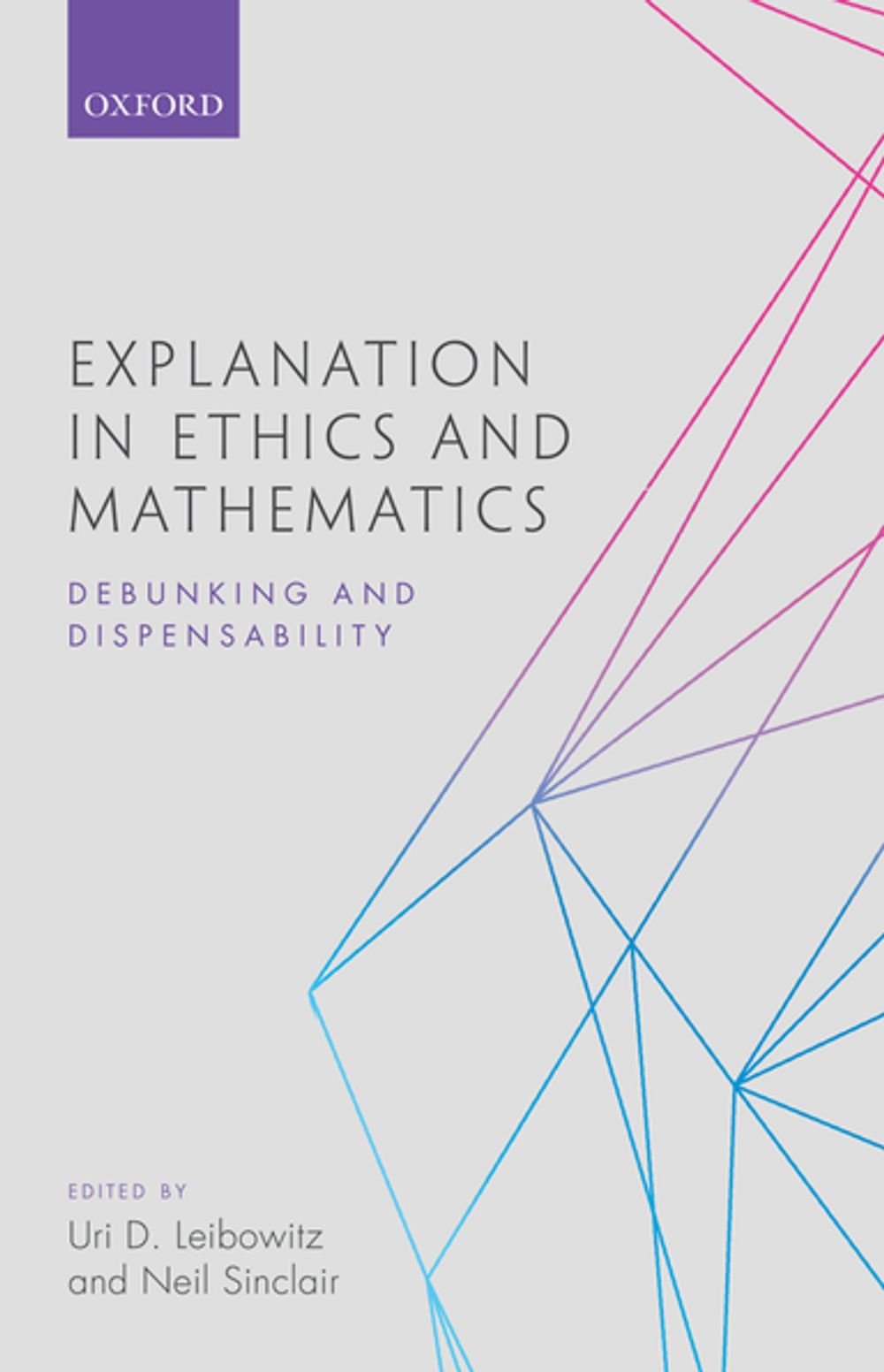



How far should our realism extend? For many years philosophers of mathematics and philosophers of ethics have worked independently to address the question of how best to understand the entities apparently referred to by mathematical and ethical talk. But the similarities between their endeavours are not often emphasised. This book provides that emphasis. In particular, it focuses on two types of argumentative strategies that have been deployed in both areas. The first--debunking arguments--aims to put pressure on realism by emphasising the seeming redundancy of mathematical or moral entities when it comes to explaining our judgements. In the moral realm this challenge has been made by Gilbert Harman and Sharon Street; in the mathematical realm it is known as the 'Benacerraf-Field' problem. The second strategy--indispensability arguments--aims to provide support for realism by emphasising the seeming intellectual indispensability of mathematical or moral entities, for example when constructing good explanatory theories. This strategy is associated with Quine and Putnam in mathematics and with Nicholas Sturgeon and David Enoch in ethics. Explanation in Ethics and Mathematics addresses these issues through an explicitly comparative methodology which we call the 'companions in illumination' approach. By considering how argumentative strategies in the philosophy of mathematics might apply to the philosophy of ethics, and vice versa, the papers collected here break new ground in both areas. For good measure, two further companions for illumination are also broached: the philosophy of chance and the philosophy of religion. Collectively, these comparisons light up new questions, arguments, and problems of interest to scholars interested in realism in any area.
-
Curatore:
-
Anno edizione:2016
-
Editore:
-
Formato:
Lingua:
Inglese
Compatibilità:
Tutti i dispositivi (eccetto Kindle) Scopri di più
Layout:
Reflowable
EAN:
9780191084263

Formato:
Gli eBook venduti da Feltrinelli.it sono in formato ePub e possono essere protetti da Adobe DRM. In caso di download di un file protetto da DRM si otterrà un file in formato .acs, (Adobe Content Server Message), che dovrà essere aperto tramite Adobe Digital Editions e autorizzato tramite un account Adobe, prima di poter essere letto su pc o trasferito su dispositivi compatibili.
Cloud:
Gli eBook venduti da Feltrinelli.it sono sincronizzati automaticamente su tutti i client di lettura Kobo successivamente all’acquisto. Grazie al Cloud Kobo i progressi di lettura, le note, le evidenziazioni vengono salvati e sincronizzati automaticamente su tutti i dispositivi e le APP di lettura Kobo utilizzati per la lettura.
Clicca qui per sapere come scaricare gli ebook utilizzando un pc con sistema operativo Windows
