










EBOOK IN LINGUA STRANIERA





Formal Methods for the Analysis of Biomedical Ontologies

43,98 €
+440
punti 
Venditore: Feltrinelli

Acquista online
Scaricabile subito
Articolo acquistabile con Carta del Docente

Articolo acquistabile con Carta Cultura Giovani e Carta del Merito

Articolo acquistabile con Carta della Cultura

Dati e Statistiche
 Salvato in 0 liste dei desideri
Salvato in 0 liste dei desideri
Formal Methods for the Analysis of Biomedical Ontologies
Scaricabile subito
43,98 €
43,98 €
Scaricabile subito

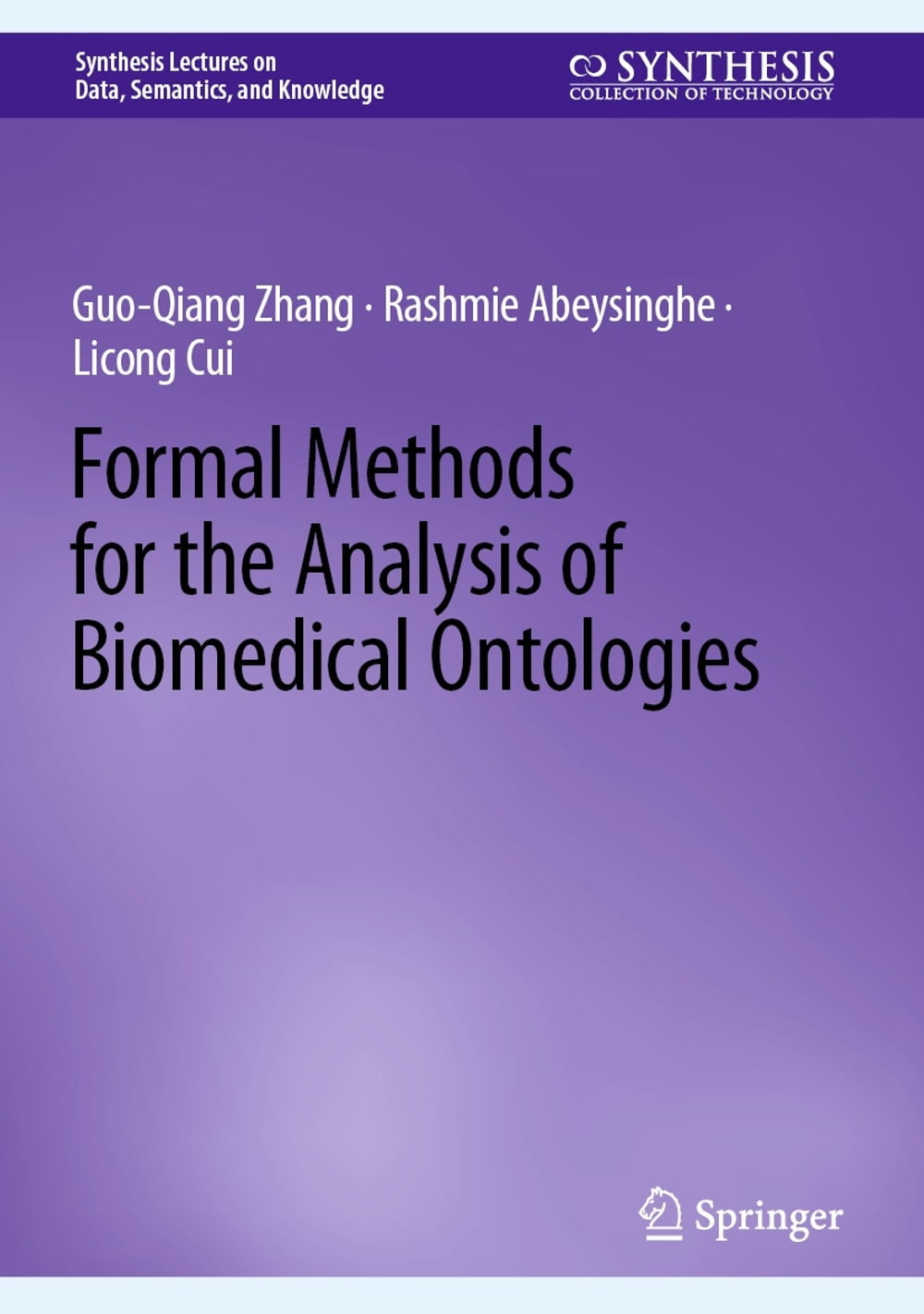



The book synthesizes research on the analysis of biomedical ontologies using formal concept analysis, including through auditing, curation, and enhancement. As the evolution of biomedical ontologies almost inevitably involves manual work, formal methods are a particularly useful tool for ontological engineering and practice, particularly in uncovering unexpected "bugs" and content materials. The book first introduces simple but formalized strategies for discovering undesired and incoherent patterns in ontologies before exploring the application of formal concept analysis for semantic completeness. The book then turns to formal concept analysis, a classical approach used in the mathematical treatment of orders and lattices, as an ontological engineering principle, focusing on the structural property of ontologies with respect to its conformation to lattice or not (non-lattice). The book helpfully covers the development of more efficient algorithms for non-latticedetection and extraction required by exhaustive lattice/non-lattice analysis. The book goes on to highlight the power and utility of uncovering non-lattice structure for debugging ontologies and describes methods that leverage the linguistic information in concept names (labels) for ontological analysis. It also addresses visualization and performance evaluation issues before closing with an overview and forward-looking perspectives on the field. This book is intended for graduate students and researchers interested in biomedical ontologies and their applications. It can be a useful supplement for courses on knowledge representation and engineering and also provide readers with a reference for related scientific publications and literature to assist in identifying potential research topics. All mathematical concepts and notations used in this book can be found in standard discrete mathematics textbooks, and the appendix at the end of the book provides a list of key ontological resources, as well as annotated non-lattice and lattice examples that were discovered using the authors' methods, demonstrating how "bugs are fixed" by converting non-lattices to lattices with minimal edit changes.
-
Autore:
-
Anno edizione:2022
-
Editore:
-
Formato:
-
Lingua:Inglese
Compatibilità:
Tutti i dispositivi (eccetto Kindle) Scopri di più
Layout:
Reflowable
EAN:
9783031121319

Formato:
Gli eBook venduti da Feltrinelli.it sono in formato ePub e possono essere protetti da Adobe DRM. In caso di download di un file protetto da DRM si otterrà un file in formato .acs, (Adobe Content Server Message), che dovrà essere aperto tramite Adobe Digital Editions e autorizzato tramite un account Adobe, prima di poter essere letto su pc o trasferito su dispositivi compatibili.
Cloud:
Gli eBook venduti da Feltrinelli.it sono sincronizzati automaticamente su tutti i client di lettura Kobo successivamente all’acquisto. Grazie al Cloud Kobo i progressi di lettura, le note, le evidenziazioni vengono salvati e sincronizzati automaticamente su tutti i dispositivi e le APP di lettura Kobo utilizzati per la lettura.
Clicca qui per sapere come scaricare gli ebook utilizzando un pc con sistema operativo Windows
