









EBOOK IN LINGUA STRANIERA





Getting it Wrong

28,59 €
+290
punti 
Venditore: Feltrinelli

Acquista online
Scaricabile subito
Articolo acquistabile con Carta del Docente

Articolo acquistabile con Carta Cultura Giovani e Carta del Merito

Articolo acquistabile con Carta della Cultura

Dati e Statistiche
 Salvato in 0 liste dei desideri
Salvato in 0 liste dei desideri
Getting it Wrong
Scaricabile subito
28,59 €
28,59 €
Scaricabile subito

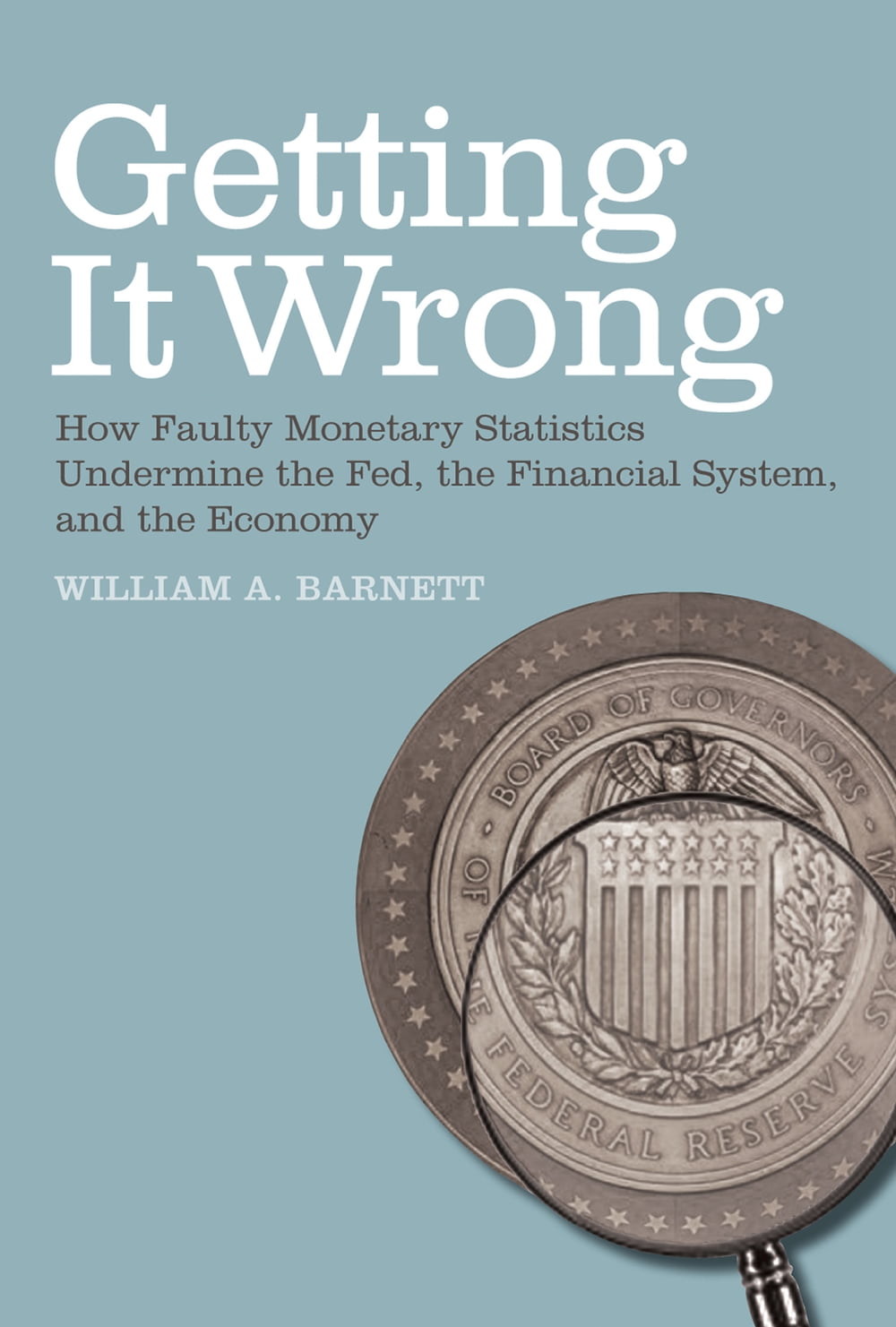


A leading economist contends that the recent financial crisis was caused not by the failure of mainstream economics but by corrupted monetary data constructed without reference to economics. Blame for the recent financial crisis and subsequent recession has commonly been assigned to everyone from Wall Street firms to individual homeowners. It has been widely argued that the crisis and recession were caused by “greed” and the failure of mainstream economics. In Getting It Wrong, leading economist William Barnett argues instead that there was too little use of the relevant economics, especially from the literature on economic measurement. Barnett contends that as financial instruments became more complex, the simple-sum monetary aggregation formulas used by central banks, including the U.S. Federal Reserve, became obsolete. Instead, a major increase in public availability of best-practice data was needed. Households, firms, and governments, lacking the requisite information, incorrectly assessed systemic risk and significantly increased their leverage and risk-taking activities. Better financial data, Barnett argues, could have signaled the misperceptions and prevented the erroneous systemic-risk assessments. When extensive, best-practice information is not available from the central bank, increased regulation can constrain the adverse consequences of ill-informed decisions. Instead, there was deregulation. The result, Barnett argues, was a worst-case toxic mix: increasing complexity of financial instruments, inadequate and poor-quality data, and declining regulation. Following his accessible narrative of the deep causes of the crisis and the long history of private and public errors, Barnett provides technical appendixes, containing the mathematical analysis supporting his arguments.
-
Autore:
-
Anno edizione:2011
-
Editore:
-
Formato:
-
Lingua:Inglese
Compatibilità:
Tutti i dispositivi (eccetto Kindle) Scopri di più
Layout:
Reflowable
EAN:
9780262300568

Formato:
Gli eBook venduti da Feltrinelli.it sono in formato ePub e possono essere protetti da Adobe DRM. In caso di download di un file protetto da DRM si otterrà un file in formato .acs, (Adobe Content Server Message), che dovrà essere aperto tramite Adobe Digital Editions e autorizzato tramite un account Adobe, prima di poter essere letto su pc o trasferito su dispositivi compatibili.
Cloud:
Gli eBook venduti da Feltrinelli.it sono sincronizzati automaticamente su tutti i client di lettura Kobo successivamente all’acquisto. Grazie al Cloud Kobo i progressi di lettura, le note, le evidenziazioni vengono salvati e sincronizzati automaticamente su tutti i dispositivi e le APP di lettura Kobo utilizzati per la lettura.
Clicca qui per sapere come scaricare gli ebook utilizzando un pc con sistema operativo Windows
