










LIBRO VINTAGE





Guide du Marechal. Ouvrage contenant une connoissance exacte du Cheval...la maniere de distinguer et de guerir les maladies

Dati e Statistiche
 Salvato in 0 liste dei desideri
Salvato in 0 liste dei desideri
Guide du Marechal. Ouvrage contenant une connoissance exacte du Cheval...la maniere de distinguer et de guerir les maladies
Disponibilità immediata
400,00 €
400,00 €
Disponibilità immediata

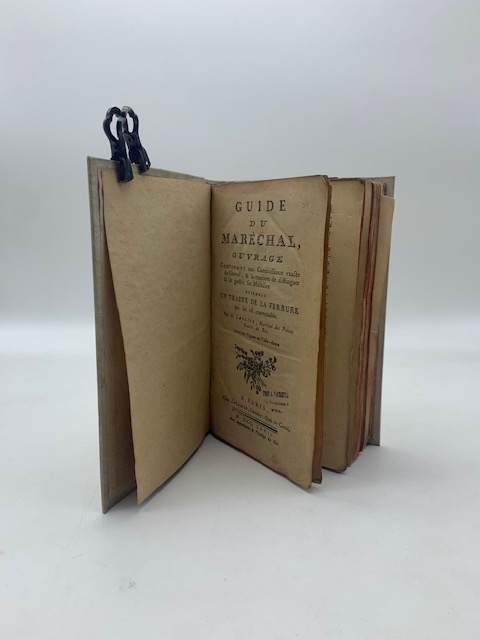




In 16 (cm 12,5 x 20), pp. XII + 417 + (3) con 10 tavole fuori testo ripiegate incise all'acquaforte. Legatura moderna in pena pergamena. Seconda edizione (edizione originale 1766) di questo manuale di Lafosse sul cavallo e sulla ferratura che conobbe varie edizioni anche successive. "Philippe Etienne Lafosse learned horseshoeing in the blacksmith shop of his father, Etienne Guillaume, who was also a well-known horse anatomist. Philipp Etienne was not merely a crude apprenticed horseshoer, however; he was also a learned man. He studied human and animal anatomy by visiting slaughterhouses and observing dissections in hospitals. Furthermore, he followed advanced studies at the Academy of Sciences, investigated anthrax, and was educated in the art of horse riding. He joined the army as a horse doctor in 1758... After the French defeat in the Seven Years' War, he joined the medical faculty of the Paris university... Then he started his own public courses in hippiatry for interested individuals in 1767, and this sparked a debate about the social attributes and purposes of veterinary education" (Jones, Koolmees, "A Concise History of Veterinary Medicine", 2022, p. 106".
Venditore:
Libreria Coenobium
Vedi tutti i prodotti
Informazioni:
In 16 (cm 12,5 x 20), pp. XII + 417 + (3) con 10 tavole fuori testo ripiegate incise all'acquaforte. Legatura moderna in pena pergamena. Seconda edizione (edizione originale 1766) di questo manuale di Lafosse sul cavallo e sulla ferratura che conobbe varie edizioni anche successive. "Philippe Etienne Lafosse learned horseshoeing in the blacksmith shop of his father, Etienne Guillaume, who was also a well-known horse anatomist. Philipp Etienne was not merely a crude apprenticed horseshoer, however; he was also a learned man. He studied human and animal anatomy by visiting slaughterhouses and observing dissections in hospitals. Furthermore, he followed advanced studies at the Academy of Sciences, investigated anthrax, and was educated in the art of horse riding. He joined the army as a horse doctor in 1758... After the French defeat in the Seven Years' War, he joined the medical faculty of the Paris university... Then he started his own public courses in hippiatry for interested individuals in 1767, and this sparked a debate about the social attributes and purposes of veterinary education" (Jones, Koolmees, "A Concise History of Veterinary Medicine", 2022, p. 106".
-
Editore:
-
Tipologia:
Anno edizione:
1767
- Prodotto usato
- Condizioni: Usato - In buone condizioni
EAN:
2568812842426

Informazioni e Contatti sulla Sicurezza dei Prodotti
Le schede prodotto sono aggiornate in conformità al Regolamento UE 988/2023. Laddove ci fossero taluni dati non disponibili per ragioni indipendenti da Feltrinelli, vi informiamo che stiamo compiendo ogni ragionevole sforzo per inserirli. Vi invitiamo a controllare periodicamente il sito www.lafeltrinelli.it per eventuali novità e aggiornamenti.
Per le vendite di prodotti da terze parti, ciascun venditore si assume la piena e diretta responsabilità per la commercializzazione del prodotto e per la sua conformità al Regolamento UE 988/2023, nonché alle normative nazionali ed europee vigenti.
Per informazioni sulla sicurezza dei prodotti, contattare productsafety@feltrinelli.it
