










EBOOK IN LINGUA STRANIERA





Handbook on Teaching Empirical Software Engineering

214,33 €
+2140
punti 
Venditore: Feltrinelli

Acquista online
Scaricabile subito
Articolo acquistabile con Carta del Docente

Articolo acquistabile con Carta Cultura Giovani e Carta del Merito

Articolo acquistabile con Carta della Cultura

Dati e Statistiche
 Salvato in 0 liste dei desideri
Salvato in 0 liste dei desideri
Handbook on Teaching Empirical Software Engineering
Scaricabile subito
214,33 €
214,33 €
Scaricabile subito

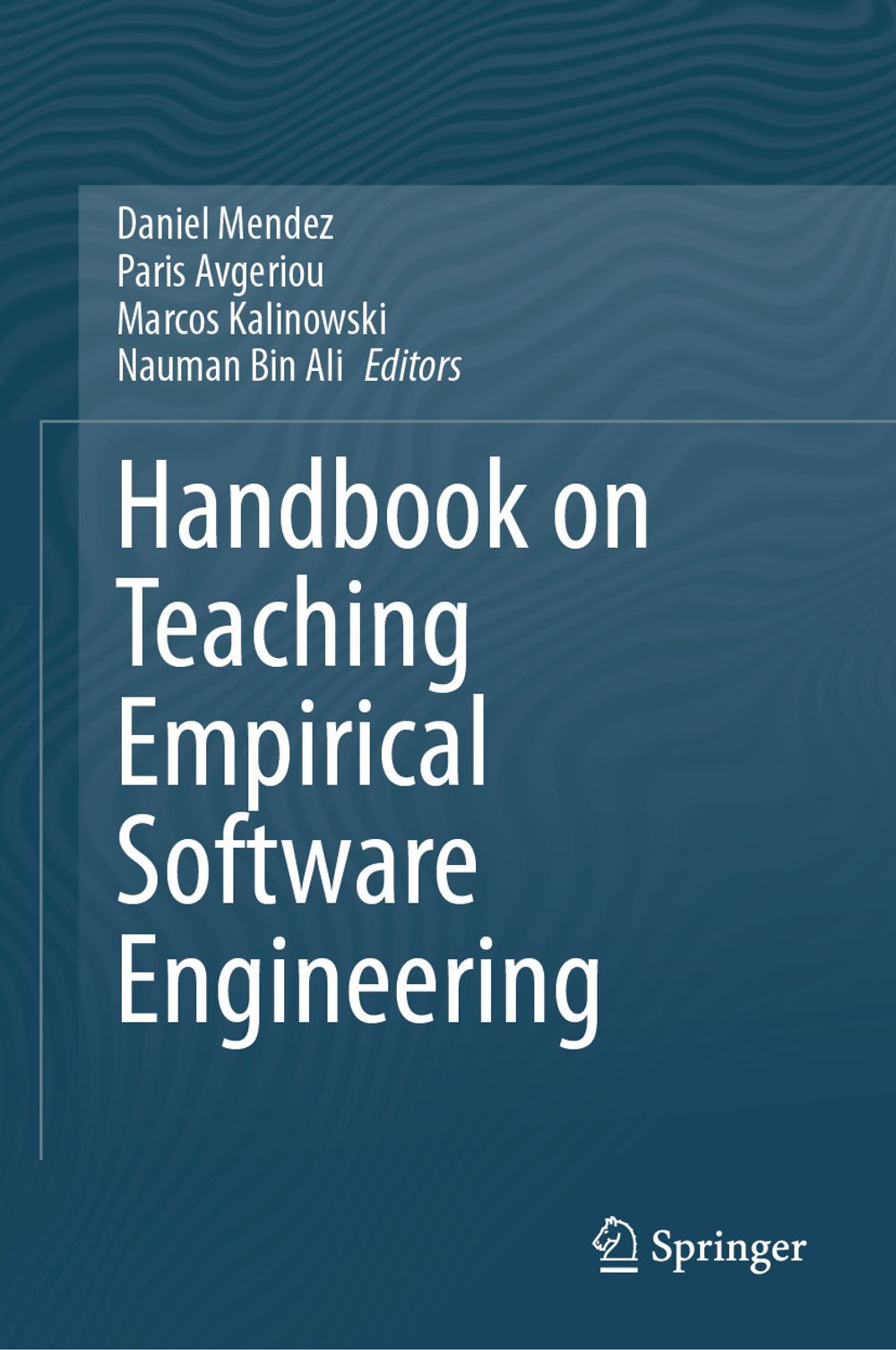



This handbook exploits the profound experience and expertise of well-established scholars in the empirical software engineering community to provide guidance and support in teaching various research methods and fundamental concepts. A particular focus is thus on combining research methods and their epistemological settings and terminology with didactics and pedagogy for the subject. The book covers the most essential contemporary research methods and philosophical and cross-cutting concerns in software engineering research, considering both academic and industrial settings, at the same time providing insights into the effective teaching of concepts and strategies. To this end, the book is organized into four major parts. In the first part, the editors set the foundation with two chapters; one laying out the larger context of the discipline for a positioning of the remainder of this book, and one guiding the creation of a syllabus for courses in empirical software engineering. The second part of the book lays the fundamentals for teaching empirical software engineering, addressing more cross-cutting aspects from theorizing and teaching research designs to measurement and quantitative data analysis. In the third part, general experiences and personal reflections from teaching empirical software engineering in different settings are shared. Finally, the fourth part contains a number of carefully selected research methods, presented through an educational lens. Next to the chapter contributions themselves that provide a more theoretical perspective and practical advice, readers will find additional material in the form of, for example, slide sets and tools, in an online material section. The book mainly targets three different audiences: (1) educators teaching empirical software engineering to undergraduate, postgraduate or doctoral students, (2) professional trainers teaching the basic concepts of empirical software engineering to software professionals, and (3) students and trainees attending such courses.
-
Curatore:
-
Anno edizione:2024
-
Editore:
-
Formato:
Lingua:
Inglese
Compatibilità:
Tutti i dispositivi (eccetto Kindle) Scopri di più
Layout:
Reflowable
EAN:
9783031717697

Formato:
Gli eBook venduti da Feltrinelli.it sono in formato ePub e possono essere protetti da Adobe DRM. In caso di download di un file protetto da DRM si otterrà un file in formato .acs, (Adobe Content Server Message), che dovrà essere aperto tramite Adobe Digital Editions e autorizzato tramite un account Adobe, prima di poter essere letto su pc o trasferito su dispositivi compatibili.
Cloud:
Gli eBook venduti da Feltrinelli.it sono sincronizzati automaticamente su tutti i client di lettura Kobo successivamente all’acquisto. Grazie al Cloud Kobo i progressi di lettura, le note, le evidenziazioni vengono salvati e sincronizzati automaticamente su tutti i dispositivi e le APP di lettura Kobo utilizzati per la lettura.
Clicca qui per sapere come scaricare gli ebook utilizzando un pc con sistema operativo Windows
