










EBOOK IN LINGUA STRANIERA





Hidden Attraction

31,40 €
+310
punti 
Venditore: Feltrinelli

Acquista online
Scaricabile subito
Articolo acquistabile con Carta del Docente

Articolo acquistabile con Carta Cultura Giovani e Carta del Merito

Articolo acquistabile con Carta della Cultura

Dati e Statistiche
 Salvato in 0 liste dei desideri
Salvato in 0 liste dei desideri
Hidden Attraction
Scaricabile subito
31,40 €
31,40 €
Scaricabile subito

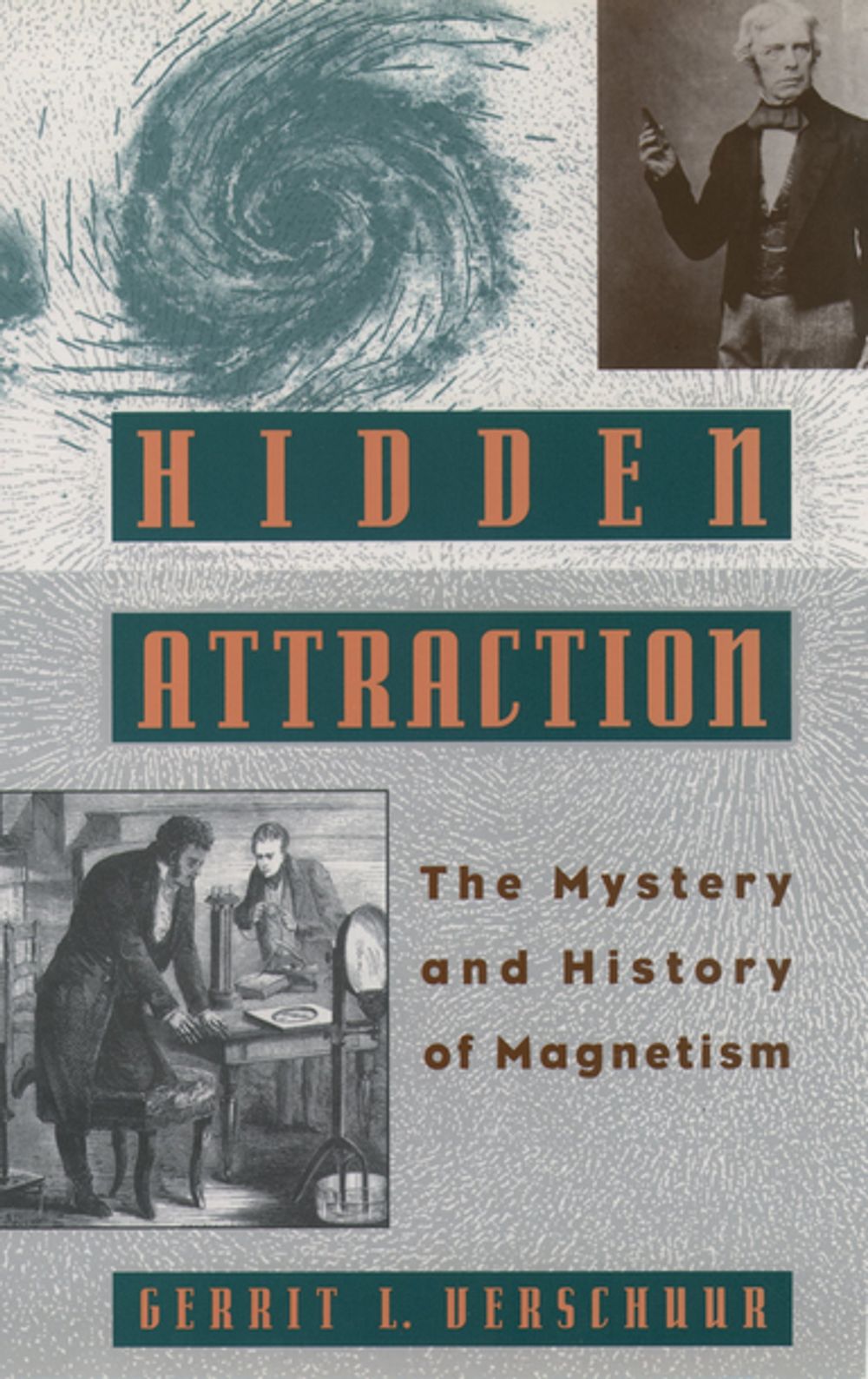



Long one of nature's most fascinating phenomena, magnetism was once the subject of many superstitions. Magnets were thought useful to thieves, effective as a love potion or as a cure for gout or spasms. They could remove sorcery from women and put demons to flight and even reconcile married couples. It was said that a lodestone pickled in the salt of sucking fish had the power to attract gold. Today, these beliefs have been put aside, but magnetism is no less remarkable for our modern understanding of it. In Hidden Attraction, Gerrit L. Verschuur, a noted astronomer and National Book Award nominee for The Invisible Universe, traces the history of our fascination with magnetism, from the first discovery of magnets in Greece, to state-of-the-art theories that see magnetism as a basic force in the universe. The book begins with the early debunking of superstitions by Peter Peregrinus (Pierre de Maricourt), whom Roger Bacon hailed as one of the world's first experimental scientists (Perigrinus held that "experience rather than argument is the basis of certainty in science"). Verschuur discusses William Gilbert, who confronted the multitude of superstitions about lodestones in De Magnete, widely regarded as the first true work of modern science, in which Gilbert reported his greatest insight: that the earth itself was magnetic. We also meet Hans Christian Oersted, who demonstrated that an electric current could influence a magnet (Oersted did this for the first time during a public lecture) and Andre-Marie Ampere, who showed that a current actually produced magnetism. Verschuur also examines the pioneering experiments and theoretical breakthroughs of Faraday and Maxwell and Zeeman (who demonstrated the relationship between light and magnetism), and he includes many lively stories of discovery, such as the use of frogs by Galvani and Volta, and Hertz's accidental discovery of radio waves. Along the way, we learn many interesting scientific facts, perhaps the most remarkable of which is that lodestones are made by bacteria (a sediment organism known as GS-15 eats iron, converting ferric oxide to magnetite and, over billions of years, forming the magnetite layers in iron formations). Boasting many informative illustrations, this is an adventure of the mind, using the specific phenomenon of magnetism to show how we have moved from an era of superstitions to one in which the Theory of Everything looms on the horizon.
-
Autore:
-
Anno edizione:1996
-
Editore:
-
Formato:
-
Lingua:Inglese
Compatibilità:
Tutti i dispositivi (eccetto Kindle) Scopri di più
Layout:
Reflowable
EAN:
9780190283056

Formato:
Gli eBook venduti da Feltrinelli.it sono in formato ePub e possono essere protetti da Adobe DRM. In caso di download di un file protetto da DRM si otterrà un file in formato .acs, (Adobe Content Server Message), che dovrà essere aperto tramite Adobe Digital Editions e autorizzato tramite un account Adobe, prima di poter essere letto su pc o trasferito su dispositivi compatibili.
Cloud:
Gli eBook venduti da Feltrinelli.it sono sincronizzati automaticamente su tutti i client di lettura Kobo successivamente all’acquisto. Grazie al Cloud Kobo i progressi di lettura, le note, le evidenziazioni vengono salvati e sincronizzati automaticamente su tutti i dispositivi e le APP di lettura Kobo utilizzati per la lettura.
Clicca qui per sapere come scaricare gli ebook utilizzando un pc con sistema operativo Windows
