










LIBRO INGLESE





Indigenous Technology Knowledge Systems: Decolonizing the Technology Education Curriculum

191,90 €
+1920
punti 
Venditore: Feltrinelli
Articolo acquistabile con Carta del Docente

Articolo acquistabile con Carta Cultura Giovani e Carta del Merito

Articolo acquistabile con Carta della Cultura

Paga con Klarna in 3 rate senza interessi per ordini superiori a 39 €

Dati e Statistiche
 Salvato in 0 liste dei desideri
Salvato in 0 liste dei desideri
Indigenous Technology Knowledge Systems: Decolonizing the Technology Education Curriculum
Disponibilità in 2 settimane
191,90 €
191,90 €
Disponibilità in 2 settimane

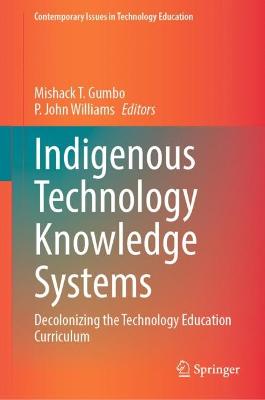


There has been a growing interest in indigenous knowledge systems and research. This interest has been mainly triggered by the need to decolonize education as a response to the colonial onslaught on indigenous knowledge and people. Research has, however, concentrated on the generality of the indigenous knowledge system rather than on its related dimensions. One area that has suffered a lack of attention is indigenous conceptions of science, technology, engineering, and mathematics (STEM) despite the unquestionable evidence of STEM in indigenous contexts. Most STEM is presented by colonial establishments and representations, especially in developed/modern/urban contexts, which portray STEM as a colonial construct. This book focuses on indigenous technological knowledge systems education (ITKSE). Indigenous people have been at the front of technological developments from pre-colonial times. The list of precolonial industries, science, and technology is extensive, including blacksmithing, wood-carving, textile-weaving and dyeing, leather works, beadworks, pottery making, architecture, agricultural breeding, metal-working, salt production, gold-smithing, copper-smithing, leather-crafting, soap-making, bronze-casting, canoe-building, brewing, glass-making, and agriculture, for example. In some parts of the world such as Africa and Australia, these technologies still exist. ITKSE should not be left to exist outside of the technology education curriculum and classroom as it can benefit both indigenous students, who have been denied learning about what is relevant to them, and non-indigenous students. These cultural groups can expand their knowledge of technology by learning both ITKSE and Western technological knowledge systems education (WTKSE). ITKSE also presents opportunities for technology teachers to reflect on and revisit their depth of technological knowledge, pedagogies, and assessment. The intent of this bookis transformational in the sense that it brings decolonial and indigenous perspectives into the technology education context. It extends technology education in the sense that it will not only influence Western-minded architects, artisans, designers, etc. but encourage indigenous-mindedness as well.
-
Curatore:
-
Editore:
-
Collana:Contemporary Issues in Technology Education
-
Anno:2023
-
Rilegatura:Hardback
Pagine:
331 p.
Testo in English
Dimensioni:
235 x 155 mm
EAN:
9789819913954

Informazioni e Contatti sulla Sicurezza dei Prodotti
Le schede prodotto sono aggiornate in conformità al Regolamento UE 988/2023. Laddove ci fossero taluni dati non disponibili per ragioni indipendenti da Feltrinelli, vi informiamo che stiamo compiendo ogni ragionevole sforzo per inserirli. Vi invitiamo a controllare periodicamente il sito www.lafeltrinelli.it per eventuali novità e aggiornamenti.
Per le vendite di prodotti da terze parti, ciascun venditore si assume la piena e diretta responsabilità per la commercializzazione del prodotto e per la sua conformità al Regolamento UE 988/2023, nonché alle normative nazionali ed europee vigenti.
Per informazioni sulla sicurezza dei prodotti, contattare productsafety@feltrinelli.it
