










EBOOK IN LINGUA STRANIERA





Inventing Immortality

106,38 €
+1060
punti 
Venditore: Feltrinelli

Acquista online
Scaricabile subito
Articolo acquistabile con Carta del Docente

Articolo acquistabile con Carta Cultura Giovani e Carta del Merito

Articolo acquistabile con Carta della Cultura

Dati e Statistiche
 Salvato in 0 liste dei desideri
Salvato in 0 liste dei desideri
Inventing Immortality
Scaricabile subito
106,38 €
106,38 €
Scaricabile subito

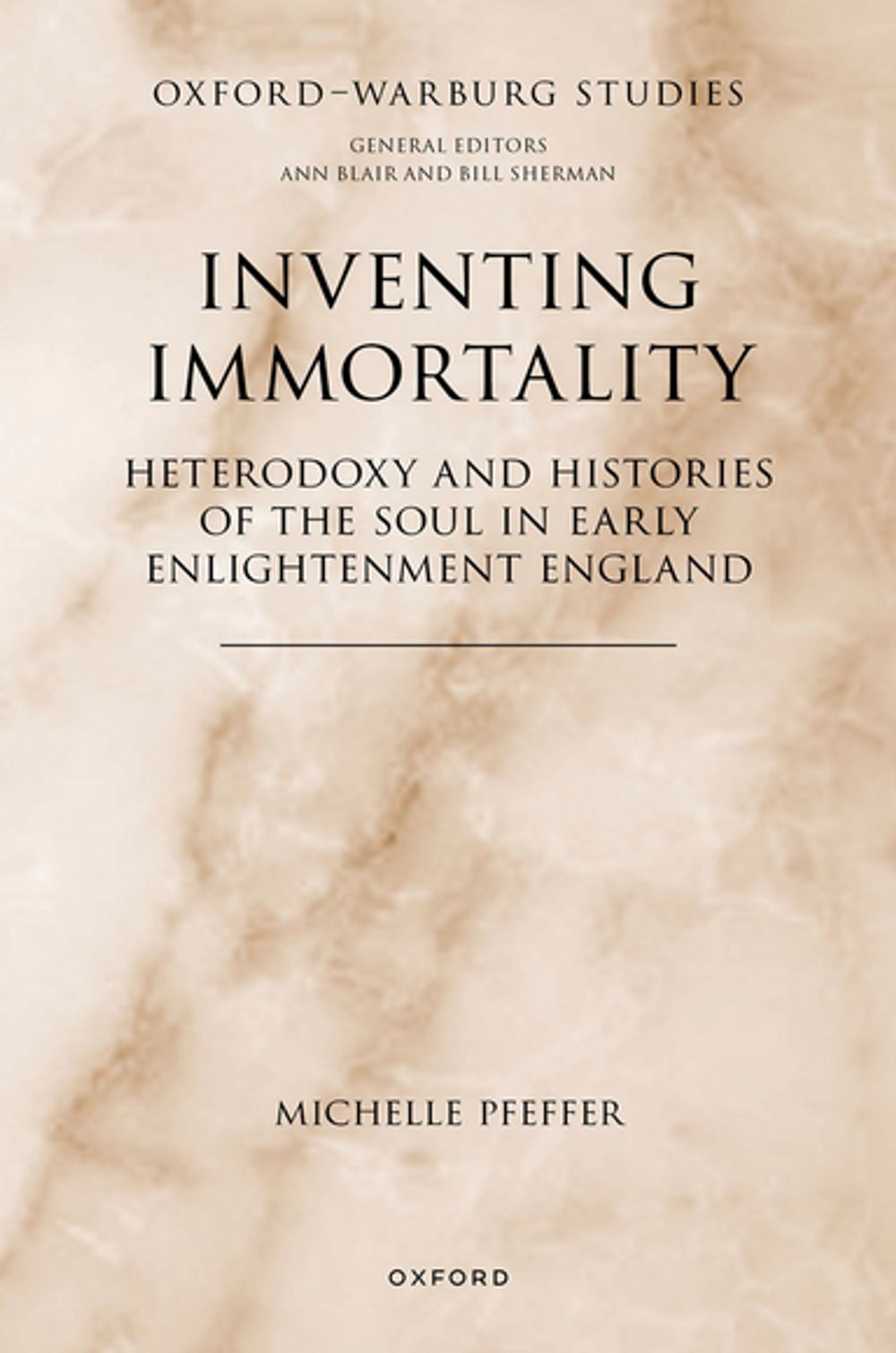



In the decades either side of 1700, England witnessed a major public debate about the immortality of the soul. At its centre were two unlikely figures: the lawyer Henry Layton and the physician William Coward. Across numerous publications, both argued that the soul's immortality was a pagan invention absent from early scripture and only later absorbed into Christianity. Their detailed histories of the soul aimed to recast it as an inescapably human creation, rather than a natural and revealed truth. Though often seen as the product of radical freethinking circles, Layton and Coward's histories drew directly on scholarly commonplaces that they simply reassembled and repurposed. Economic, social, and cultural shifts across the seventeenth century had made academic scholarship more accessible than ever, enabling a growing number of non-specialists to participate in scholarly debates that were now more firmly in the public sphere. The derivative nature of their work should not see writers like Layton and Coward dismissed as mere hacks. Technical proficiency does not automatically confer historical significance, nor does its absence preclude it. Layton and Coward's contributions to the debate about the soul were amateurish and, to specialist scholars at the time, unsurprising. Yet they helped push scholarship in new directions. The impact of ideas depends as much on the context of their circulation as on their originality and rigour. Rather than portraying the heterodox publications of the period c.1700 as the 'unintended consequences' of scholarship, this book presents a more dynamic model: a feedback loop between lay and specialist knowledge, in which amateur contributions actively shaped scholarly debates. The early Enlightenment, this book suggests, may be best understood less in terms of substantive new ideas, and more in the repackaging of older ones, with different targets, by different sorts of people, for different audiences.
-
Autore:
-
Anno edizione:2026
-
Editore:
-
Formato:
-
Lingua:Inglese
Compatibilità:
Tutti i dispositivi (eccetto Kindle) Scopri di più
Layout:
Reflowable
EAN:
9780198989233

Formato:
Gli eBook venduti da Feltrinelli.it sono in formato ePub e possono essere protetti da Adobe DRM. In caso di download di un file protetto da DRM si otterrà un file in formato .acs, (Adobe Content Server Message), che dovrà essere aperto tramite Adobe Digital Editions e autorizzato tramite un account Adobe, prima di poter essere letto su pc o trasferito su dispositivi compatibili.
Cloud:
Gli eBook venduti da Feltrinelli.it sono sincronizzati automaticamente su tutti i client di lettura Kobo successivamente all’acquisto. Grazie al Cloud Kobo i progressi di lettura, le note, le evidenziazioni vengono salvati e sincronizzati automaticamente su tutti i dispositivi e le APP di lettura Kobo utilizzati per la lettura.
Clicca qui per sapere come scaricare gli ebook utilizzando un pc con sistema operativo Windows
