









EBOOK IN LINGUA STRANIERA





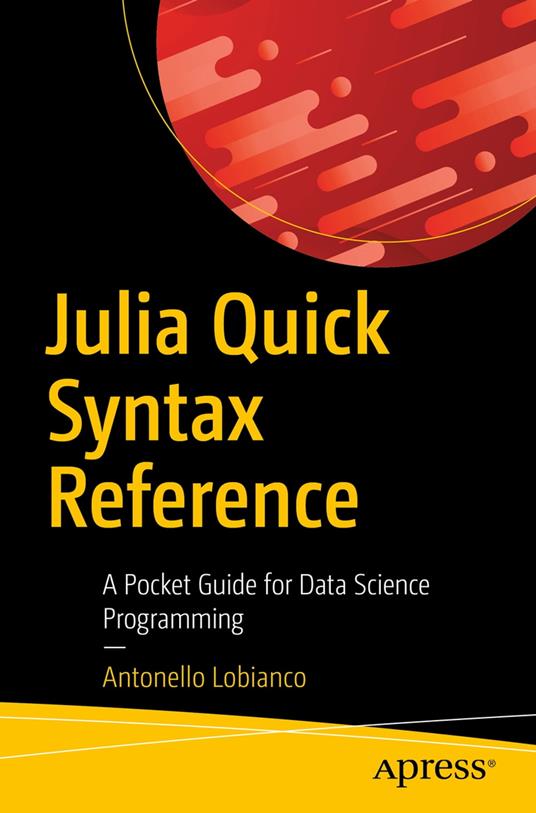
Julia Quick Syntax Reference

49,91 €
+500
punti 
Venditore: Feltrinelli

Acquista online
Scaricabile subito
Articolo acquistabile con Carta del Docente

Articolo acquistabile con Carta Cultura Giovani e Carta del Merito

Articolo acquistabile con Carta della Cultura

Dati e Statistiche
 Salvato in 0 liste dei desideri
Salvato in 0 liste dei desideri
Julia Quick Syntax Reference
Scaricabile subito
49,91 €
49,91 €
Scaricabile subito
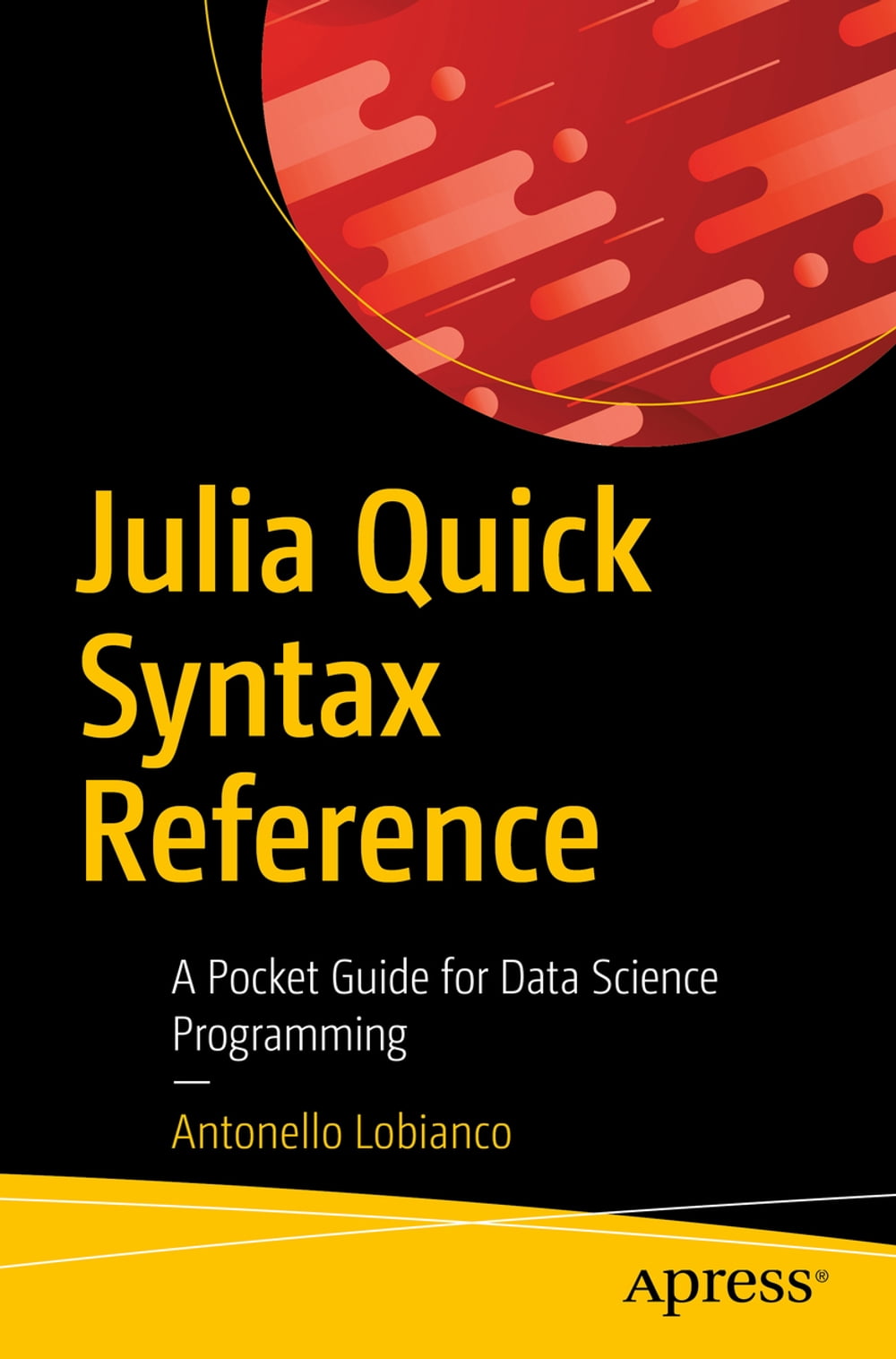


This quick Julia programming language guide is a condensed code and syntax reference to the Julia 1.x programming language, updated with the latest features of the Julia APIs, libraries, and packages. It presents the essential Julia syntax in a well-organized format that can be used as a handy reference. This book provides an introduction that reveals basic Julia structures and syntax; discusses data types, control flow, functions, input/output, exceptions, metaprogramming, performance, and more. Additionally, you'll learn to interface Julia with other programming languages such as R for statistics or Python. You will learn how to use Julia packages for data analysis, numerical optimization and symbolic computation, and how to disseminate your results in dynamic documents or interactive web pages. In this book, the focus is on providing important information as quickly as possible. It is packed with useful information and is a must-have for any Julia programmer. What You Will Learn Set up the software needed to run Julia and your first Hello World example Work with types and the different containers that Julia makes available for rapid application development Use vectorized, classical loop-based code, logical operators, and blocks Explore Julia functions by looking at arguments, return values, polymorphism, parameters, anonymous functions, and broadcasts Build custom structures in Julia Interface Julia with other languages such as C/C++, Python, and R Program a richer API, modifying the code before it is executed using expressions, symbols, macros, quote blocks, and more Maximize your code’s performance Who This Book Is For Experienced programmers new to Julia, as well as existing Julia coders new tothe now stable Julia version 1.0 release.
-
Autore:
-
Anno edizione:2019
-
Editore:
-
Formato:
-
Lingua:Inglese
Compatibilità:
Tutti i dispositivi (eccetto Kindle) Scopri di più
Layout:
Reflowable
EAN:
9781484251904

Formato:
Gli eBook venduti da Feltrinelli.it sono in formato ePub e possono essere protetti da Adobe DRM. In caso di download di un file protetto da DRM si otterrà un file in formato .acs, (Adobe Content Server Message), che dovrà essere aperto tramite Adobe Digital Editions e autorizzato tramite un account Adobe, prima di poter essere letto su pc o trasferito su dispositivi compatibili.
Cloud:
Gli eBook venduti da Feltrinelli.it sono sincronizzati automaticamente su tutti i client di lettura Kobo successivamente all’acquisto. Grazie al Cloud Kobo i progressi di lettura, le note, le evidenziazioni vengono salvati e sincronizzati automaticamente su tutti i dispositivi e le APP di lettura Kobo utilizzati per la lettura.
Clicca qui per sapere come scaricare gli ebook utilizzando un pc con sistema operativo Windows
