









EBOOK IN LINGUA STRANIERA





Lessons in Bioinformatics - Dot Plots

2,99 €
+30
punti 
Venditore: Feltrinelli

Acquista online
Scaricabile subito
Articolo acquistabile con Carta del Docente

Articolo acquistabile con Carta Cultura Giovani e Carta del Merito

Articolo acquistabile con Carta della Cultura

Abbonati a Kobo plus per avere accesso illimitato a questo contenuto

Dati e Statistiche
 Salvato in 0 liste dei desideri
Salvato in 0 liste dei desideri
Lessons in Bioinformatics - Dot Plots
Scaricabile subito
2,99 €
2,99 €
Scaricabile subito
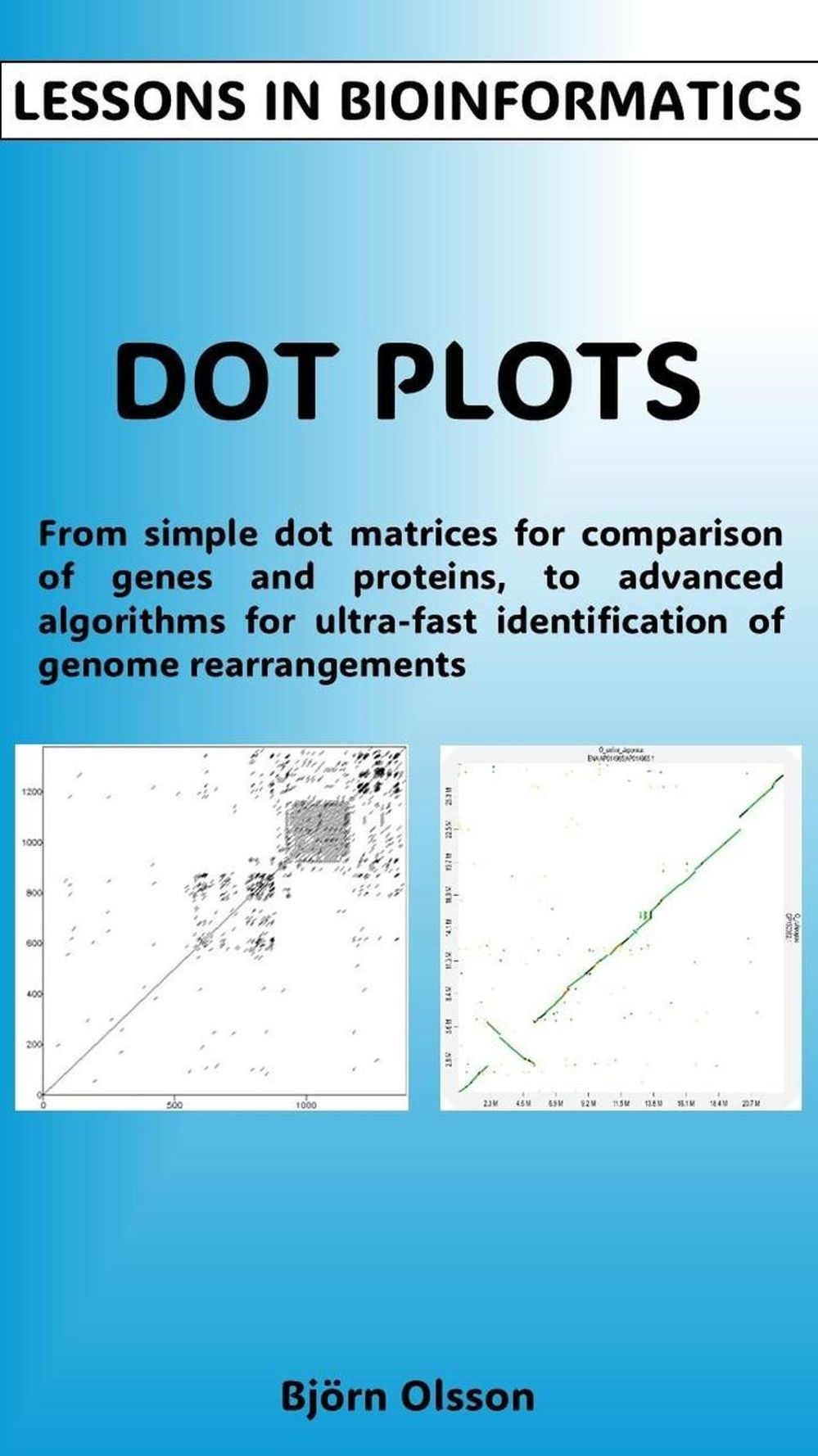


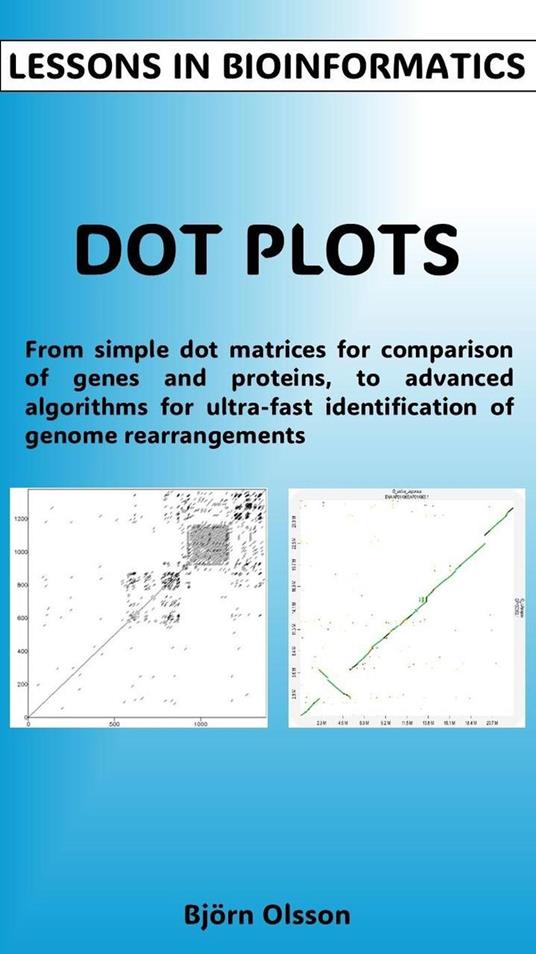
This book is intended to be the first volume in a series of books, Lessons in Bioinformatics, on fundamental concepts and methods in bioinformatics. Each book will focus on a single topic, which is explained in a comprehensive and detailed, yet easy-to-read, format. The books are primarily addressed towards beginner bioinformaticians who are building up a broad base of knowledge and skills. Previous knowledge of bioinformatics is not assumed, so everything covered in this text should be easy to understand even if it is the first book you read on bioinformatics. The current volume covers the topic of dot plots, starting with a basic introduction to what dot plots are and how a simple dot matrix is generated. The text thereafter gradually progresses towards more advanced methods with numerous examples explaining each new concept that is introduced, for example, the use of sliding windows and substitution matrices. It shows how dot plots can be used to identify inserts and deletes, repeat regions, compositional bias, and domain structure in protein sequences. When applied to the study of genome sequences, the algorithms used by modern dot plot software are more complex, since analysis of very long sequences – consisting of up to hundreds of millions or even a few billion symbols – is far too slow unless the algorithms are cleverly designed to be very fast. Recently published dot plot software for genome sequence analysis therefore relies on advanced concepts such as position trees, suffix arrays and minimizers. The book attempts to explain these algorithmic ideas in a reasonably easy way, to make them accessible to readers regardless of academic background. The final chapters of the book present application examples from research articles and show step-by-step how the dot plots shown in the journal articles can be reproduced by the reader. At the very end, the final chapter gives an overview of the history of research on dot plot algorithms, from the 1970s to the present day. This gives a historical perspective of how algorithms have advanced from the time when short sequences of a few hundred symbols were painstakingly analyzed by the slow computers of that time, or even by hand with pen and paper, to the powerful dot plot tools used today, that can compare medium-sized genomes in a matter of seconds or two eukaryote genomes containing over a billion symbols in a few minutes. If you find this book useful, then look out for upcoming titles in the same series, Lessons in Bioinformatics, which are intended to cover the fundamental topics that every bioinformatician should master.
-
Autore:
-
Anno edizione:2025
-
Editore:
-
Formato:
-
Lingua:Inglese
Compatibilità:
Tutti i dispositivi (eccetto Kindle) Scopri di più
Layout:
Reflowable
EAN:
9789199033006

Formato:
Gli eBook venduti da Feltrinelli.it sono in formato ePub e possono essere protetti da Adobe DRM. In caso di download di un file protetto da DRM si otterrà un file in formato .acs, (Adobe Content Server Message), che dovrà essere aperto tramite Adobe Digital Editions e autorizzato tramite un account Adobe, prima di poter essere letto su pc o trasferito su dispositivi compatibili.
Cloud:
Gli eBook venduti da Feltrinelli.it sono sincronizzati automaticamente su tutti i client di lettura Kobo successivamente all’acquisto. Grazie al Cloud Kobo i progressi di lettura, le note, le evidenziazioni vengono salvati e sincronizzati automaticamente su tutti i dispositivi e le APP di lettura Kobo utilizzati per la lettura.
Clicca qui per sapere come scaricare gli ebook utilizzando un pc con sistema operativo Windows
