










EBOOK IN LINGUA STRANIERA





Materials Data Science

60,83 €
+610
punti 
Venditore: Feltrinelli

Acquista online
Scaricabile subito
Articolo acquistabile con Carta del Docente

Articolo acquistabile con Carta Cultura Giovani e Carta del Merito

Articolo acquistabile con Carta della Cultura

Dati e Statistiche
 Salvato in 0 liste dei desideri
Salvato in 0 liste dei desideri
Materials Data Science
Scaricabile subito
60,83 €
60,83 €
Scaricabile subito

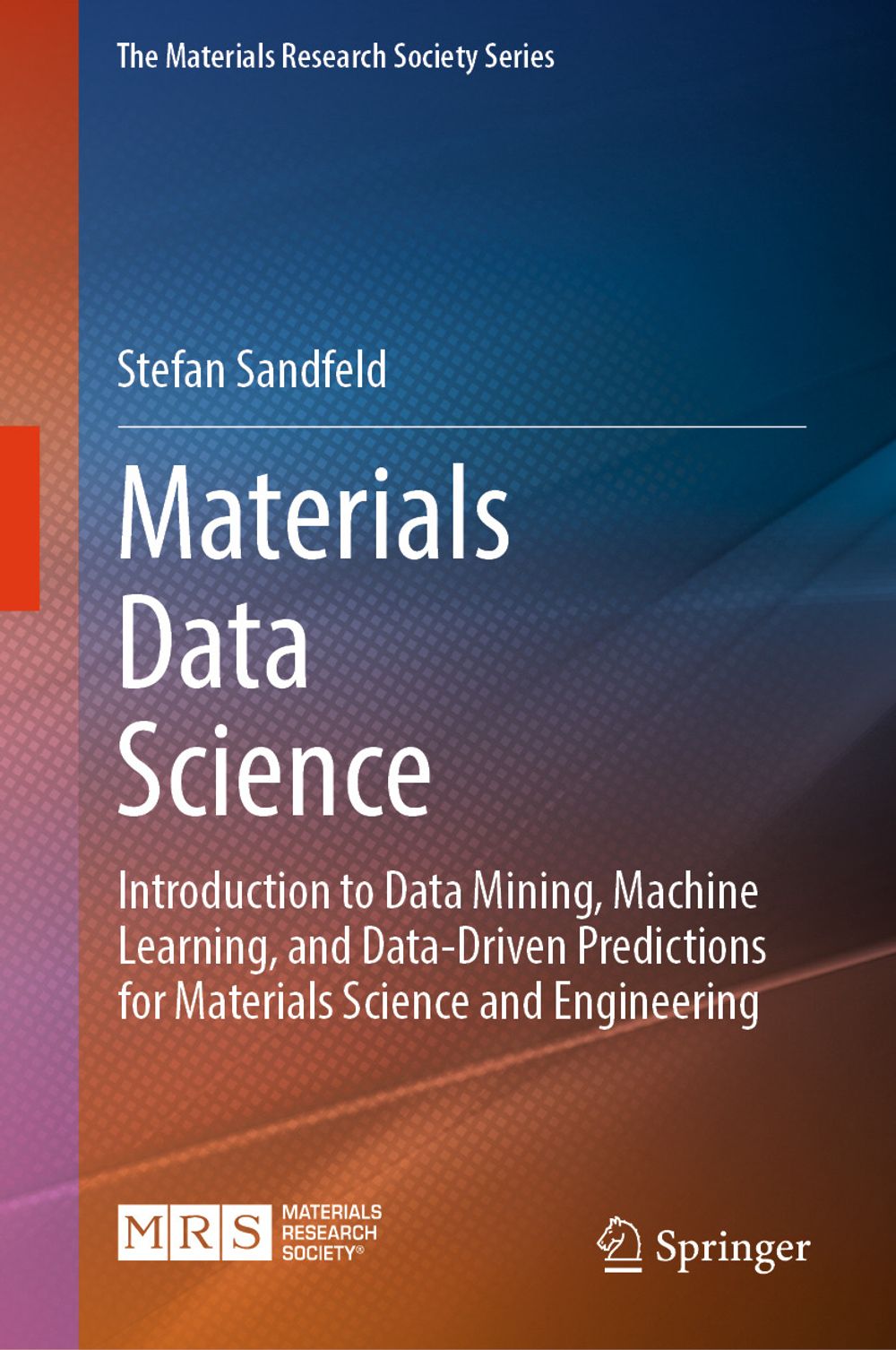


This text covers all of the data science, machine learning, and deep learning topics relevant to materials science and engineering, accompanied by numerous examples and applications. Almost all methods and algorithms introduced are implemented “from scratch” using Python and NumPy. The book starts with an introduction to statistics and probabilities, explaining important concepts such as random variables and probability distributions, Bayes’ theorem and correlations, sampling techniques, and exploratory data analysis, and puts them in the context of materials science and engineering. Therefore, it serves as a valuable primer for both undergraduate and graduate students, as well as a review for research scientists and practicing engineers. The second part provides an in-depth introduction of (statistical) machine learning. It begins with outlining fundamental concepts and proceeds to explore a variety of supervised learning techniques for regression and classification, including advanced methods such as kernel regression and support vector machines. The section on unsupervised learning emphasizes principal component analysis, and also covers manifold learning (t-SNE and UMAP) and clustering techniques. Additionally, feature engineering, feature importance, and cross-validation are introduced. The final part on neural networks and deep learning aims to promote an understanding of these methods and dispel misconceptions that they are a “black box”. The complexity gradually increases until fully connected networks can be implemented. Advanced techniques and network architectures, including GANs, are implemented “from scratch” using Python and NumPy, which facilitates a comprehensive understanding of all the details and enables the user to conduct their own experiments in Deep Learning.
-
Autore:
-
Anno edizione:2024
-
Editore:
-
Formato:
-
Lingua:Inglese
Compatibilità:
Tutti i dispositivi (eccetto Kindle) Scopri di più
Layout:
Reflowable
EAN:
9783031465659

Formato:
Gli eBook venduti da Feltrinelli.it sono in formato ePub e possono essere protetti da Adobe DRM. In caso di download di un file protetto da DRM si otterrà un file in formato .acs, (Adobe Content Server Message), che dovrà essere aperto tramite Adobe Digital Editions e autorizzato tramite un account Adobe, prima di poter essere letto su pc o trasferito su dispositivi compatibili.
Cloud:
Gli eBook venduti da Feltrinelli.it sono sincronizzati automaticamente su tutti i client di lettura Kobo successivamente all’acquisto. Grazie al Cloud Kobo i progressi di lettura, le note, le evidenziazioni vengono salvati e sincronizzati automaticamente su tutti i dispositivi e le APP di lettura Kobo utilizzati per la lettura.
Clicca qui per sapere come scaricare gli ebook utilizzando un pc con sistema operativo Windows
