










LIBRO INGLESE





Materials, Productions, Exchange Network and their Impact on the Societies of Neolithic Europe: Proceedings of the XVII UISPP World Congress (1-7 September 2014, Burgos, Spain) Volume 13/Session A25a


30,00 €
+300
punti 
Venditore: Feltrinelli
Articolo acquistabile con Carta del Docente

Articolo acquistabile con Carta Cultura Giovani e Carta del Merito

Articolo acquistabile con Carta della Cultura

Dati e Statistiche
 Salvato in 0 liste dei desideri
Salvato in 0 liste dei desideri
Materials, Productions, Exchange Network and their Impact on the Societies of Neolithic Europe: Proceedings of the XVII UISPP World Congress (1-7 September 2014, Burgos, Spain) Volume 13/Session A25a
Disponibile in 5 gg lavorativi
30,00 €
30,00 €
Disponibile in 5 gg lavorativi
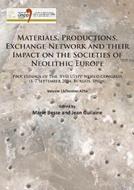




Scholars who will study the historiography of the European Neolithic, more particularly with regards to the second half of the 20th century and the beginning of the 21st century, will observe a progressive change in the core understanding of this period. For several decades the concept of 'culture' has been privileged and the adopted approach aimed to highlight the most significant markers likely to emphasise the character of a given culture and to stress its specificities, the foundations of its identity. In short, earlier research aimed primarily to highlight the differences between cultures by stressing the most distinctive features of each of them. The tendency was to differentiate, single out, and identify cultural boundaries. However, over the last few years this perspective has been universally challenged. Although regional originality and particularisms are still a focus of study, the research community is now interested in widely diffused markers, in medium-scale or large-scale circulation, and in interactions that make it possible to go beyond the traditional notion of 'archaeological culture'. The networks related to raw materials or finished products are currently leading us to re-think the history of Neolithic populations on a more general and more global scale. The aim is no longer to stress differences, but on the contrary to identify what links cultures together, what reaches beyond regionalism in order to try to uncover the underlying transcultural phenomena. From culturalism, we have moved on to its deconstruction. This is indeed a complete change in perspective. This new approach certainly owes a great deal to all kinds of methods, petrographic, metal, chemical and other analyses, combined with effective tools such as the GIS systems that provide a more accurate picture of the sources, exchanges or relays used by these groups. It is also true that behind the facts observed there are social organisations involving prospectors, extractors, craftsmen, distributors, sponsors, users, and recyclers. We therefore found it appropriate to organise a session on the theme 'Materials, productions, exchange networks and their impact on the societies of Neolithic Europe'. How is it possible to identify the circulation of materials or of finished objects in Neolithic Europe, as well as the social networks involved? Several approaches exist for the researcher, and the present volume provides some examples.
-
Curatore:
-
Editore:
-
Collana:Proceedings of the UISPP World Congress
-
Anno:2017
-
Rilegatura:Paperback / softback
Pagine:
88 p.
Testo in English
Dimensioni:
290 x 205 mm
Peso:
363 gr.
EAN:
9781784915247

Informazioni e Contatti sulla Sicurezza dei Prodotti
Le schede prodotto sono aggiornate in conformità al Regolamento UE 988/2023. Laddove ci fossero taluni dati non disponibili per ragioni indipendenti da Feltrinelli, vi informiamo che stiamo compiendo ogni ragionevole sforzo per inserirli. Vi invitiamo a controllare periodicamente il sito www.lafeltrinelli.it per eventuali novità e aggiornamenti.
Per le vendite di prodotti da terze parti, ciascun venditore si assume la piena e diretta responsabilità per la commercializzazione del prodotto e per la sua conformità al Regolamento UE 988/2023, nonché alle normative nazionali ed europee vigenti.
Per informazioni sulla sicurezza dei prodotti, contattare productsafety@feltrinelli.it
