










EBOOK IN LINGUA STRANIERA





Micromechanics with Mathematica

88,99 €
+890
punti 
Venditore: Feltrinelli

Acquista online
Scaricabile subito
Articolo acquistabile con Carta del Docente

Articolo acquistabile con Carta Cultura Giovani e Carta del Merito

Articolo acquistabile con Carta della Cultura

Dati e Statistiche
 Salvato in 0 liste dei desideri
Salvato in 0 liste dei desideri
Micromechanics with Mathematica
Scaricabile subito
88,99 €
88,99 €
Scaricabile subito
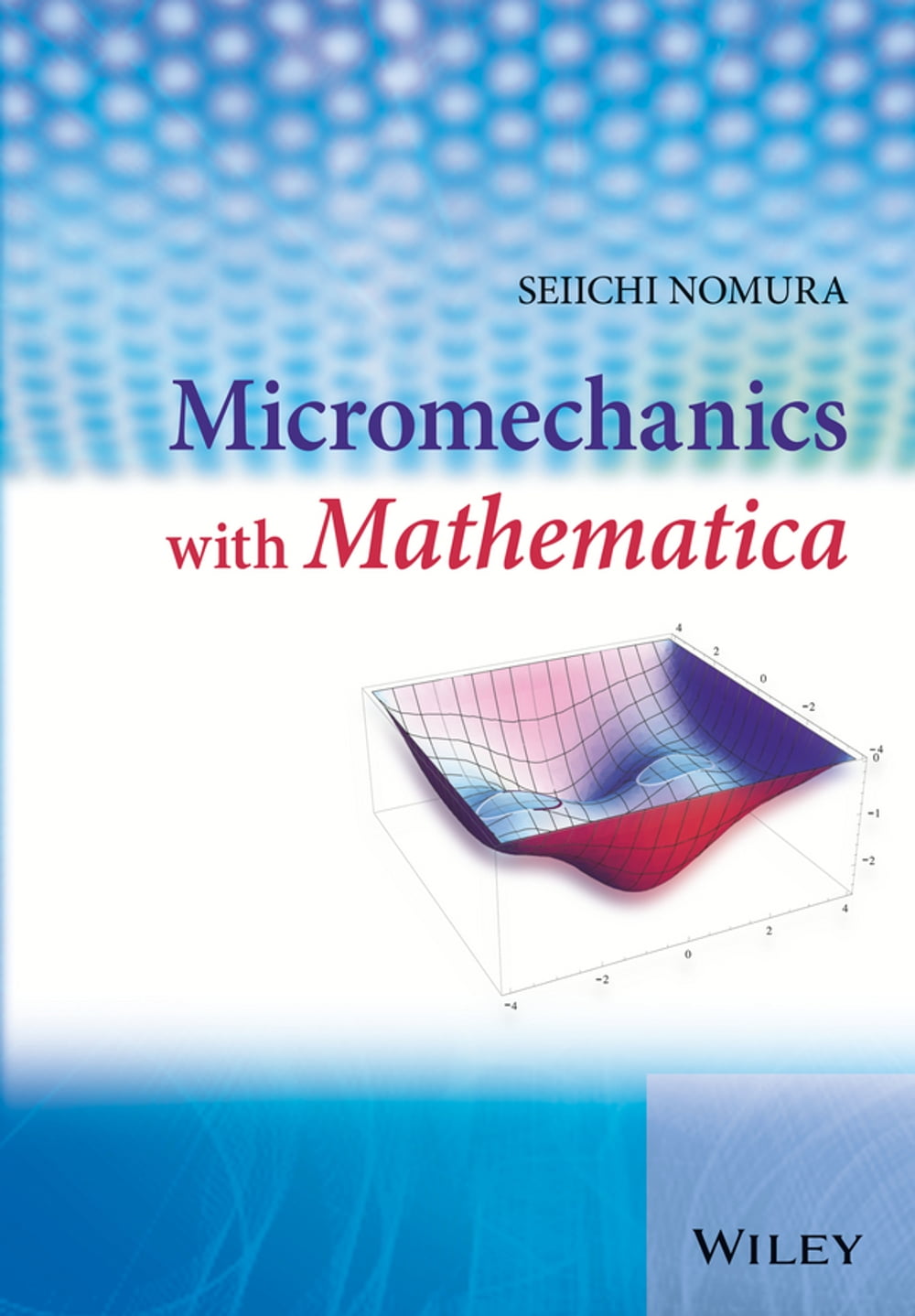


Demonstrates the simplicity and effectiveness of Mathematica as the solution to practical problems in composite materials. Designed for those who need to learn how micromechanical approaches can help understand the behaviour of bodies with voids, inclusions, defects, this book is perfect for readers without a programming background. Thoroughly introducing the concept of micromechanics, it helps readers assess the deformation of solids at a localized level and analyse a body with microstructures. The author approaches this analysis using the computer algebra system Mathematica, which facilitates complex index manipulations and mathematical expressions accurately. The book begins by covering the general topics of continuum mechanics such as coordinate transformations, kinematics, stress, constitutive relationship and material symmetry. Mathematica programming is also introduced with accompanying examples. In the second half of the book, an analysis of heterogeneous materials with emphasis on composites is covered. Takes a practical approach by using Mathematica, one of the most popular programmes for symbolic computation Introduces the concept of micromechanics with worked-out examples using Mathematica code for ease of understanding Logically begins with the essentials of the topic, such as kinematics and stress, before moving to more advanced areas Applications covered include the basics of continuum mechanics, Eshelby's method, analytical and semi-analytical approaches for materials with inclusions (composites) in both infinite and finite matrix media and thermal stresses for a medium with inclusions, all with Mathematica examples Features a problem and solution section on the book’s companion website, useful for students new to the programme
-
Autore:
-
Anno edizione:2016
-
Editore:
-
Formato:
-
Lingua:Inglese
Compatibilità:
Tutti i dispositivi (eccetto Kindle) Scopri di più
Layout:
Reflowable
EAN:
9781118385708

Formato:
Gli eBook venduti da Feltrinelli.it sono in formato ePub e possono essere protetti da Adobe DRM. In caso di download di un file protetto da DRM si otterrà un file in formato .acs, (Adobe Content Server Message), che dovrà essere aperto tramite Adobe Digital Editions e autorizzato tramite un account Adobe, prima di poter essere letto su pc o trasferito su dispositivi compatibili.
Cloud:
Gli eBook venduti da Feltrinelli.it sono sincronizzati automaticamente su tutti i client di lettura Kobo successivamente all’acquisto. Grazie al Cloud Kobo i progressi di lettura, le note, le evidenziazioni vengono salvati e sincronizzati automaticamente su tutti i dispositivi e le APP di lettura Kobo utilizzati per la lettura.
Clicca qui per sapere come scaricare gli ebook utilizzando un pc con sistema operativo Windows
