










EBOOK IN LINGUA STRANIERA





Moving Target Defense in the Smart Grid

149,75 €
+1500
punti 
Venditore: Feltrinelli

Acquista online
Scaricabile subito
Articolo acquistabile con Carta del Docente

Articolo acquistabile con Carta Cultura Giovani e Carta del Merito

Articolo acquistabile con Carta della Cultura

Dati e Statistiche
 Salvato in 0 liste dei desideri
Salvato in 0 liste dei desideri
Moving Target Defense in the Smart Grid
Scaricabile subito
149,75 €
149,75 €
Scaricabile subito

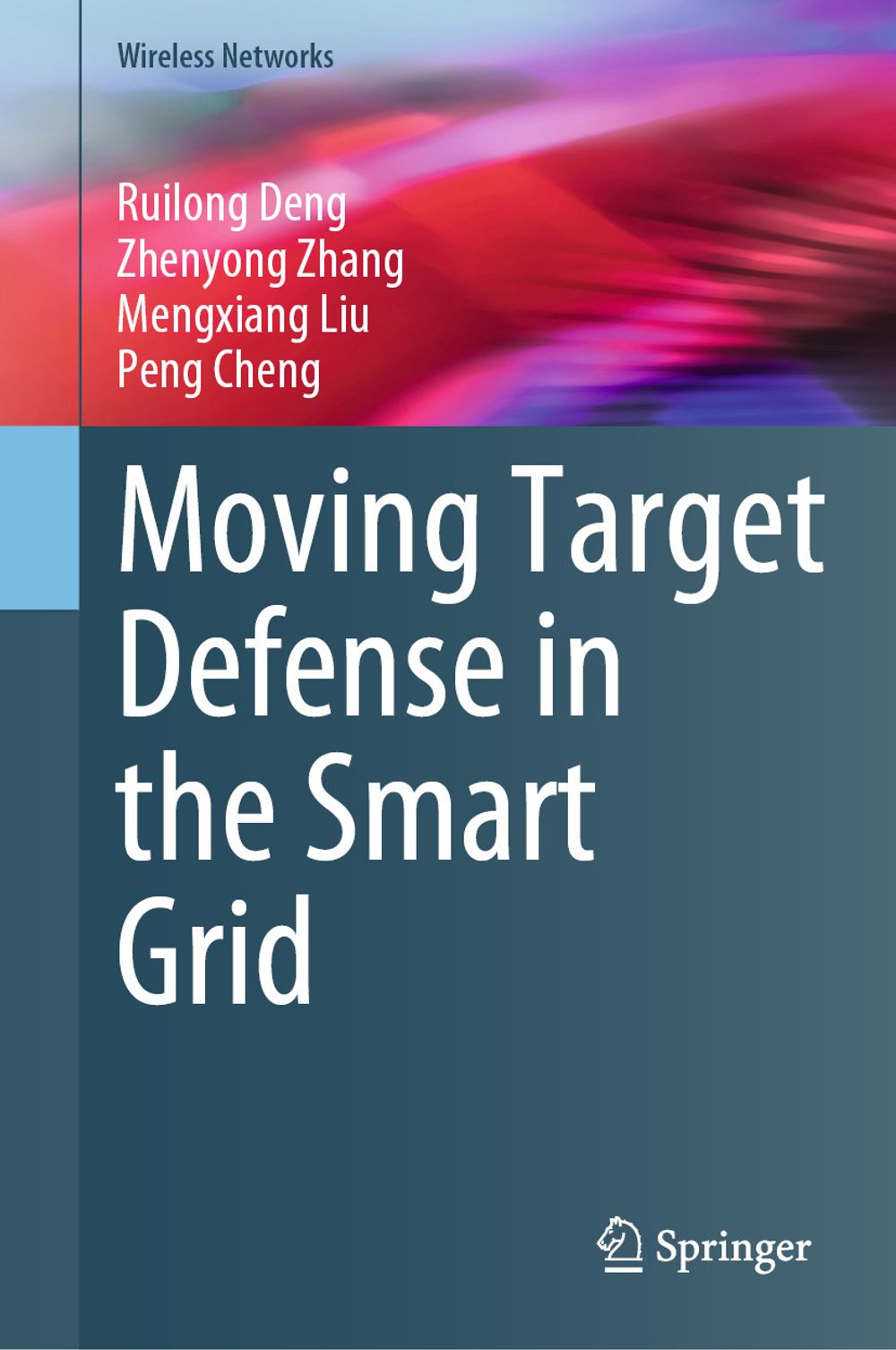



Low-carbon goals, energy crisis, and increasing electricity demand lead to the integration of advanced electronic and communication devices into the smart grid to enable environmental-friendly, real-time, and economic operation and control. However, the vulnerabilities exposed in the IP-based devices and communication networks make the smart grid prone to cyberattacks. For example, the false data injection attack is one of the critical cyberattacks that threatens the system operations such as state estimation, voltage control, economic dispatch, and etc. Observing that the design of cyberattacks on the smart grid depends on the attacker's knowledge of certain key parameters such as the grid topology and line configurations, an innovative defensive mechanism is to proactively perturb these key parameters to prevent the attacker from knowing this related information for constructing cyberattacks. This proactive perturbation strategy is termed as moving target defense (MTD), which mitigates this risk by dynamically altering the power line reactance, making it harder for adversaries to construct effective cyberattacks. Unlike static countermeasures, MTD enhances smart grid cybersecurity by continuously reshaping the attack surface. Since MTD increases the system uncertainty and complexity of the smart grid, the opportunity for the attacker to successfully launch cyberattacks is reduced. This book provides a comprehensive analysis of the theoretical foundations of MTD, the optimal deployment of this defense strategy, and the deep impact of MTD on the system’s operation and control. To begin with, a thorough literature review is conducted to summarize the cyber-, physical-, and cyber-physical coordinated MTD approaches. Then, a detailed theoretical analysis is provided to validate the effectiveness and completeness of MTD in terms of detecting and mitigating cyberattacks. Furthermore, the hiddenness of MTD is deeply analyzed from the attacker’s perspective, leading to the development of a coordinated defense framework to enhance the MTD’s hiddenness. Given the complexity resulted from the nonlinear AC state estimation, sensitivity-based approximation methods are proposed to quantify the effectiveness and hiddenness of MTD in AC power systems, forming the basis of an optimization framework to balance the MTD’s effectiveness between hiddenness. Finally, considering the proactive activities caused by MTD, its impact on the system’s operation and control, including the operation cost, load frequency control, and small signal stability, is theoretically and numerically analyzed. This book concludes by discussing future research directions and practical strategies for deploying MTD. The presented MTD design and the corresponding research results covered in this book will provide valuable insights for practical MTD deployment and motivate new ideas for strengthening smart grid cybersecurity. This book will be valuable for researchers, graduate students, and industry professionals seeking a comprehensive understanding of the latest developments in MTD for smart grid cybersecurity. Designed for readers with a background in Electrical & Computer Engineering, Telecommunications, Computer Science, or related disciplines, it provides the necessary foundation to explore advanced defense strategies. The primary audiences include college students specializing in smart grid, Internet of Things, and cybersecurity, as well as researchers, consultants, and executives involved in smart grid cybersecurity and cyber-physical systems. Additionally, the book will be useful for standardization task forces developing advanced defense strategies. Beyond individual readers, institutions such as power utilities, cybersecurity firms, universities, and research organizations will find it a valuable resource for advancing knowledge and practical applications in smar
-
Autore:
-
Anno edizione:2025
-
Editore:
-
Formato:
-
Lingua:Inglese
Compatibilità:
Tutti i dispositivi (eccetto Kindle) Scopri di più
Layout:
Reflowable
EAN:
9783031923784

Formato:
Gli eBook venduti da Feltrinelli.it sono in formato ePub e possono essere protetti da Adobe DRM. In caso di download di un file protetto da DRM si otterrà un file in formato .acs, (Adobe Content Server Message), che dovrà essere aperto tramite Adobe Digital Editions e autorizzato tramite un account Adobe, prima di poter essere letto su pc o trasferito su dispositivi compatibili.
Cloud:
Gli eBook venduti da Feltrinelli.it sono sincronizzati automaticamente su tutti i client di lettura Kobo successivamente all’acquisto. Grazie al Cloud Kobo i progressi di lettura, le note, le evidenziazioni vengono salvati e sincronizzati automaticamente su tutti i dispositivi e le APP di lettura Kobo utilizzati per la lettura.
Clicca qui per sapere come scaricare gli ebook utilizzando un pc con sistema operativo Windows
