










EBOOK IN LINGUA STRANIERA





Multimedia Systems and Techniques

131,03 €
+1310
punti 
Venditore: Feltrinelli

Acquista online
Scaricabile subito
Articolo acquistabile con Carta del Docente

Articolo acquistabile con Carta Cultura Giovani e Carta del Merito

Articolo acquistabile con Carta della Cultura

Dati e Statistiche
 Salvato in 0 liste dei desideri
Salvato in 0 liste dei desideri
Multimedia Systems and Techniques
Scaricabile subito
131,03 €
131,03 €
Scaricabile subito

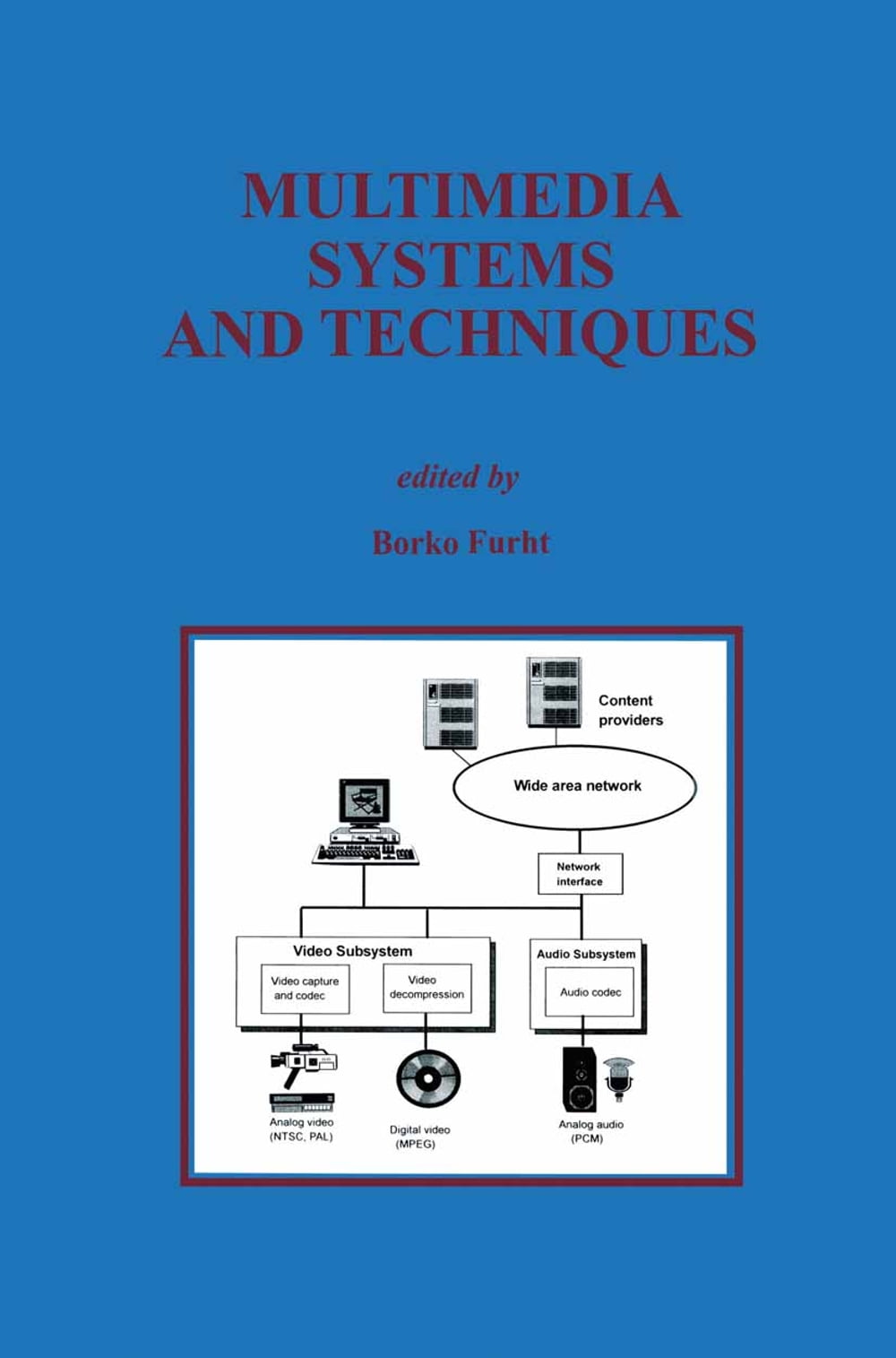



Multimedia computing has emerged in the last few years as a major area of research. Multimedia computer systems have opened a wide range of applications by combining a variety of information sources, such as voice, graphics, animation, images, audio and full-motion video. Looking at the big picture, multimedia can be viewed as the merging of three industries: computer, communications, and broadcasting industries. Research and development efforts can be divided into two areas. As the first area of research, much effort has been centered on the stand-alone multimedia workstation and associated software systems and tools, such as music composition, computer-aided education and training, and interactive video. However, the combination of multimedia computing with distributed systems offers even greater potential. New applications based on distributed multimedia systems include multimedia information systems, collaborative and video conferencing systems, on-demand multimedia services, and distance learning. Multimedia Systems and Techniques is one of two volumes published by Kluwer, both of which provide a broad introduction into this fast moving area. The book covers fundamental concepts and techniques used in multimedia systems. The topics include multimedia objects and related models, multimedia compression techniques and standards, multimedia interfaces, multimedia storage techniques, multimedia communication and networking, multimedia synchronization techniques, multimedia information systems, scheduling in multimedia systems, and video indexing and retrieval techniques. Multimedia Systems and Techniques, together with its companion volume, Multimedia Tools and Applications, is intended for anyone involved in multimedia system design and applications and can be used as a textbook for advanced courses on multimedia.
-
Curatore:
-
Anno edizione:2012
-
Editore:
-
Formato:
Lingua:
Inglese
Compatibilità:
Tutti i dispositivi (eccetto Kindle) Scopri di più
Layout:
Reflowable
EAN:
9781461313410

Formato:
Gli eBook venduti da Feltrinelli.it sono in formato ePub e possono essere protetti da Adobe DRM. In caso di download di un file protetto da DRM si otterrà un file in formato .acs, (Adobe Content Server Message), che dovrà essere aperto tramite Adobe Digital Editions e autorizzato tramite un account Adobe, prima di poter essere letto su pc o trasferito su dispositivi compatibili.
Cloud:
Gli eBook venduti da Feltrinelli.it sono sincronizzati automaticamente su tutti i client di lettura Kobo successivamente all’acquisto. Grazie al Cloud Kobo i progressi di lettura, le note, le evidenziazioni vengono salvati e sincronizzati automaticamente su tutti i dispositivi e le APP di lettura Kobo utilizzati per la lettura.
Clicca qui per sapere come scaricare gli ebook utilizzando un pc con sistema operativo Windows
